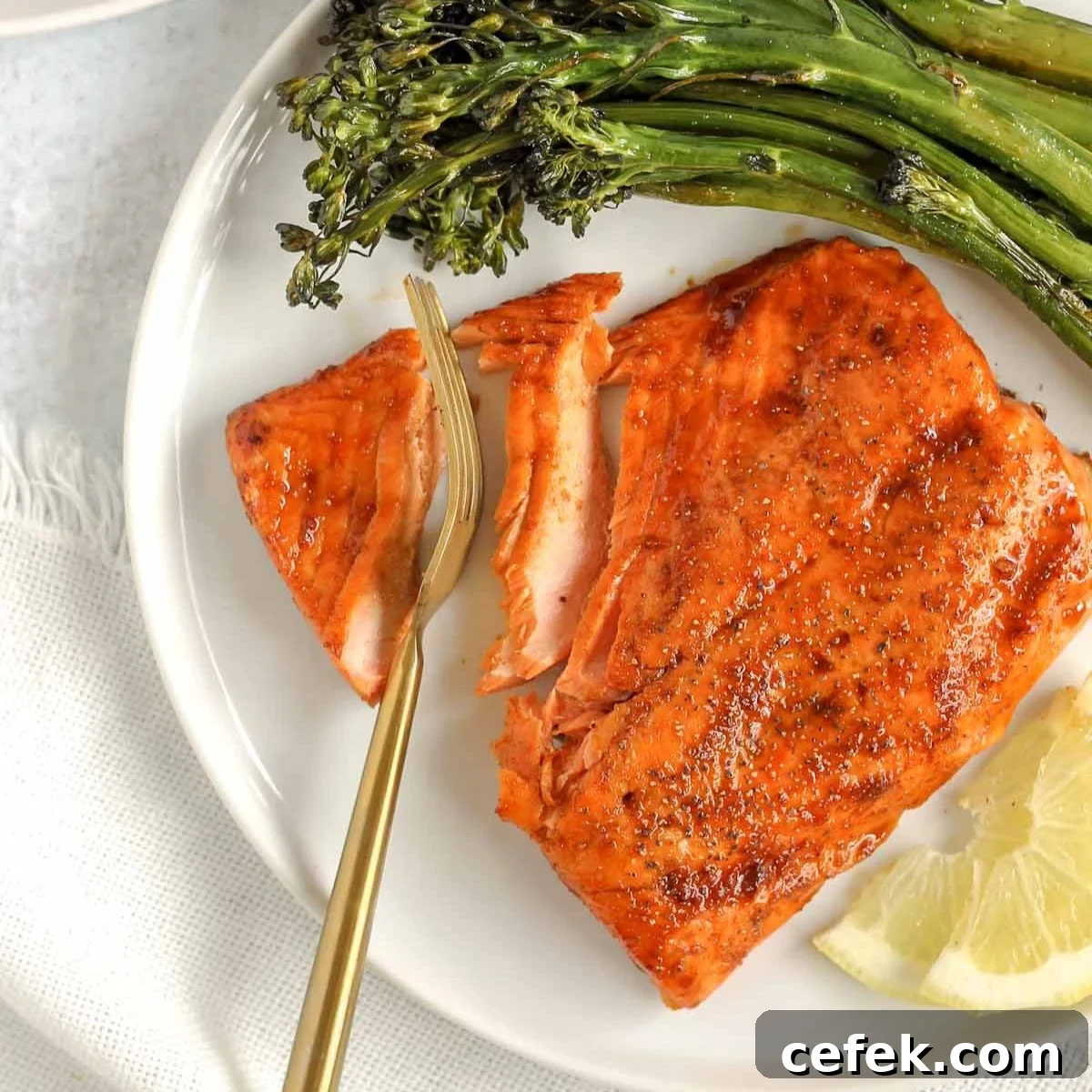
Tender, flaky frozen salmon in the air fryer—these fillets are finished with a simple, flavorful honey-garlic glaze for an easy meal ready in about 12 minutes. Ideal for busy weeknights or low-effort dinners.
If you enjoy salmon, consider trying the maple Dijon salmon sheet pan next.
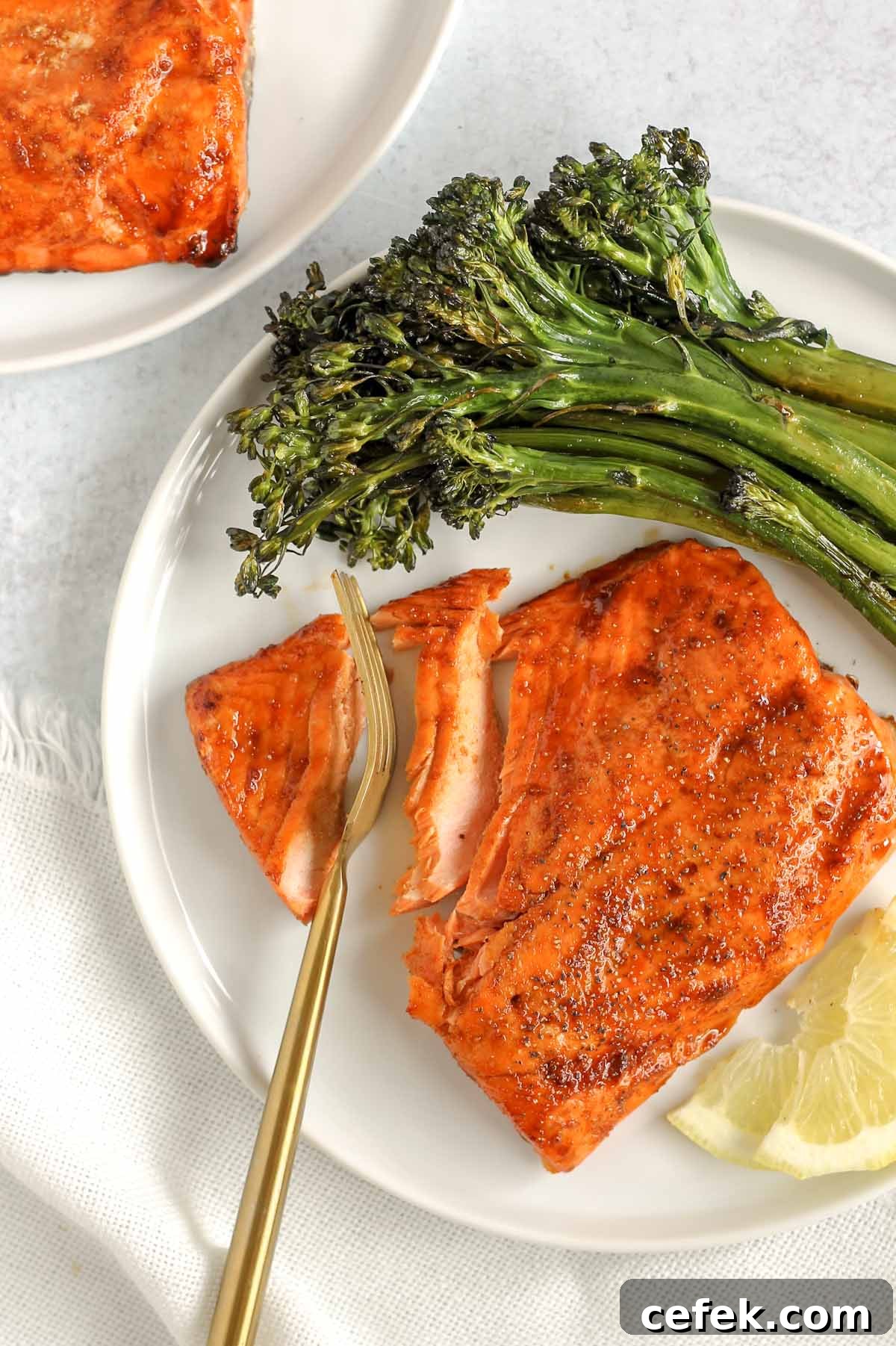
Cooking frozen salmon in the air fryer is fast, convenient, and forgiving—perfect whether you’re new to air frying or use it all the time. With minimal prep and short cook time, it delivers a great weeknight main with crisp edges and a tender center.
My air fryer has become a kitchen workhorse—everything from air fryer teriyaki chicken bites to air fryer smashed potatoes, air fried apples, and air fryer turkey burgers all come out well. The air fryer handles a wide range of recipes with impressive results.
[feast_advanced_jump_to]
What To Love About This Recipe
- Convenient and quick – From frozen to plate in roughly 12 minutes, giving you a healthy protein with minimal effort.
- Delicious – A simple honey and garlic glaze adds great flavor without fuss. Variations are easy to swap in if you prefer other tastes.
- Crispy outside, flaky inside – The air fryer’s circulating hot air crisps the exterior while keeping the flesh moist and flaky.
- Diet-friendly – Naturally gluten-free and dairy-free, low-carb friendly, and compatible with Paleo and clean-eating approaches.
Ingredient Notes
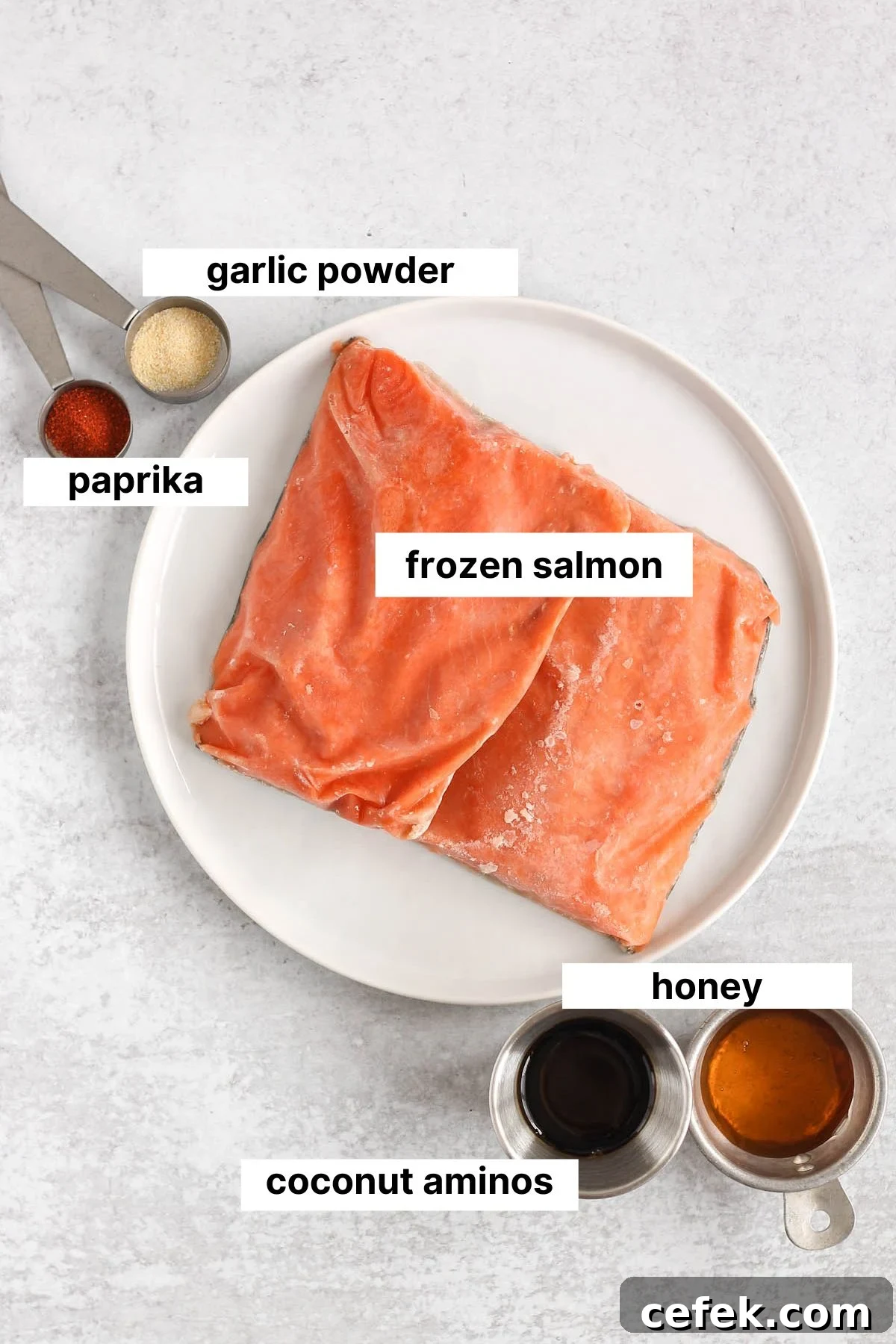
See the recipe card below for the full ingredient list and amounts. Notes and substitutions are summarized here.
- Frozen salmon – Sockeye and Atlantic are common choices. Sockeye fillets tend to be thinner and more intensely flavored, while Atlantic fillets are thicker and milder. Either works in the air fryer; adjust cook time if fillets are very thick.
- Coconut aminos – A soy- and gluten-free alternative to soy sauce. Use soy sauce or tamari if preferred; flavor differences are minor.
- Paprika – Regular or smoked paprika both work—smoked paprika adds a gentle smoky depth.
Clean food tip: I prefer wild-caught salmon for both nutritional and environmental reasons. Wild-caught salmon often contains higher omega-3 levels and gets its color from its natural diet. Farmed salmon can vary in feed and practices, so check labels if you have preferences.
Variations
- Pesto: Brush kale pesto on before or after cooking. Cooking with pesto helps form a flavorful crust.
- Teriyaki salmon: Brush soy-free teriyaki sauce halfway through and again after cooking for extra glaze.
- Dijon mustard: Stir a teaspoon of Dijon into the honey-coconut amino glaze for brightness.
- Lemon slices: Place thin lemon slices on fillets while cooking for a fresh citrus note.
How to Cook Frozen Salmon in the Air Fryer
A few simple steps and your salmon will be ready quickly.
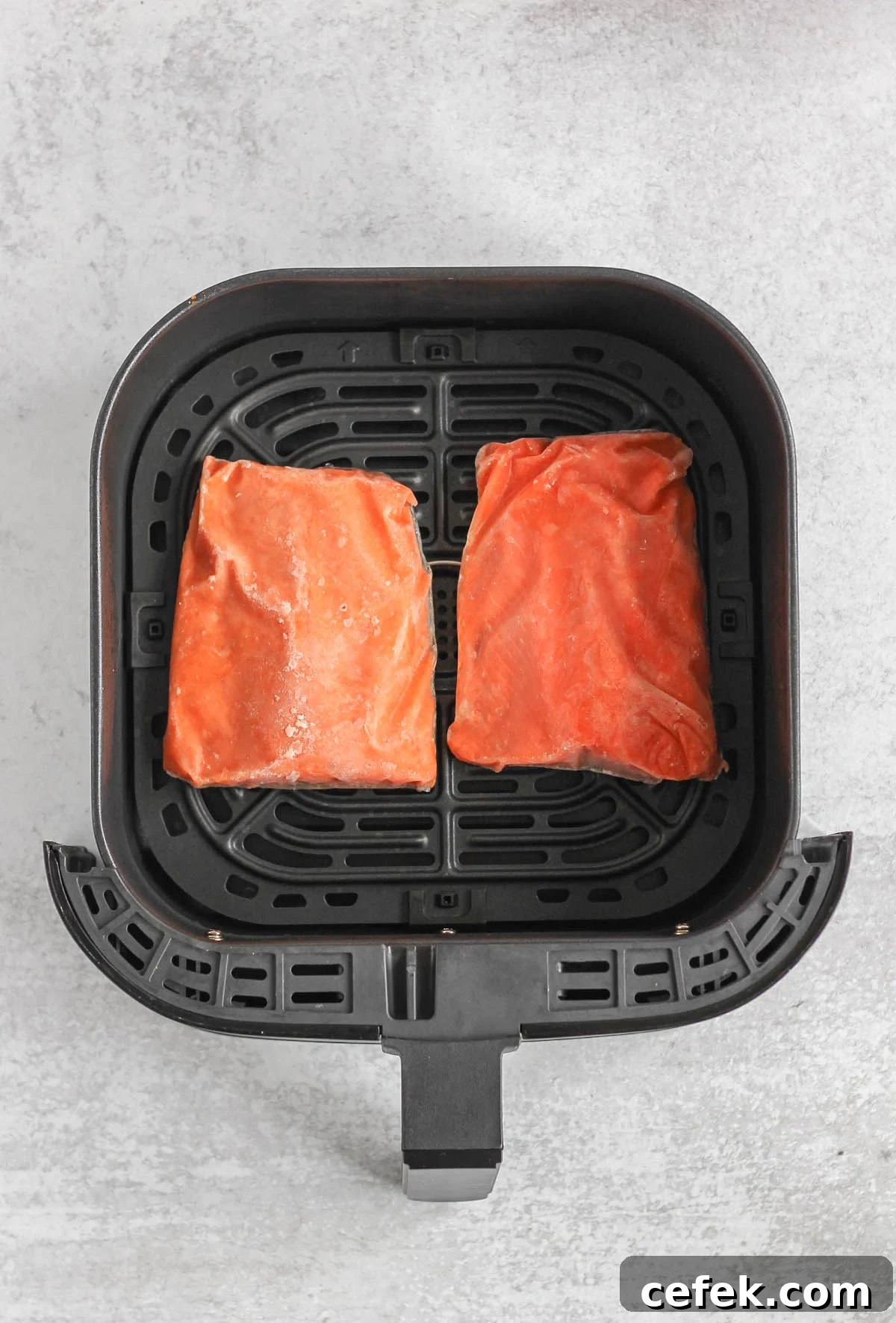
Step 1: Preheat the air fryer to 390°F. Place frozen fillets in the basket, skin side down, and set the timer for 12 minutes.
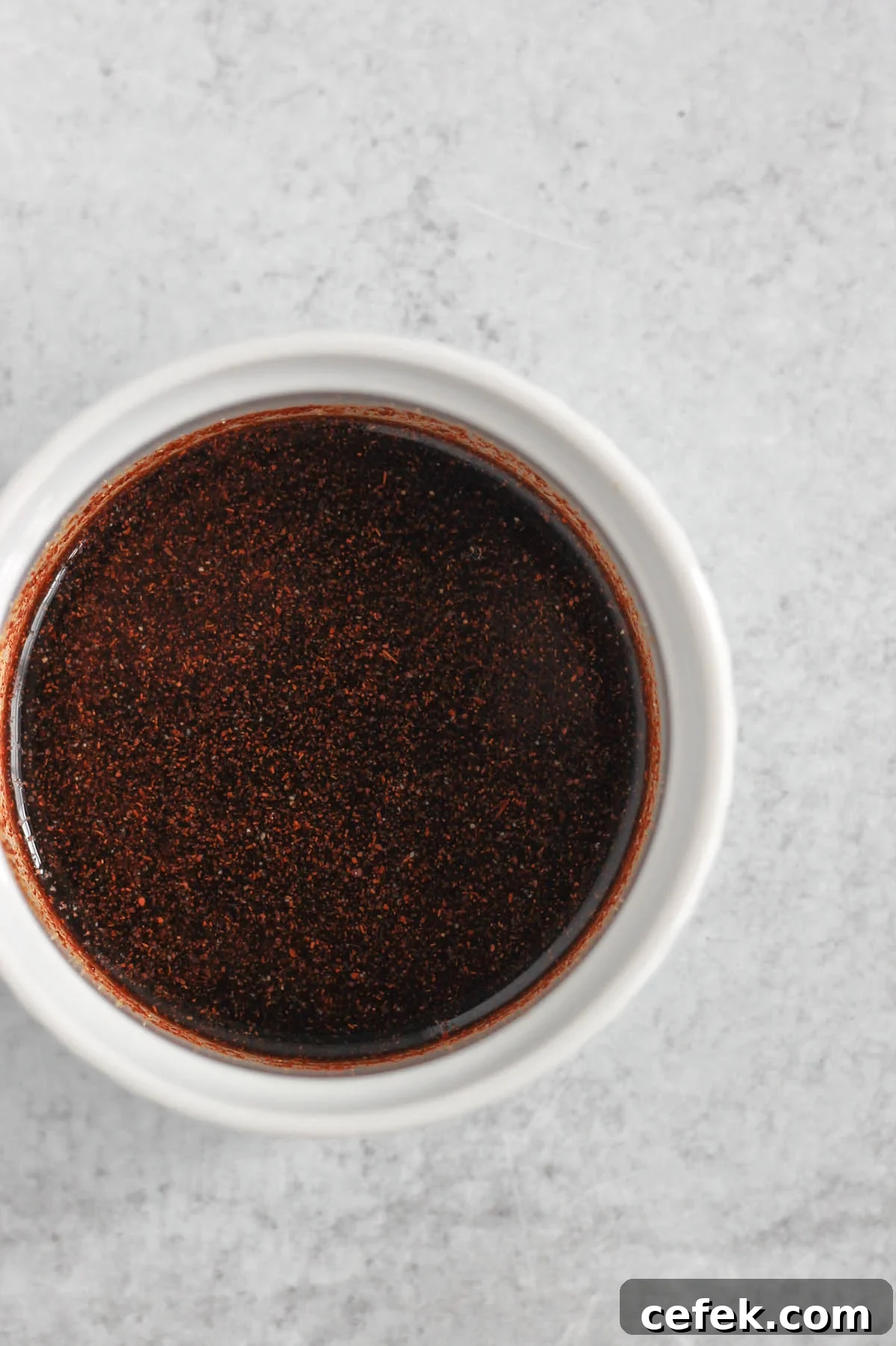
Step 2: While the salmon cooks, whisk honey, coconut aminos (or soy sauce), garlic powder, and paprika to make the glaze.
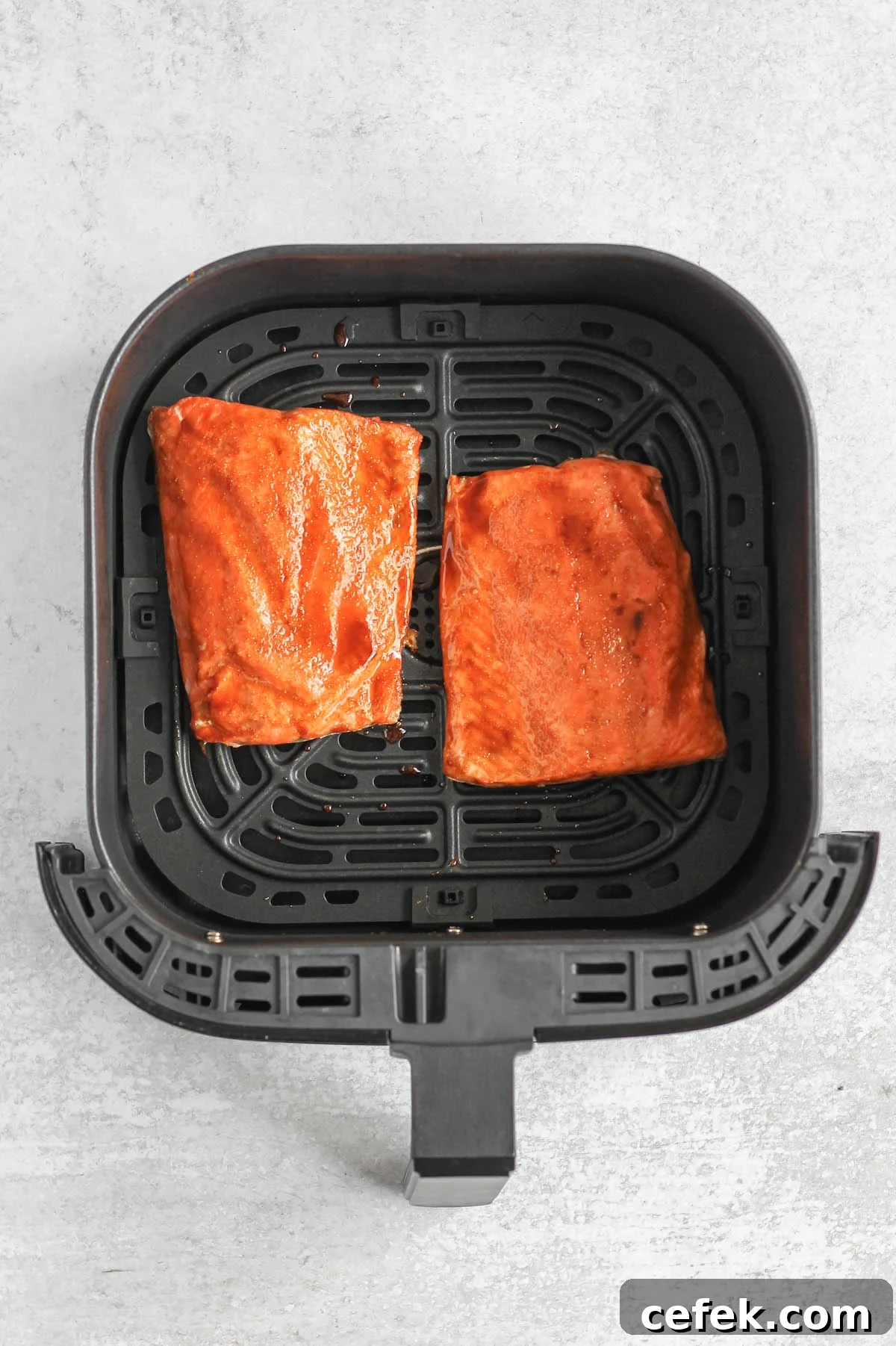
Step 3: Halfway through cooking, remove the basket and brush the glaze over each fillet. Return to the air fryer to finish cooking.
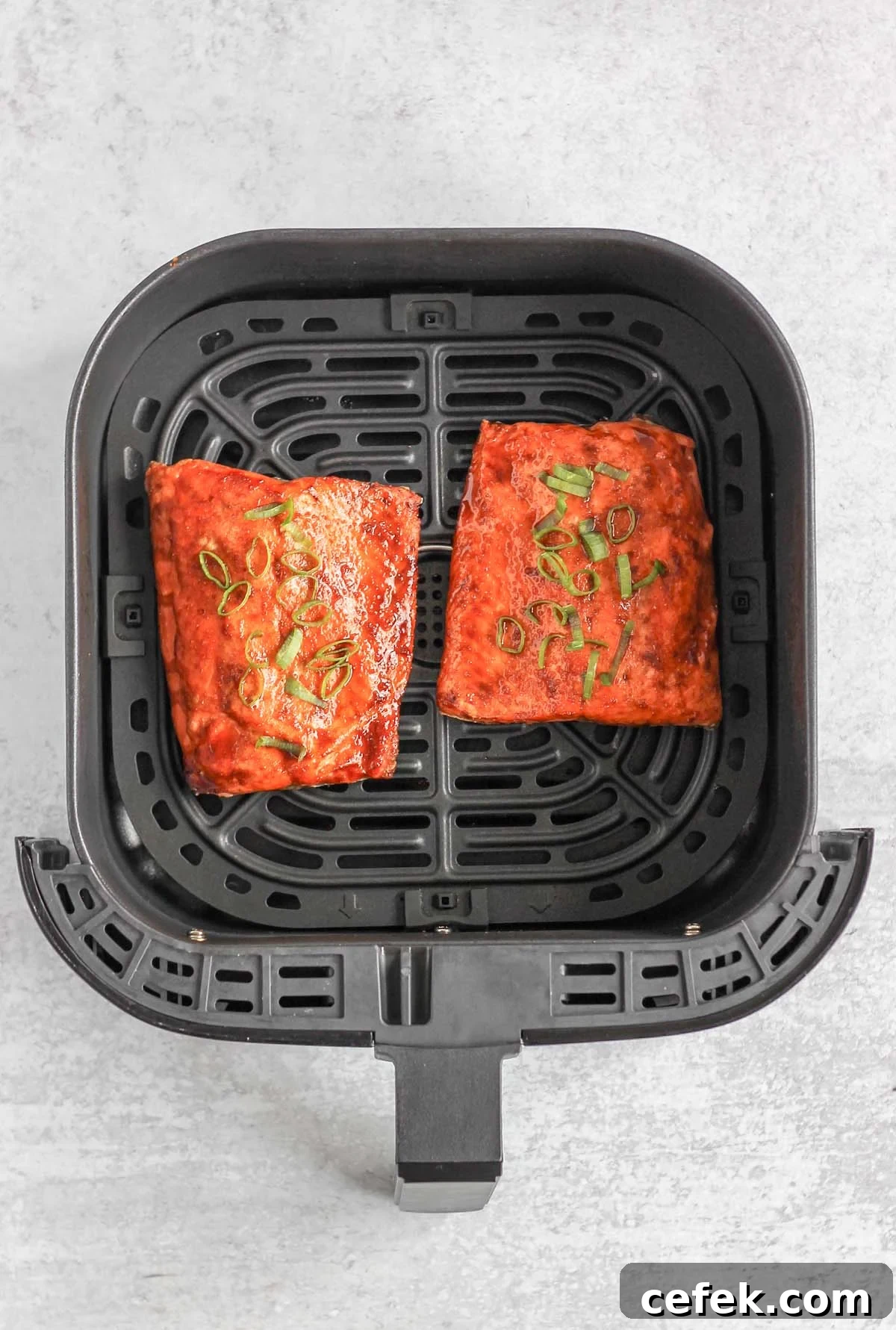
Step 4: Continue until the salmon is done, about 12 minutes total for thinner fillets. Thicker pieces may need a few extra minutes.
Note: Cooking time depends on fillet thickness. Thinner sockeye fillets often finish in about 12 minutes; adjust as needed for thicker cuts.
Expert Tips & Notes
Watch the time: Salmon can overcook quickly in an air fryer; monitor closely, especially with thinner pieces.
Cook evenly sized fillets so everything finishes at the same time.
Preheat the air fryer for consistent results.
How Long Should I Cook Frozen Salmon in Air Fryer?
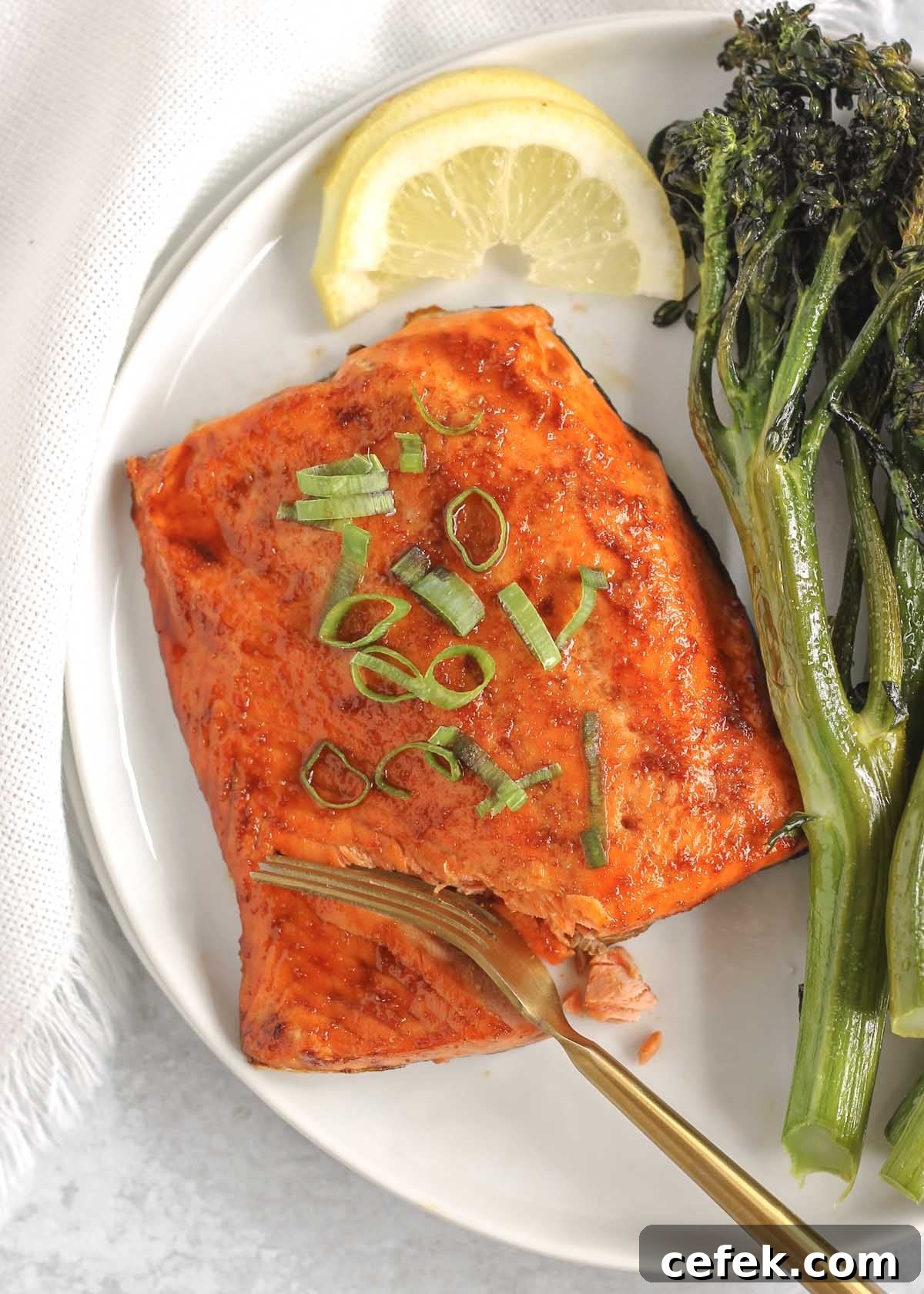
Cooking preference varies: some like salmon medium-rare, others well done. The USDA recommends cooking fish to an internal temperature of 145°F for well-done doneness. If you prefer well done, cook until a thermometer reads 145°F in the thickest part.
For medium doneness, pull salmon at about 125–130°F; it will rise a few degrees while resting. If you don’t have a thermometer, check for flakiness with a fork—when it flakes easily, it’s done.
Recipe FAQs
No—this recipe is designed to cook salmon directly from frozen. It will still be tender and flaky when finished.
Yes, cook with the skin on for protection and crispness. You can peel it off after cooking if you prefer, but it’s edible and becomes nicely crispy in the air fryer.
Salmon provides high-quality protein, omega-3 fatty acids, vitamin A, several B vitamins, and minerals like selenium and zinc.
Yes. Fresh salmon cooks faster—start checking at 5–7 minutes, depending on thickness.
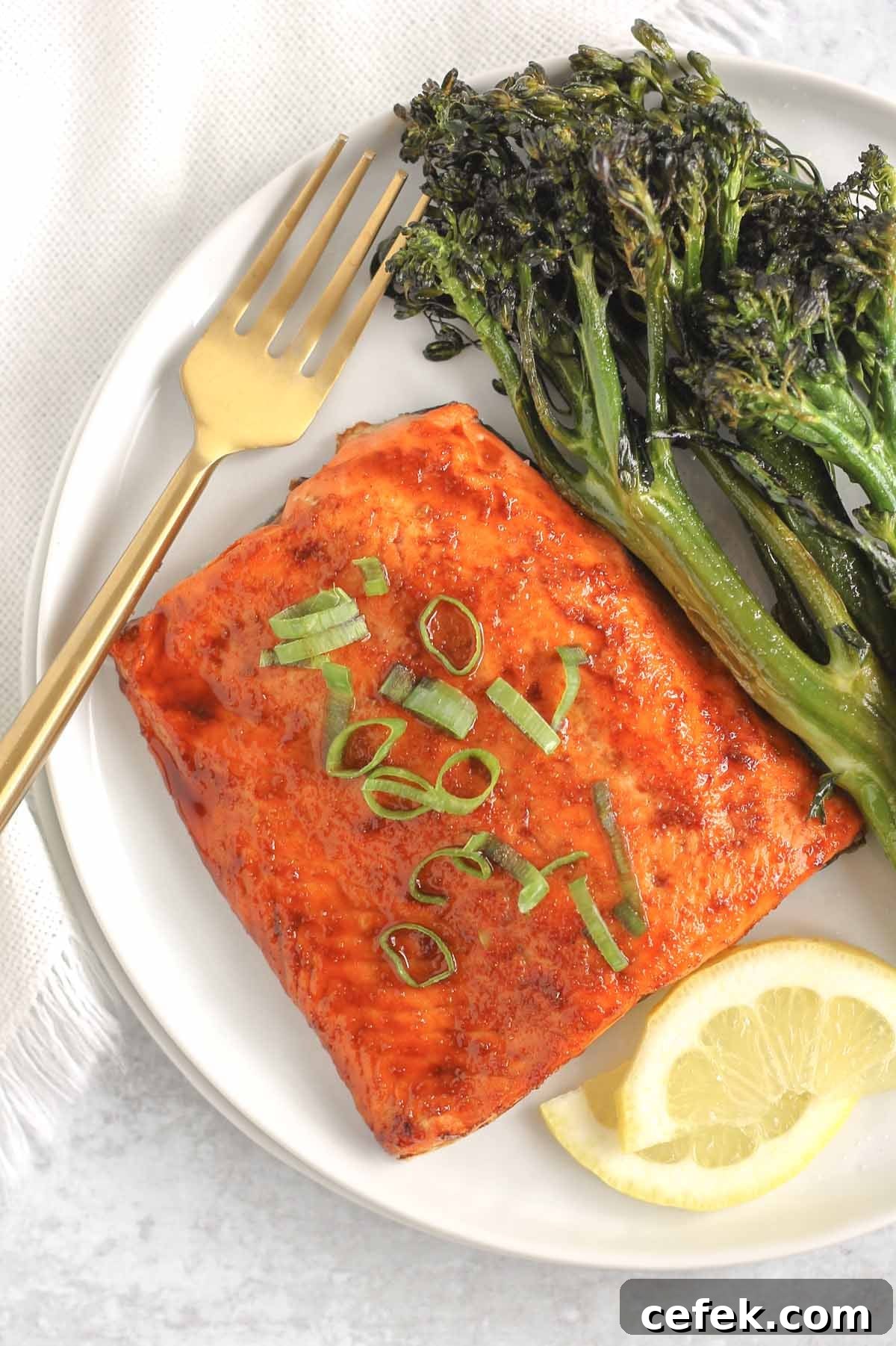
Serving Suggestions
With fried rice: Omit the chicken from a fried rice recipe and top with this salmon.
With pesto pasta: Toss your favorite noodles with kale pesto and top with salmon for a quick dinner.
Over a salad: Add salmon to a Mediterranean bowl, a hearty grain salad, or a classic Caesar for a protein-packed meal.
Storing and Reheating
Store leftovers in an airtight container in the refrigerator for up to 3 days. Reheat gently in the air fryer or microwave, or enjoy cold on salads.
More Air Fryer Recipes
-
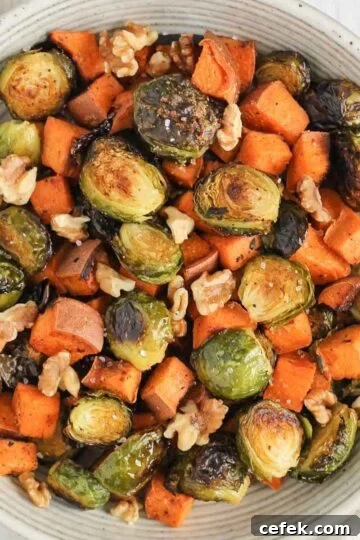
Roasted Brussels Sprouts and Sweet Potatoes
-
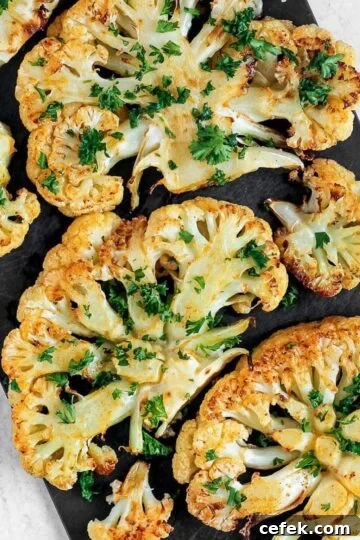
Vegan Roasted Cauliflower Steaks
-
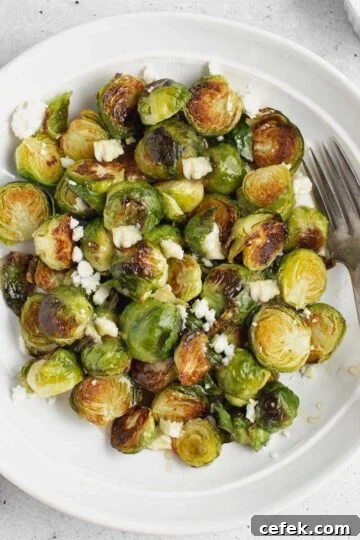
Roasted Brussels Sprouts with Goat Cheese and Honey
-
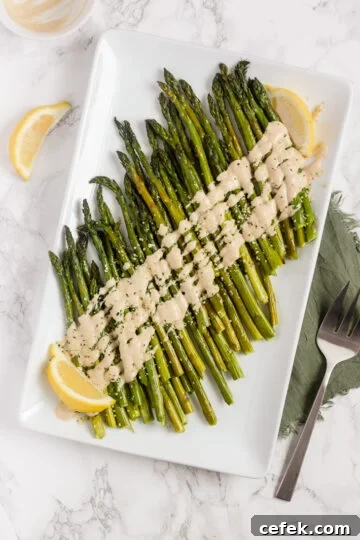
Easy Roasted Asparagus with Lemon Tahini Sauce
Eat Clean. Be Healthy!
-Sara
If you make this recipe, please let me know what you think by leaving a star rating or comment below. Share a photo on social media and tag @CleanPlateMama if you’d like—I always enjoy seeing your results!
Eat Clean. Be Well!
-Sara

How to Cook Frozen Salmon in the Air Fryer
Equipment
-
1 Air Fryer
Ingredients
- 2 frozen salmon fillets
- 1 tbsp. coconut aminos (or soy sauce)
- ½ tbsp. honey
- ¼ tsp. garlic powder
- ¼ tsp. paprika
Instructions
- Preheat your air fryer to 390°F.
- Once preheated, place frozen salmon fillets, skin side down, in the air fryer basket. Set timer for 12 minutes.
- Meanwhile, whisk coconut aminos (or soy sauce), honey, garlic powder, and paprika. Halfway through cooking, brush the fillets with the glaze.
- Check salmon after 12 minutes. It’s done when it flakes easily with a fork or reaches 140–145°F (it will rise a few degrees while resting).
- Enjoy!
Notes
- Substitutions: Use soy sauce instead of coconut aminos; brown sugar or coconut sugar can replace honey if needed.
- If you’d like extra glaze for serving, set aside half the marinade before brushing it on the raw fish to avoid contamination.
- Cooking time varies with fillet thickness—adjust as needed.
- See the post above for tips on achieving medium or well-done salmon.