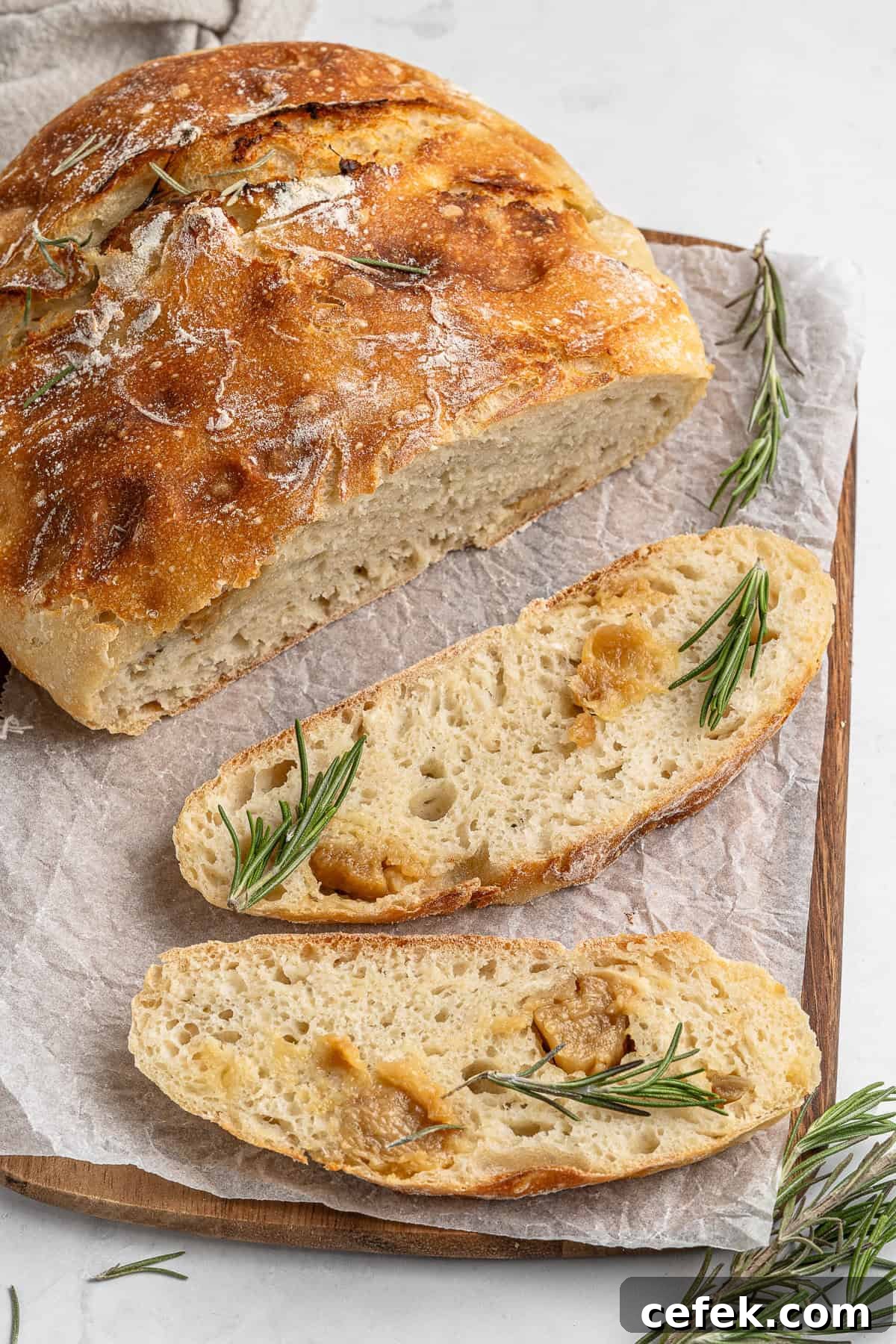
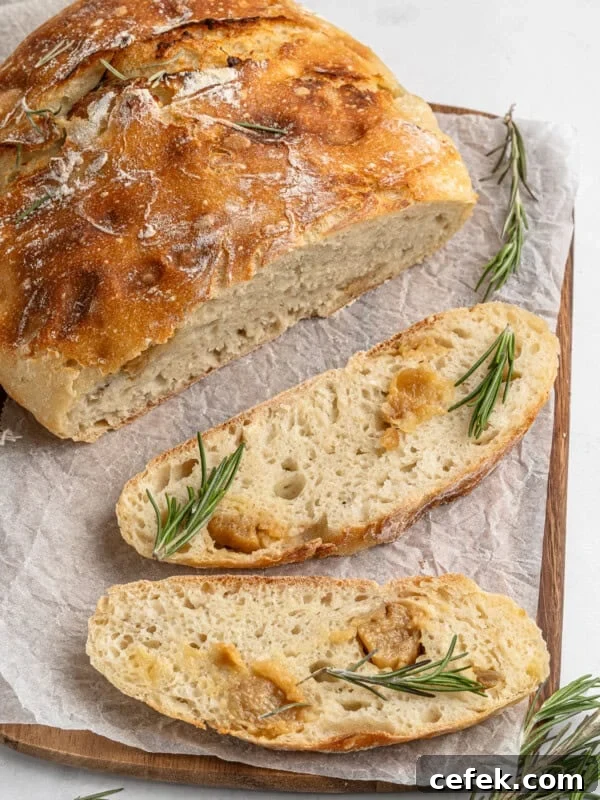
Mirror, mirror on the wall—what’s the most irresistible loaf of them all? For me, it’s this No Knead Garlic Bread, a garlic-forward twist on a classic no-knead peasant loaf. Simple, rustic, and supremely satisfying, it combines a soft, airy crumb with a crisp, golden crust and a mellow homemade garlic confit that elevates every bite.
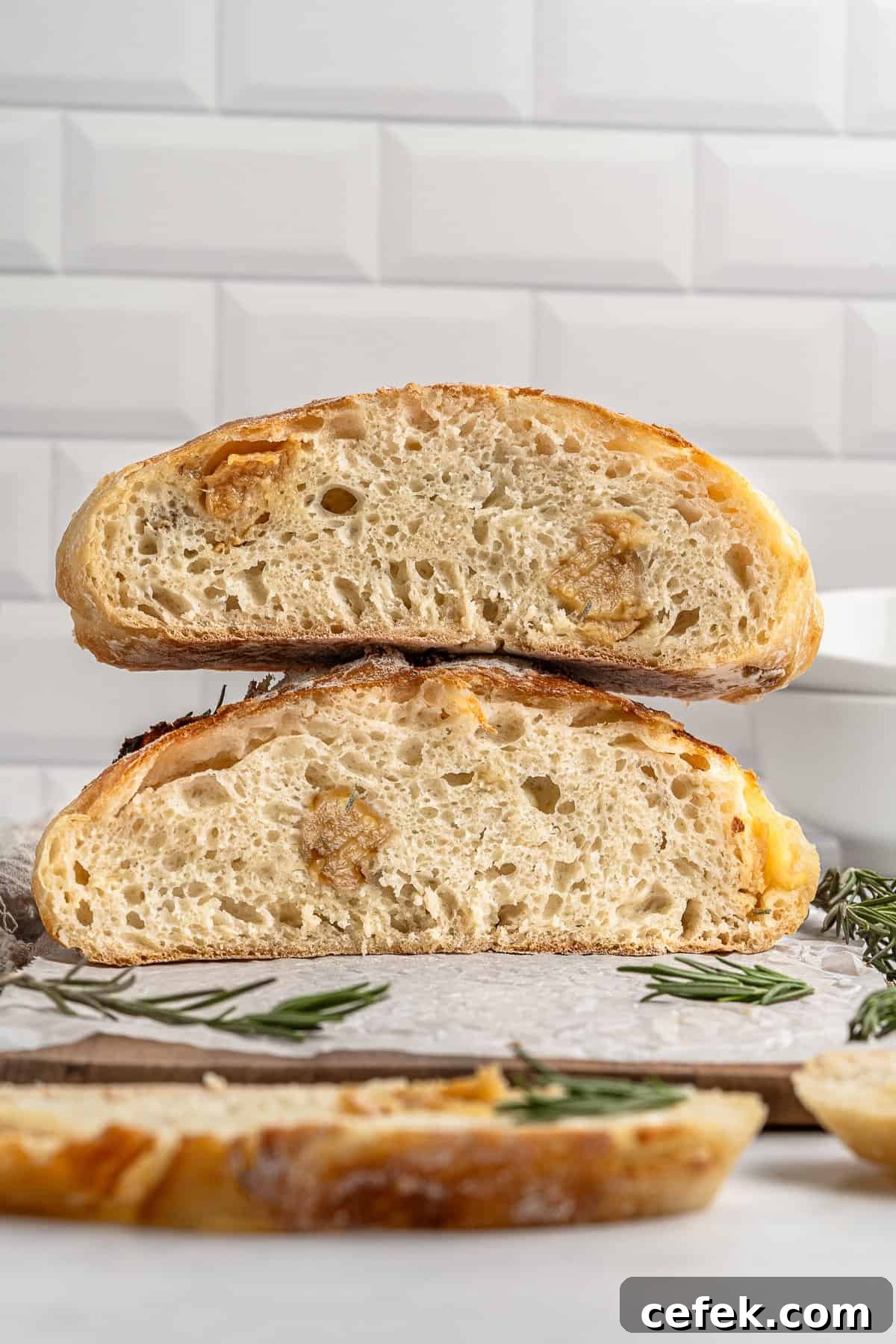
Why You’ll Love No Knead Garlic Bread
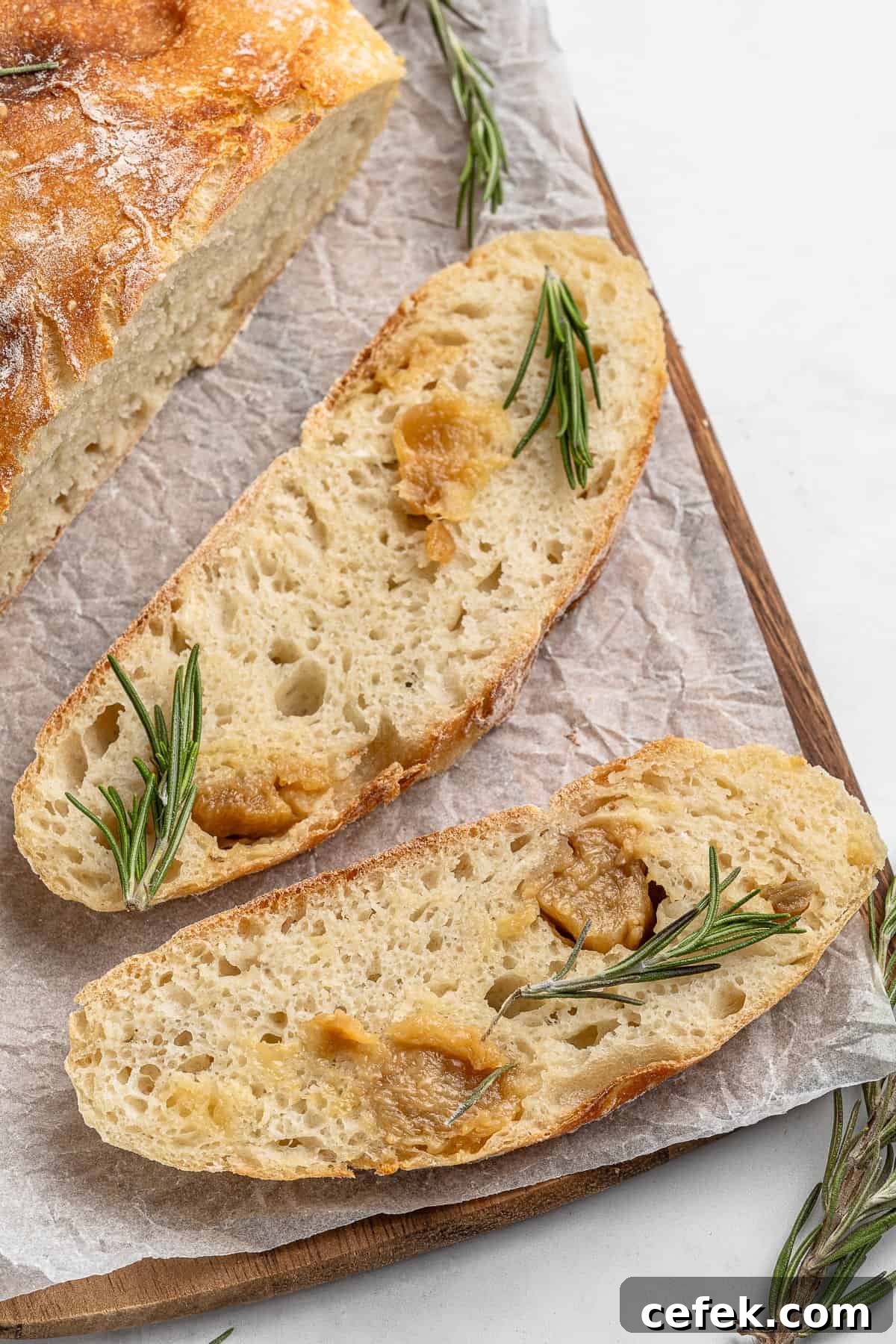
This loaf is golden and crispy on the outside and soft and airy inside—the kind of bread that makes you close your eyes on the first bite. The garlic confit adds a rich, sweet garlic flavor without bitterness, and the crumb stays light and pillowy even when studded with roasted garlic and herbs. Serve it with butter, dip it in olive oil and balsamic, or pair it alongside soups and stews for a comforting meal.
How to Prepare
Garlic Confit
- Preheat the oven to 400°F (200°C).
- Peel the garlic cloves and place them in a small oven-safe dish or ramekin. Cover the cloves with olive oil so they are fully submerged.
- Cover the dish and bake for 30–40 minutes, until the cloves are light golden and soft when pierced with a knife. Let cool and reserve both the garlic and the infused oil.


The Dough
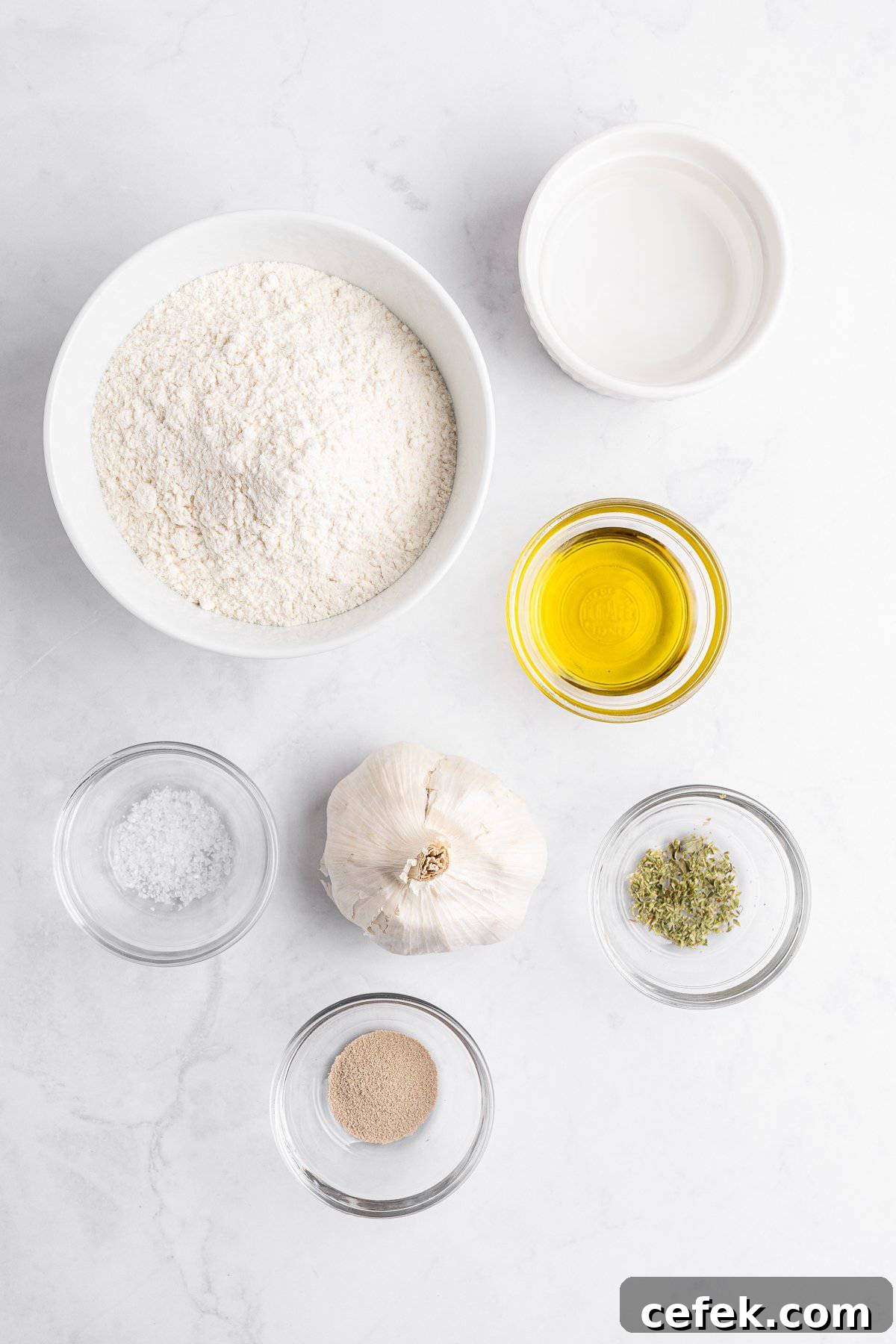
- In a large bowl, whisk together 3 cups all-purpose flour, 1 teaspoon salt, and ½ teaspoon active dry yeast.
- Strain the roasted garlic from the oil and add the softened cloves to the flour along with dry oregano or rosemary to taste. Reserve the garlic-infused oil for dipping.
- Add 1 ¾ cups warm water (between 100–110°F / 37–43°C) and mix until you have a thick, sticky dough. The water temperature is important for yeast activation—too hot or too cold will affect the rise.
- Cover the bowl with a clean towel and let the dough rest at room temperature for at least 3 hours or overnight until it has tripled in size. Keep it away from drafts.
- Once risen, flour your counter, turn the dough out, and flour the top. Gently shape it into an oval—no kneading required. If sticky, dust with a little more flour.
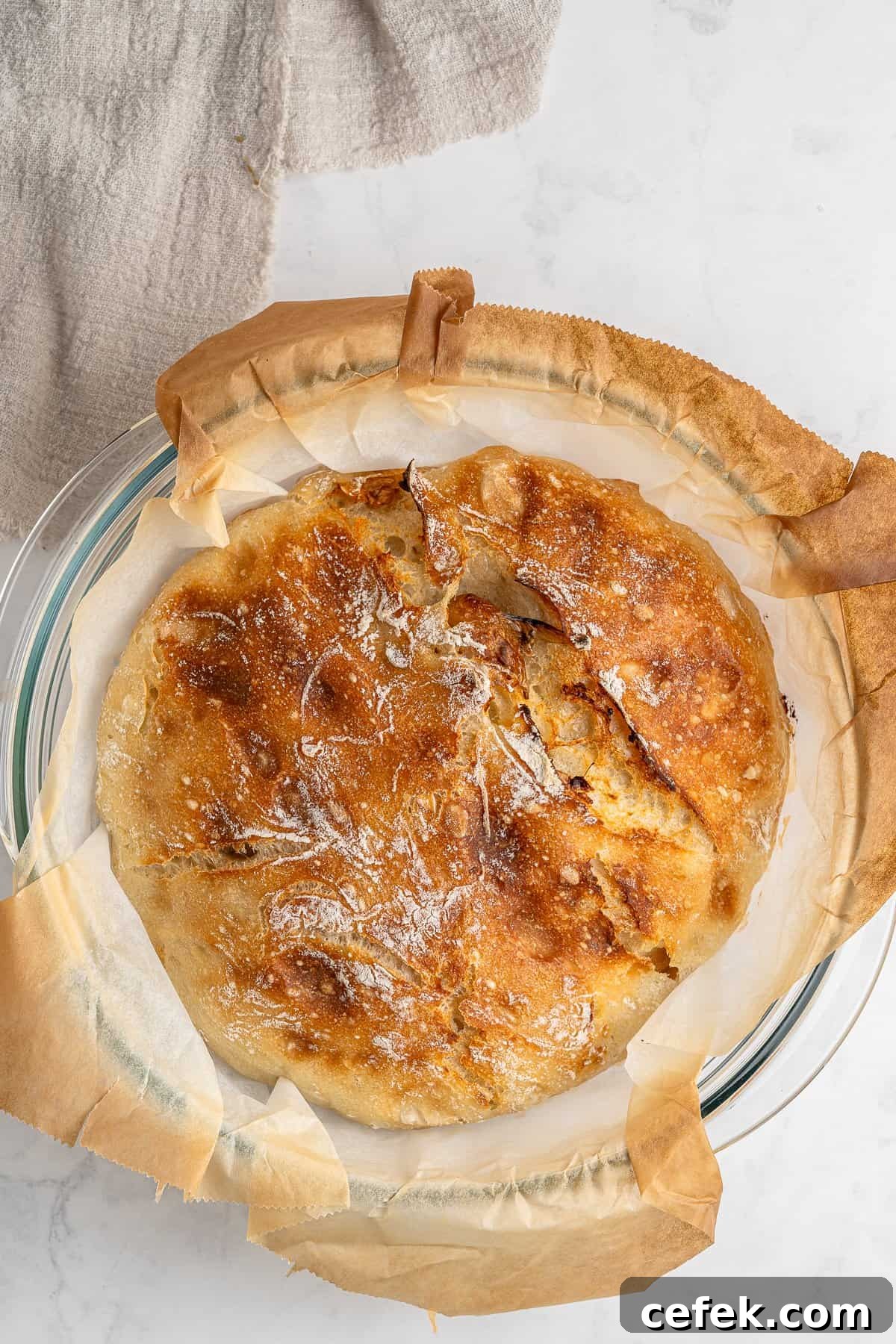
- Place the loaf on parchment in an oven-safe dish and cover. Put the covered dish in a cold oven, then turn the oven to 450°F (230°C).
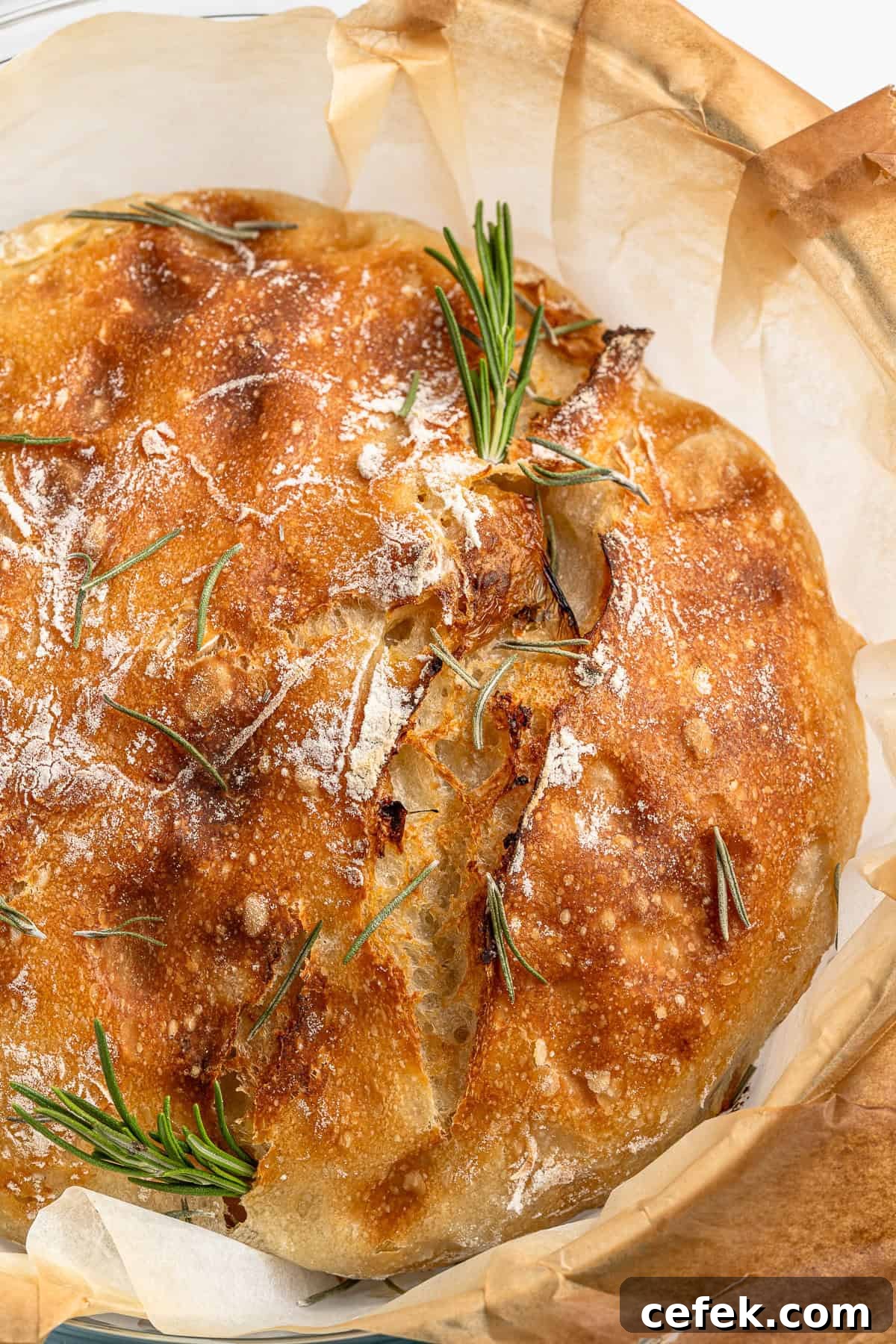
- Bake covered for 30 minutes, then remove the lid and bake uncovered for 25–30 minutes more until the loaf is evenly golden and crisp. Total baking time from when the loaf goes into the cold oven is about 1 hour but will vary by oven.
- Let the bread cool 5–10 minutes before slicing. For a dip, whisk some reserved garlic oil with a splash of balsamic vinegar.
Nonna’s Tip
The water you add to the dough should be between 100°F and 110°F (37–43°C). If it’s too hot you’ll kill the yeast; too cool and the yeast won’t activate. Always check the yeast’s expiration before baking.
Variations and Substitutions
You can easily adapt this recipe to suit tastes and pantry items. Below are some ideas to try.
- Swap herbs: try thyme, basil, or parsley in place of oregano or rosemary.
- Use whole wheat or a blend of whole wheat and all-purpose flour for a denser, nuttier loaf.
- If you only have instant yeast, it can be used instead of active dry yeast—follow package instructions for best results.
- Adjust the garlic: add fewer or more cloves, or roast extra cloves to mash into a spread.
- Mix-ins: fold in grated Parmesan, chopped olives, sun-dried tomatoes, or caramelized onions for extra flavor.
Best Served With
- A hearty soup such as cream of broccoli or a creamy vegetable soup.
- A cheese or charcuterie board—the garlic bread pairs beautifully with soft cheeses and cured meats.
Common Questions
Rest the dough a minimum of 3 hours; many bakers let it rise overnight for deeper flavor. Ensure it’s kept in a draft-free spot.
If it’s too wet, sprinkle in a little more flour; if too dry, add warm water a tablespoon at a time until tacky and pliable.
Yes. Preheat the Dutch oven with its lid at 450°F (230°C), place the shaped dough inside, bake 30 minutes with the lid on, then 15–20 minutes uncovered until golden.
Let the loaf cool, then wrap in plastic wrap, beeswax wrap, or a clean towel and store at room temperature. It’s best on the same day; reheat slices briefly before serving.
No Knead Garlic Bread
Ingredients
The Garlic Confit
- 16 cloves garlic
- Olive oil, enough to cover the cloves
The Dough
- 3 cups all-purpose flour, plus more for dusting
- 1 teaspoon salt
- ½ teaspoon active dry yeast (check expiration)
- Dry oregano or rosemary, to taste
- 1 ¾ cups warm water (100–110°F / 37–43°C)
Instructions
The Garlic Confit
- Preheat oven to 400°F (200°C). Place peeled garlic in a small oven-safe dish and cover with olive oil.
- Cover and bake 30–40 minutes until light golden and soft. Cool, then reserve the garlic and oil.
The Dough
- In a large bowl, combine flour, salt, and yeast.
- Remove garlic from the oil, strain off excess oil, and add the cloves and herbs to the bowl. Reserve the oil for dipping.
- Add warm water and mix until a thick, sticky dough forms.
- Cover and let rest at room temperature for at least 3 hours or overnight until tripled in size.
- Flour your counter, shape the dough into an oval (no kneading), and place on parchment in an oven-safe dish. Cover the dish and place it in a cold oven.
- Turn the oven to 450°F (230°C). Bake covered for 30 minutes, then uncover and bake an additional 25–30 minutes until golden.
- Let cool 5–10 minutes, slice, and serve with garlic-infused oil mixed with a splash of balsamic for dipping.
Notes
Substitutions: Try other herbs like thyme, basil, or parsley. Use whole wheat or a blend for a heartier loaf. Instant yeast can be used, following package directions.
Adjustments: Increase or decrease garlic to taste; roasted cloves make a lovely spread. Add mix-ins like grated Parmesan, olives, sun‑dried tomatoes, or caramelized onions.