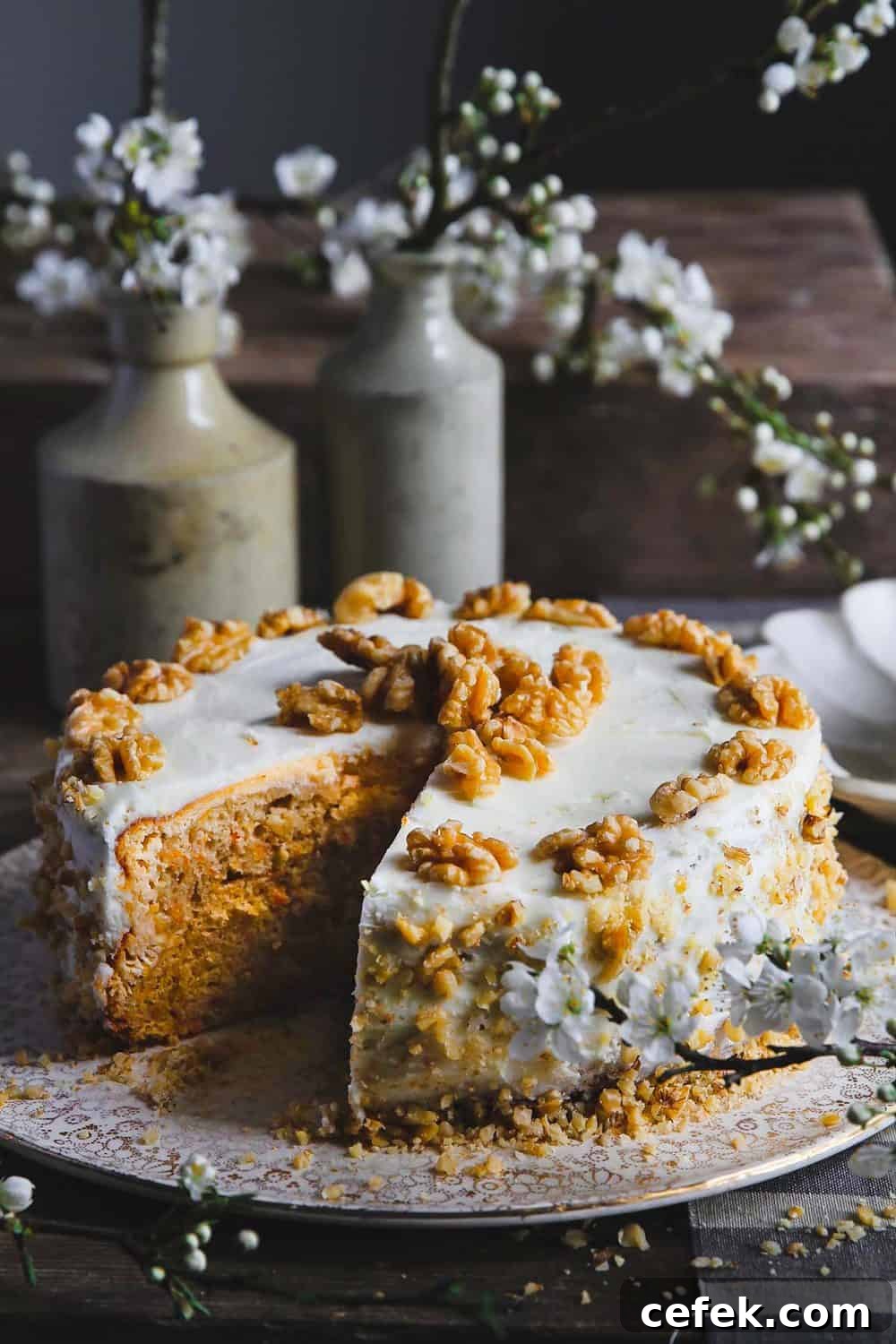
Fantastic for any occasion, this perfectly spiced dessert—carrot cake with a cheesecake swirl and a cream cheese/sour cream topping—is light, airy, and not overly sweet.
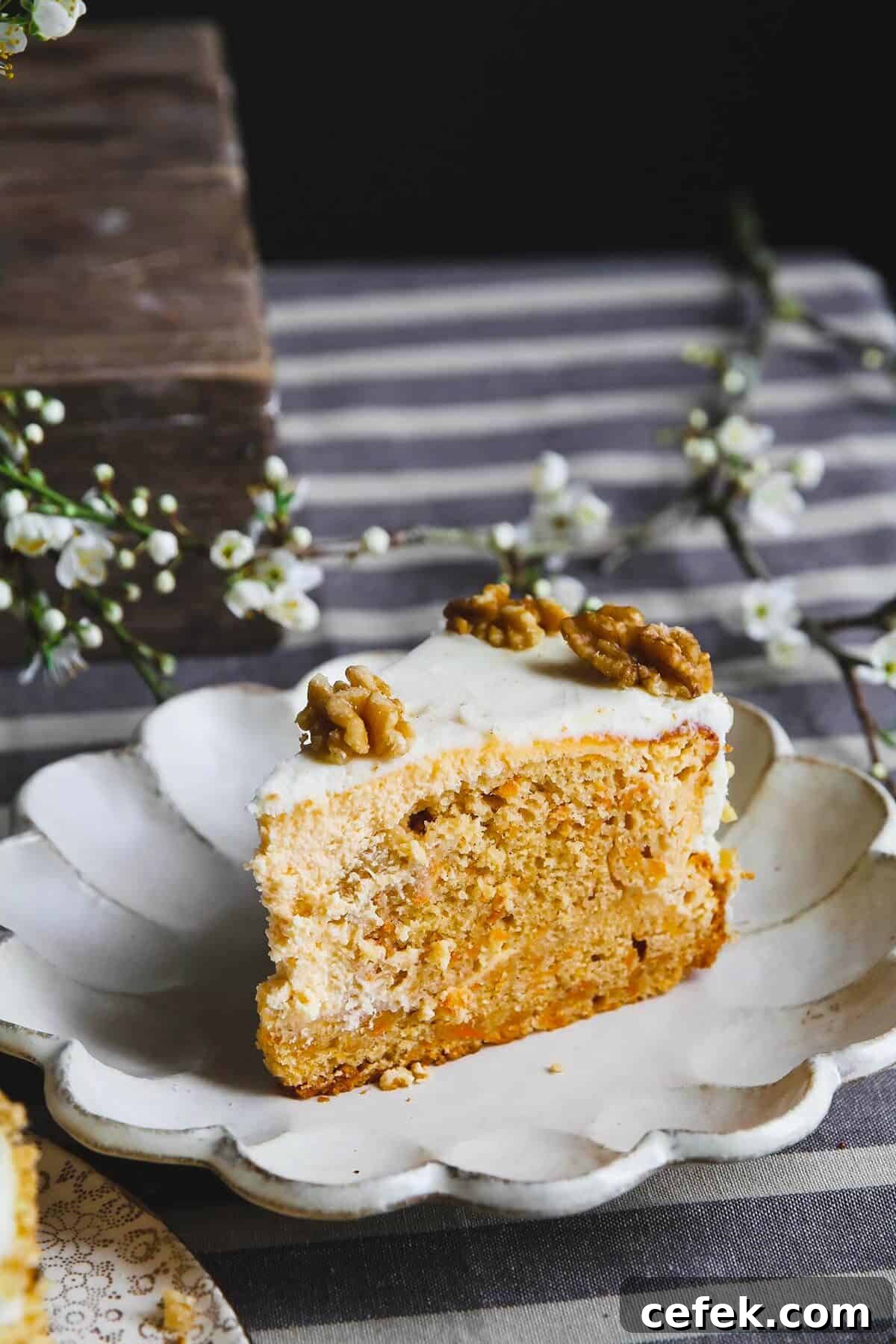
The cake itself contains no raisins or nuts, though it is pictured with walnut decoration. If you prefer, add chopped nuts, raisins, or shredded coconut to the carrot cake batter.
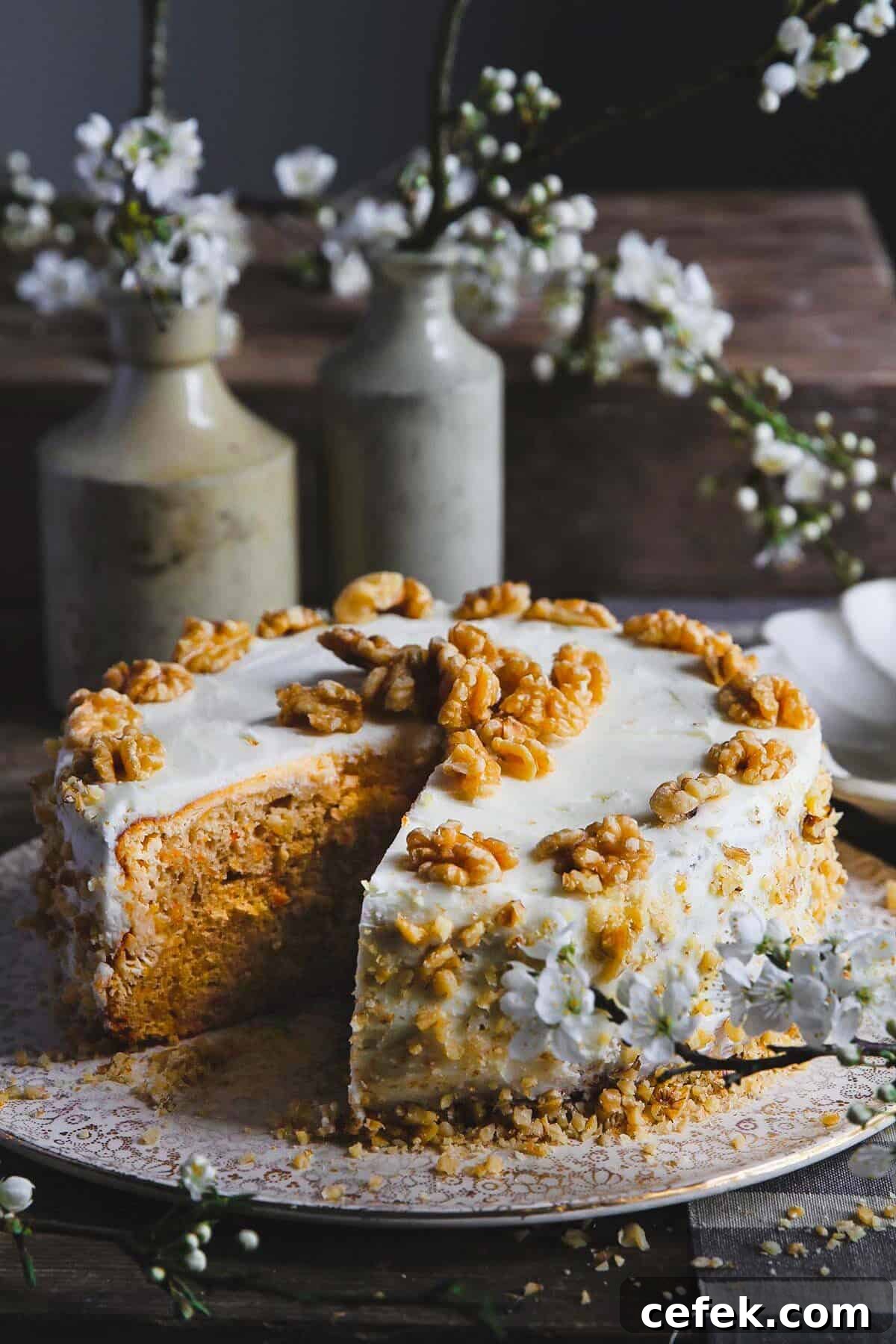
This creamy carrot cake cheesecake is ideal for Easter, but its warm spices—cinnamon, nutmeg, and vanilla with plenty of shredded carrots—make it a welcome dessert year-round, including Thanksgiving and Christmas.
If it were up to my husband, I’d bake this every week. But seasonal treats keep their charm when they aren’t constant—so I save this one for special moments.
📃 Why it Works
Combining two favorites solves indecision: a tender carrot cake paired with a silky cheesecake swirl gives you the best of both worlds. If you love mashups, this one joins other successful fusions like tiramisu cheesecake, baklava cheesecake, and brownie pumpkin cheesecake.
With a little creativity you can dress this cake up for any holiday:
- For Easter: top with candy “robin eggs” or make small marzipan, fondant, or frosting carrots.
- For Thanksgiving: candied carrots and nuts make a festive garnish.
- For Christmas: decorate with rosemary sprigs, holly-style accents, fruit slices, or sugared cranberries for a cozy holiday presentation.
🛒 Ingredients and Notes
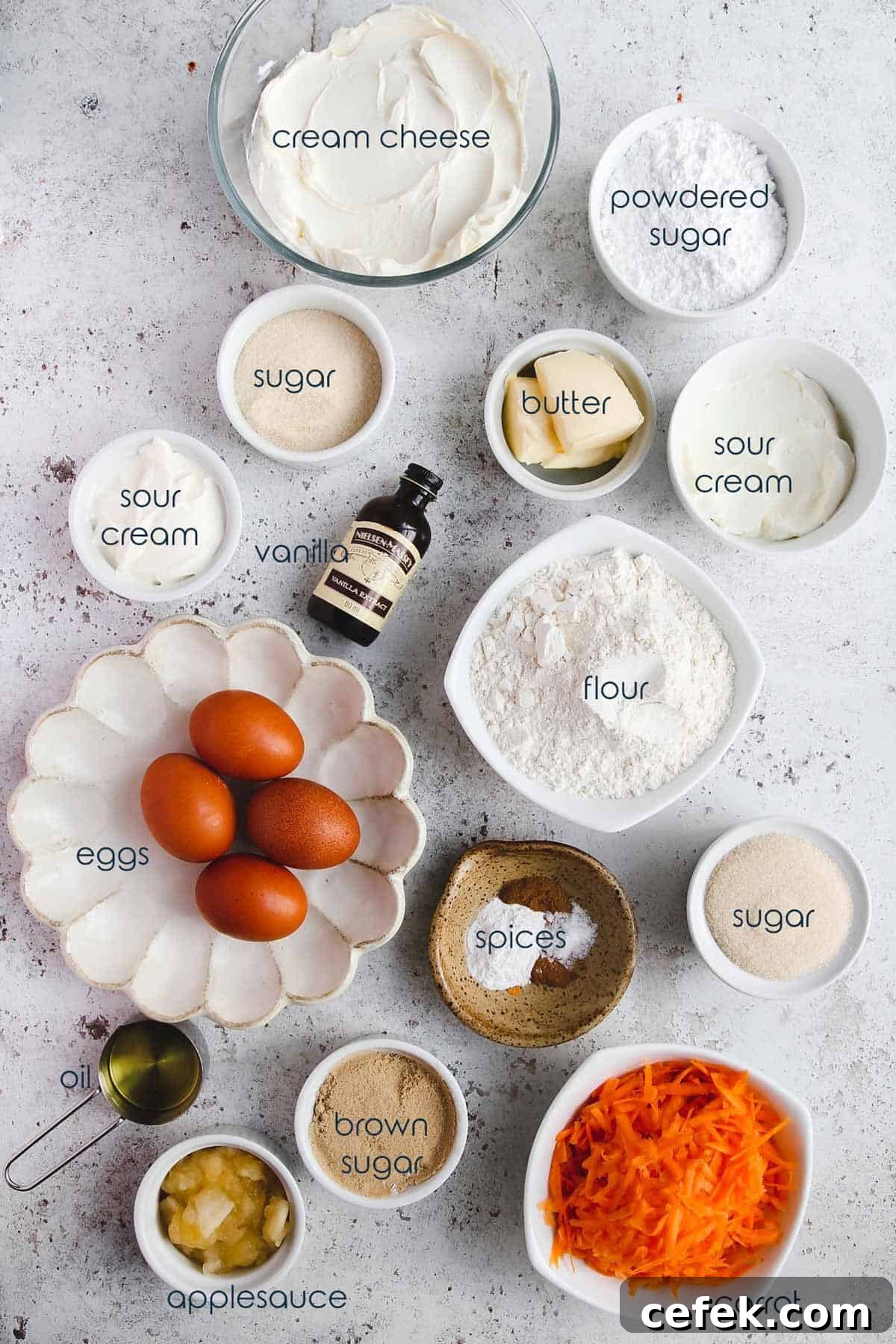
- Carrots: Coarse shreds or finely grated work—use the large or medium holes of a box grater or a food processor with a grater blade. Tossing shredded carrots with a bit of brown sugar first brings out extra sweetness.
- Cream cheese: Full-fat cream cheese gives the creamiest cheesecake layer. Light cream cheese is usable but may produce a slightly runnier batter; add 1–2 teaspoons of flour if needed to firm it up.
- Applesauce: Unsweetened applesauce keeps the cake balanced; if you have sweetened applesauce, it will make the cake sweeter. You can also substitute grated apples or pears.
- Sour cream: Included in both the cheesecake and the frosting, sour cream adds brightness and prevents the cake from becoming too rich.
🔪 Instructions
Step 1 – Carrot Cake Layer
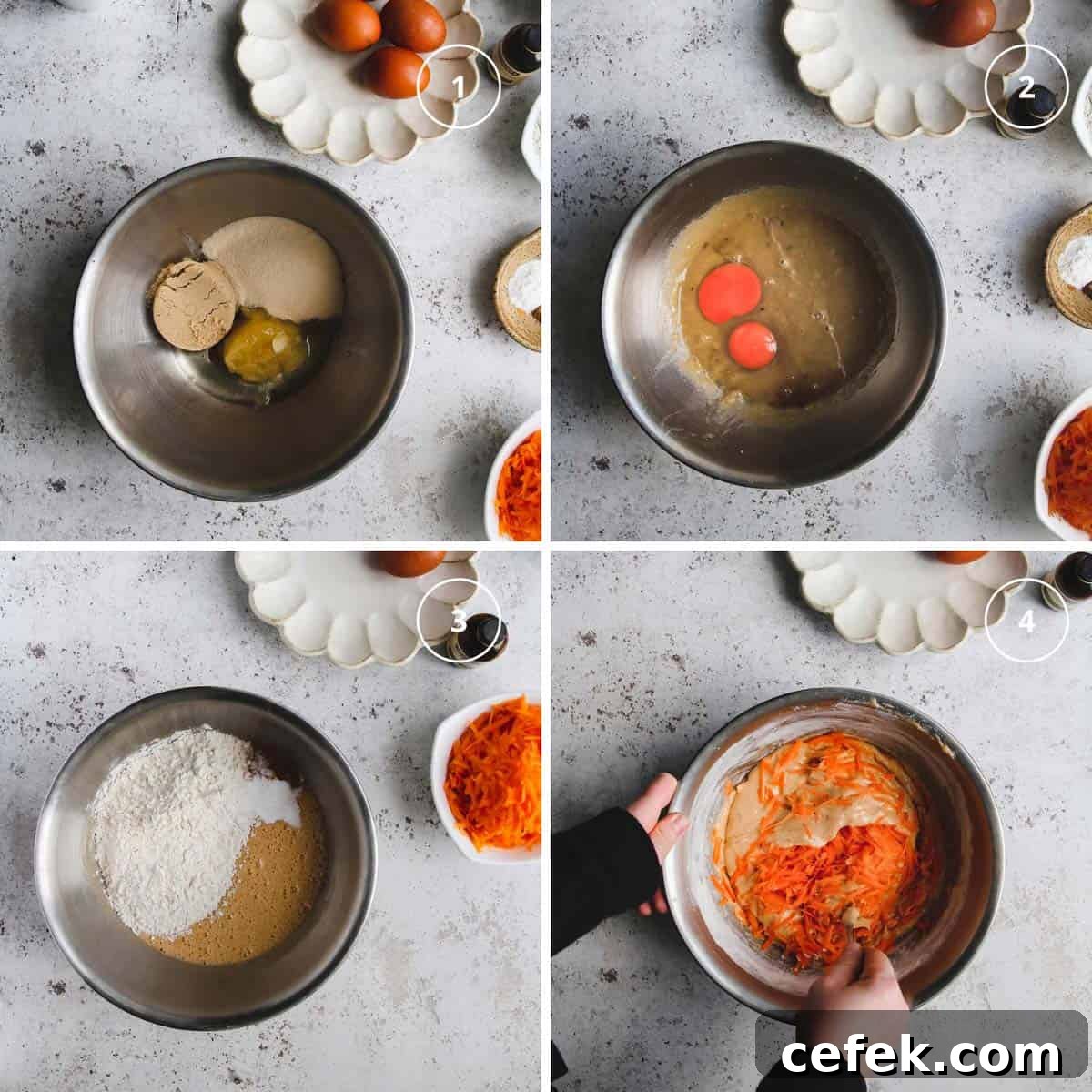
- In a large bowl, beat together oil, applesauce, sugar, and brown sugar until smooth.
- Add vanilla and eggs; beat until the mixture is creamy and light.
- Stir in flour, baking powder, nutmeg, cinnamon, and salt until just combined.
- Fold in the shredded carrots.
Step 2 – Cheesecake Layer & Assemble
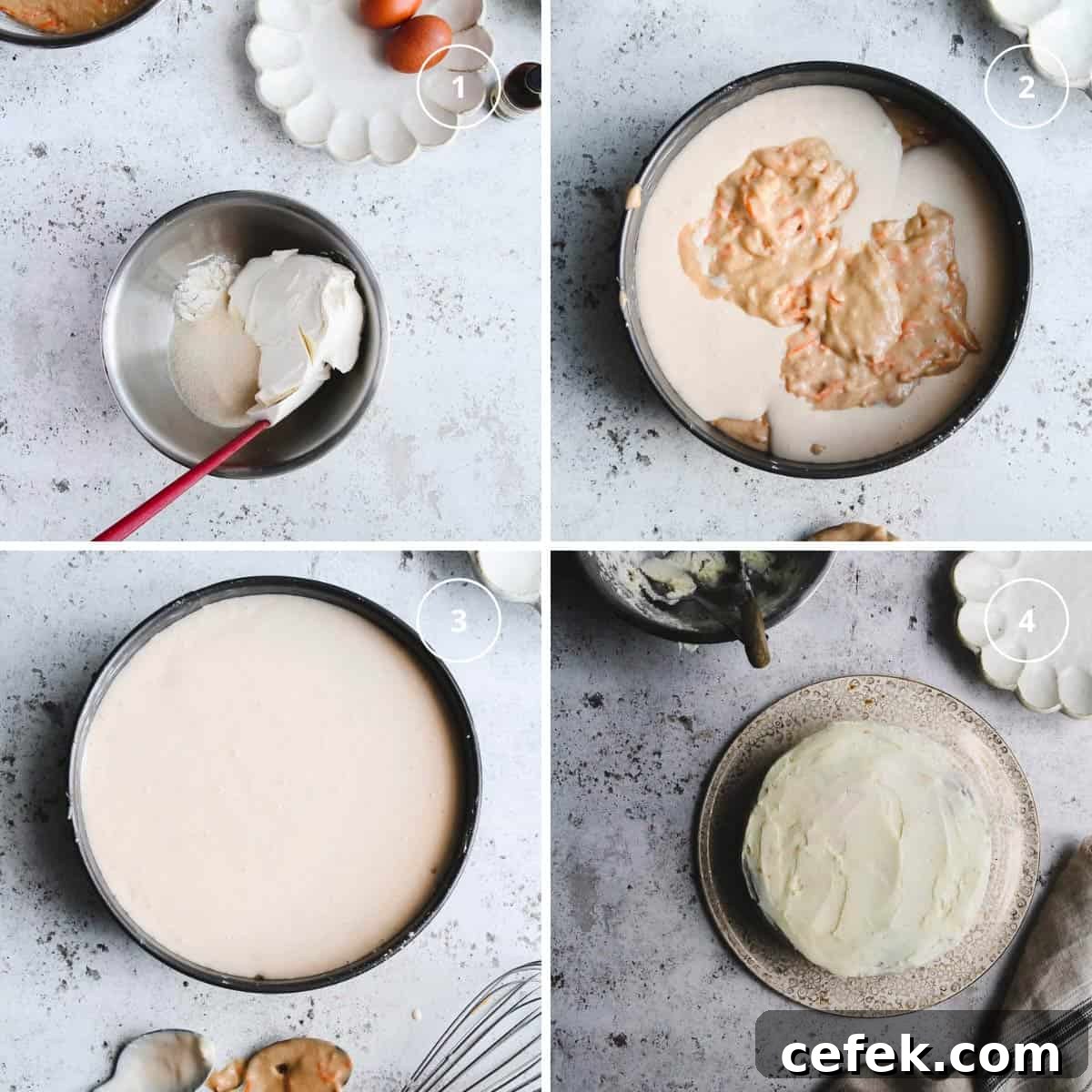
- In a medium bowl, beat cream cheese, flour, and sugar until smooth. Add eggs one at a time, mixing just until combined. Stir in vanilla and sour cream; do not overbeat.
- Pour half of the carrot cake batter into a greased 8-inch springform pan. Dollop half of the cheesecake mixture on top in large spoonfuls, then add the remaining carrot batter around and over the cheesecake dollops.
- Spoon the remaining cheesecake mixture on top and smooth gently. Bake at 350°F for about 60 minutes. The center should still be slightly soft and jiggly when done. Cool completely, cover with foil, and chill in the refrigerator at least 6 hours or overnight.
- For the frosting: beat cream cheese and butter until smooth. Add powdered sugar gradually until lump-free, then mix in vanilla and sour cream. Spread evenly over the chilled cake and chill again until set. Decorate as desired.
Recipe Notes:
- Shredding carrots: A food processor with a grater blade speeds prep—cut carrots into chunks first.
- Macerate carrots: Toss shredded carrots with brown sugar briefly to intensify their natural sweetness.
- You may use a 9-inch springform pan, but the cake will be shorter.
- Prevent burning: Place a pan of water on the lower oven rack and bake the springform one rack above to protect the bottom; this can extend baking time by 10–15 minutes.
- If your pan isn’t leakproof, set it on a baking sheet to catch drips. Tent the top with foil if browning too quickly.
- Slicing tip: Run a long sharp knife under hot water, dry it, and slice while the blade is warm for clean cuts.
- Oven temperatures vary—especially gas versus electric—so monitor the cake as it approaches 60 minutes. The cheesecake should still be slightly soft in the center when removed.
- The top may puff or crack during baking; it will settle as it cools and any cracks are concealed by frosting.
- Swirl patterns vary each time due to many factors (egg size, altitude, baking powder age, humidity, oven differences), so expect natural variation.
- For decorations: use chopped pecans or walnuts, or reserve 2 tablespoons of frosting, color one orange and one green, and pipe small frosting carrots using sandwich bags with the corner snipped.
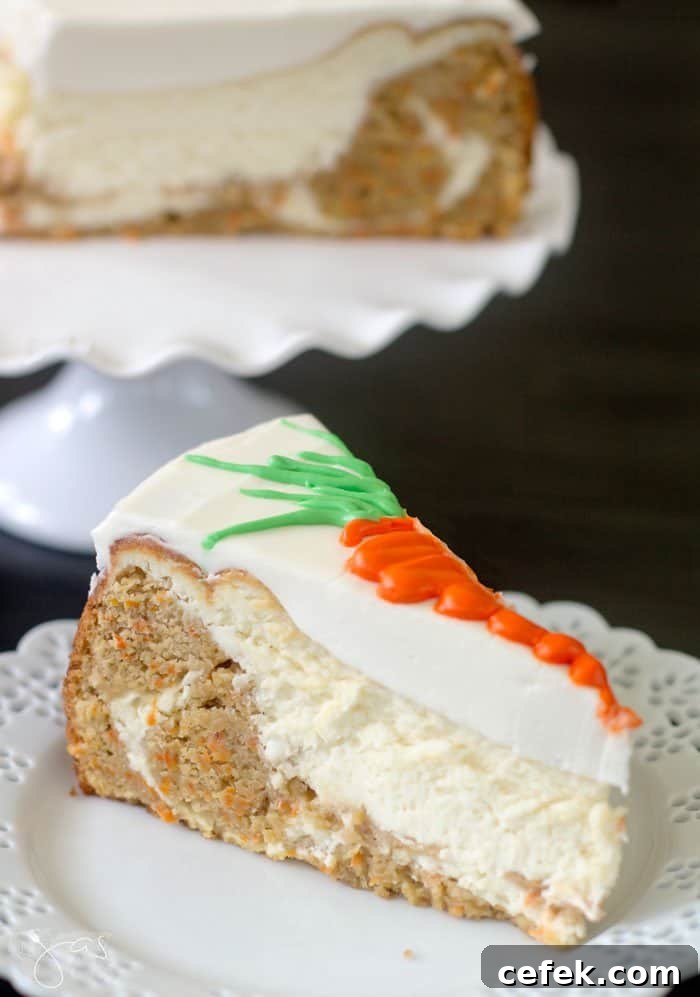
Help! My carrot cheesecake “cracked” on top.
Cracking can happen for several reasons. A water bath isn’t necessary—extra moisture can make the cake soggy. Try these tips to reduce cracking:
- Don’t overbeat the batters.
- Bring refrigerated ingredients to room temperature before mixing to avoid lumps and excess air.
- Add a teaspoon of cornstarch or potato starch to the dry ingredients to help stabilize the cheesecake.
- Turn the oven off 10–15 minutes early and let the cake cool inside to reduce sudden temperature changes.
❓ Frequently Asked Questions
You can experiment with boxed mix, but be aware you may need a larger pan or to use less batter to avoid overflow.
Yes. Substitute the all-purpose flour with a 1:1 gluten-free flour blend in the same amount called for in the recipe.
Yes. This cheesecake tastes even better after chilling for a day or two.
Yes. Freeze the cake plain and add the frosting after it thaws for best texture.
Enjoyed this recipe? Leave a rating and a comment—feedback is always appreciated. Follow and tag if you share your bake on social media and sign up for updates if you’d like more recipes and tips.
Carrot Cake Cheesecake Recipe
Pin Recipe
Print Recipe
30 mins
1 hr
1 hr 30 mins
EQUIPMENT
- Mixing bowls
- Electric mixer
- Offset spatula
- 8-inch springform pan
Ingredients
Carrot Cake
- ½ cup oil (vegetable or canola)
- ¼ cup unsweetened applesauce
- ½ cup packed light brown sugar
- ½ cup sugar
- 1 teaspoon vanilla extract
- 2 large eggs
- 1 ¼ cups all-purpose flour
- 1 teaspoon baking powder
- ⅛ teaspoon ground nutmeg
- 1 teaspoon ground cinnamon
- ¼ teaspoon salt
- 1 ¼ cups shredded carrots (about 10 oz.)
Cheesecake
- 16 ounces cream cheese, softened
- 1 teaspoon all-purpose flour
- ½ cup sugar
- 2 large eggs
- 1 teaspoon vanilla extract
- ½ cup sour cream
Frosting
- 3 ounces cream cheese, room temperature
- 2 tablespoons butter, softened
- 1 ½ cups powdered sugar
- 1 teaspoon vanilla
- 1 tablespoon sour cream
Instructions
Carrot Cake
- Beat together oil, applesauce, sugar, and brown sugar until smooth. Add vanilla and eggs and beat until creamy and light.
- Stir in flour, baking powder, nutmeg, cinnamon, and salt until just combined. Mix in the carrots. Tap the bowl to release large air pockets.
Cheesecake
- Beat cream cheese until smooth. Add flour and sugar and beat until creamy. Add eggs one at a time, then vanilla and sour cream. Do not overbeat. Tap the bowl to release air bubbles.
Assemble
- Preheat oven to 350°F. Grease an 8-inch springform pan and oil the sides or line with parchment.
- Pour half the carrot batter into the pan. Dollop half the cheesecake on top—do not spread. Add the remaining carrot batter around the cheesecake dollops and spread the remaining cheesecake on top.
- Tap the pan to remove air bubbles. Bake 60–70 minutes. Loosen the edge with a knife after baking, cool in the pan about an hour, then cover and chill at least 6 hours or overnight.
Frosting
- Beat cream cheese and butter until smooth. Add powdered sugar gradually, then vanilla and sour cream. Spread over the chilled cake, cover, and chill before serving.
- Release the springform sides, decorate, and store the cake refrigerated in an airtight container.
Notes
- Shredding carrots in a food processor saves time—cut them into chunks first.
- Macerating shredded carrots in brown sugar releases extra sweetness.
- Using a 9-inch pan yields a shorter cake.
- To protect the bottom from burning, place a pan of water on the oven floor; baking time may increase slightly.
- If your springform leaks, bake it on a baking sheet. Tent with foil if the top browns too fast.
- Use a warmed knife for cleaner slices.
- Oven variability may require extra baking time; the center should be slightly jiggly at removal.
- Cracks are normal and are hidden by frosting once the cake cools.
- This cake freezes well; add frosting after thawing.
Nutrition
Let us know how it was!
Update Notes: This recipe was originally published in November 2017 and updated in March 2021 with new photos and tips.