
Buttermilk and sour milk are versatile ingredients that add flavor and richness to many dishes. This guide shares 10 simple and creative ways to use buttermilk and sour milk in cooking and baking, plus answers to common reader questions about making and substituting them.
Readers’ Homemade Buttermilk Questions Answered
We often get questions about buttermilk and our homemade buttermilk recipe, like “How do I use homemade buttermilk?” or “What if I don’t have any buttermilk to start?” Here are clear, practical answers to help you make and use buttermilk and sour milk with confidence.
- You can freeze buttermilk. Like regular milk, it separates after freezing, so shake well before using. It’s fine for cooking and baking, though the texture may not be ideal for drinking.
- Dried buttermilk in a can works great. It stores a long time when unopened and keeps well after opening if stored properly.
- Buttermilk can replace milk in many recipes, but be careful when a recipe uses baking powder. Because buttermilk is acidic it affects leavening. If substituting buttermilk for milk, replace each 2 teaspoons of baking powder with 1/2 teaspoon of baking soda to balance the acidity.
- You can usually interchange yogurt, sour cream and buttermilk. If you need a looser texture, use 1/4 cup milk plus 3/4 cup yogurt or sour cream as a substitute for 1 cup of buttermilk.
- To make sour milk quickly, stir 2–3 teaspoons of lemon juice or vinegar into a cup measuring container, then add milk to the 1-cup line and let it sit for 10 minutes.
- Buttermilk and sour milk aren’t always interchangeable without affecting texture. When a recipe specifically calls for buttermilk, using real cultured buttermilk will usually give better results.
-Jill
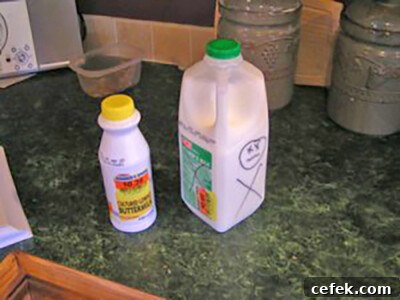
Today I made some homemade buttermilk. It’s one of the easiest things to prepare. I had milk that had begun to sour, and Mike made sure we all noticed (see picture). I also found a carton of buttermilk marked down at the grocery store for $0.39, so I used that to culture more milk. It’ll be ready in the morning — perfect for pancakes.
Homemade buttermilk recipe tips: It works best with whole milk for a creamier result, but skim milk will also culture — it’ll just be thinner. If you’re converting from store-bought buttermilk, you can add a small amount to regular milk and let it sit at room temperature to culture. I sometimes pour the cultured buttermilk back into the milk container if I’ve already used part of the milk for biscuits.
-Tawra
One reader asked why buttermilk left to sour is fine, but milk left in a child’s sippy cup is unsafe.
It comes down to the difference between buttermilk, sour milk, and spoiled milk.
- Buttermilk used to be the watery liquid left after churning butter; now it’s typically made by adding lactic acid bacteria to pasteurized milk, producing a cultured, tangy milk that’s safe and useful in cooking.
- Sour milk can be made intentionally by adding an acid like vinegar or lemon juice to regular milk to create an acidic liquid for recipes.
- Spoiled milk is milk that has been left to grow uncontrolled bacteria and has gone bad, such as milk left in a child’s sippy cup; this isn’t safe to consume or use.
How homemade buttermilk works: A common method is to mix 1–2 cups of cultured buttermilk into regular milk and let it sit. The lactic acid bacteria from the starter culture ferments the milk, producing acids that inhibit harmful bacteria. This is similar to how beneficial gut bacteria crowd out harmful microbes — the cultured bacteria make the environment safe and flavorful.
Sour milk made with vinegar or lemon juice also becomes acidic, and that acidity helps limit bad bacteria in the short term. That acidic environment is the same reason why pickled foods have a long shelf life.
While buttermilk and sour milk can often substitute for each other, cultured buttermilk tends to produce a slightly different, usually fluffier texture in baked goods like pancakes and biscuits. That’s why many recipes specifically call for buttermilk — it gives results you won’t get from a simple vinegar-based sour milk substitute.
Buttermilk pancakes and biscuits typically turn out fluffier when made with true buttermilk rather than a quick vinegar-based sour milk. The cultured bacteria contribute to leavening and texture in subtle ways.

Our cookbooks are full of practical recipes and tips to make home cooking easier and more affordable.