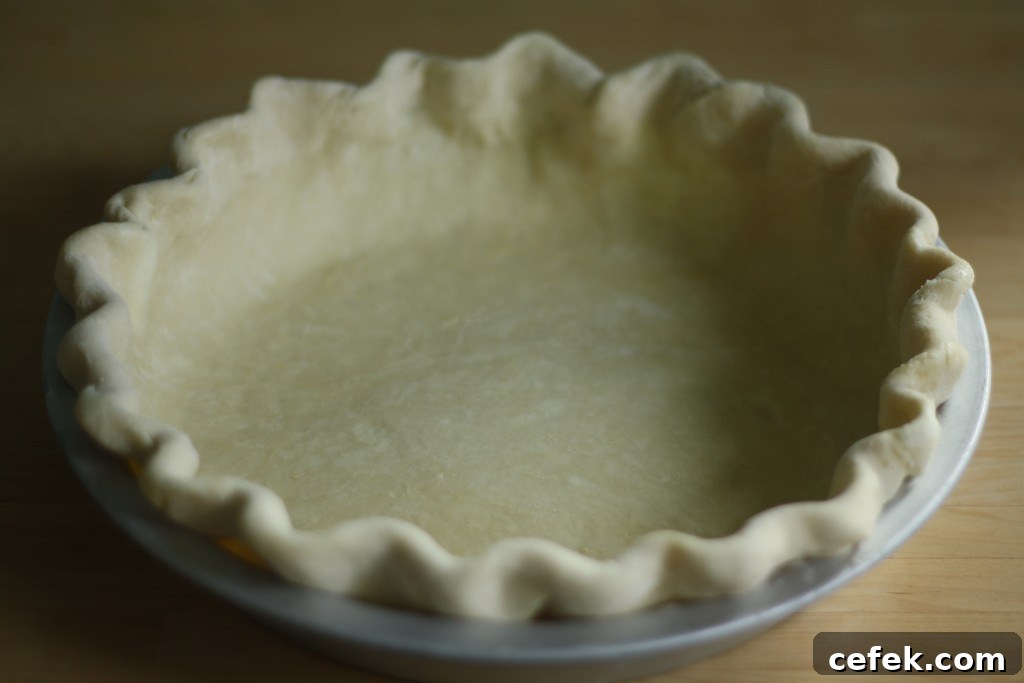
Making a pie crust from scratch is one of those comforting, old-fashioned kitchen tasks that instantly makes you feel like a nurturing home cook. In a world full of gadgets, pie dough is gloriously simple: basic ingredients, a few easy techniques, and attention to keeping everything cold.
Homemade pie crust often gets a bad reputation, but it doesn’t have to be intimidating. There are no secret ingredients or mysterious steps—just a few practical rules: work quickly, keep your ingredients and tools as cold as possible, and be gentle with the dough. Follow these tips and you’ll soon be saying, “Making crust is a breeze.”
All-Butter Pie Crust
Makes two 9-inch single crusts or one 9-inch double crust
2 1/2 cups all-purpose flour
1 tablespoon sugar
1 teaspoon salt
2 sticks unsalted butter, frozen
1 cup water, very cold
Start by measuring a cup of water, add a few ice cubes, and chill it in the refrigerator until you need it. For best results use a metal mixing bowl (it stays colder longer). Combine the flour, sugar, and salt in the bowl and pop it briefly into the freezer so the dry ingredients stay cold. The colder everything is, the flakier your crust will be.
Use frozen butter for best layering. I prefer an all-butter crust for flavor and texture. Working one stick at a time, grate the frozen butter into the flour mixture, returning the bowl to the freezer between sticks if you can. The grated butter pieces should stay cold and coated in flour.
After you’ve grated the butter, stir the mixture with a rubber spatula so each butter piece is well coated with flour. This helps build small pockets of butter in the dough that create flakiness when baked.
Add about 1/2 cup of the ice-cold water (discard any remaining ice) and stir until the mixture is evenly moistened. You will likely need an extra 1/4 cup of water, but add it sparingly—one tablespoon at a time—until the dough just holds together. Test for readiness by pressing some mixture against the side of the bowl; when it forms and holds a shape, turn it out onto a clean surface.
Working quickly but gently, bring the dough together into a single cohesive ball. Avoid overworking it; handling the dough minimally keeps the butter cold and prevents gluten from developing excessively, which would make the crust tough.
Divide the dough into two even portions. Pat each into a flat round, wrap separately in plastic wrap, and chill in the refrigerator for at least two hours before rolling. Chilling lets the flour hydrate and the butter firm up, which improves texture and makes rolling easier.
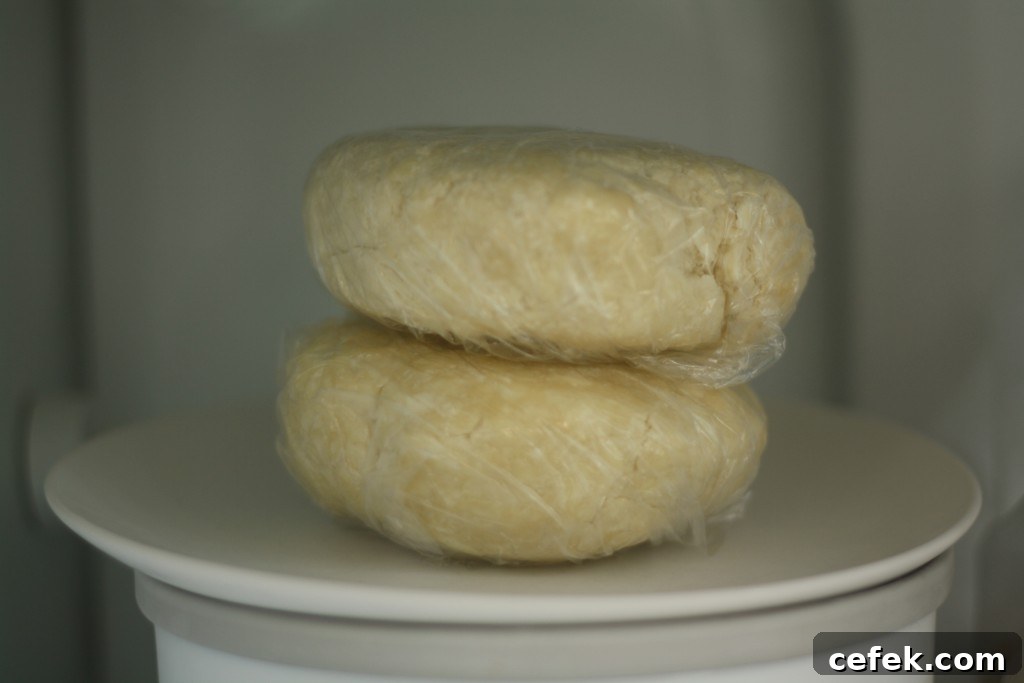 The dough will keep in the refrigerator for about a week or in the freezer for longer storage. If frozen, thaw overnight in the fridge before using.
Dough Rolling 101: To roll a single-crust pie you’ll need a pie plate, a small cup of flour for dusting, a rolling pin, and one portion of chilled dough. Generously flour your work surface so the dough doesn’t stick and your rolling goes smoothly.
Begin rolling the dough into a rectangle rather than a circle. This technique builds thin layers of butter and flour—similar to laminating a croissant—which will bake into a flaky crust. Fold the rectangle into thirds like a letter, rotate it 90 degrees, and repeat the roll-and-fold one more time. Chill the dough for 30 minutes after these folds to keep it cold and manageable.
After chilling, flour your surface again and roll the dough from the center outward into a large circle about 2–3 inches larger than your pie pan. Flip the dough occasionally to keep thickness even and dust more flour as needed to prevent sticking.
When the dough reaches the right size, fold it into quarters and gently lift it into the pie plate. Unfold carefully and press the dough into the pan so it conforms to the sides. Trim the excess, leaving about an inch or two of overhang around the rim.
Fold the overhang under itself so the edge is flush with the pan. To create a decorative edge, form a V with your thumb and index finger of one hand and press the dough into the V using the index finger of your other hand, moving around the rim to create an even crimp.
With the edge finished and the crust chilled, your pie shell is ready to be filled. Whether you choose a fruit filling, custard, or something savory, starting with a well-made crust makes all the difference.
There you have it: a simple, buttery, flaky pie crust made at home. With practice you’ll find your rhythm, and baking from scratch will become a joyful and rewarding habit.