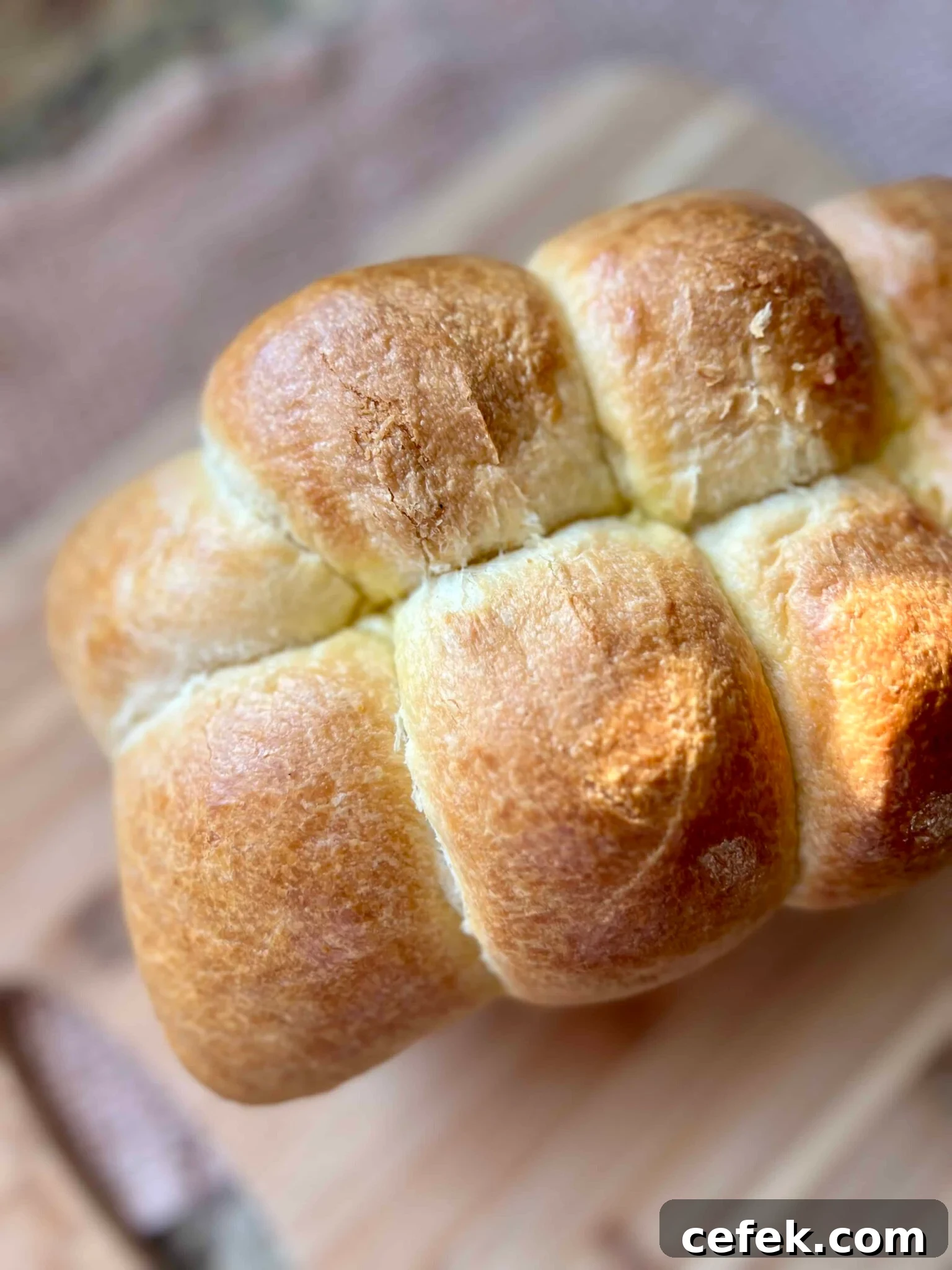
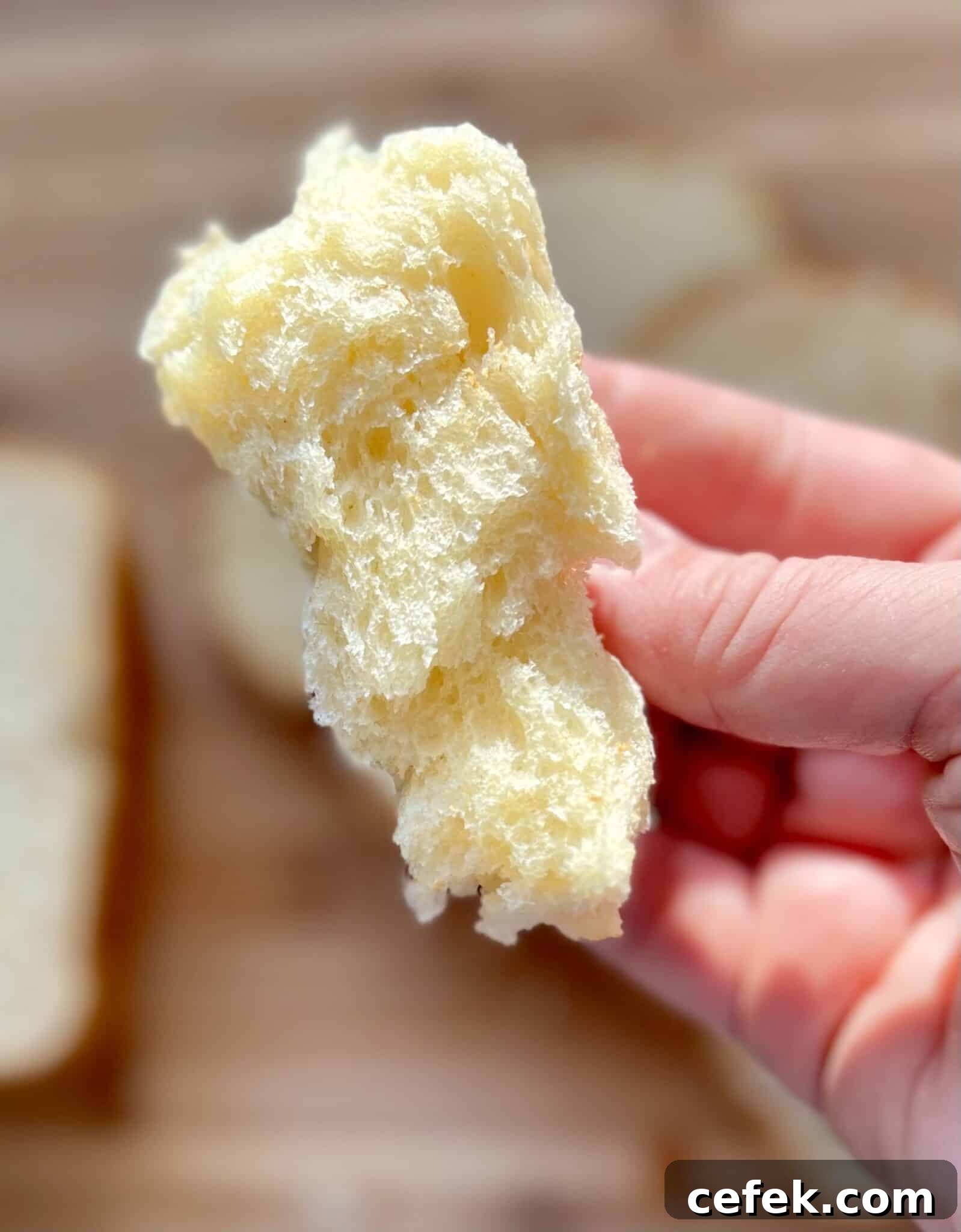
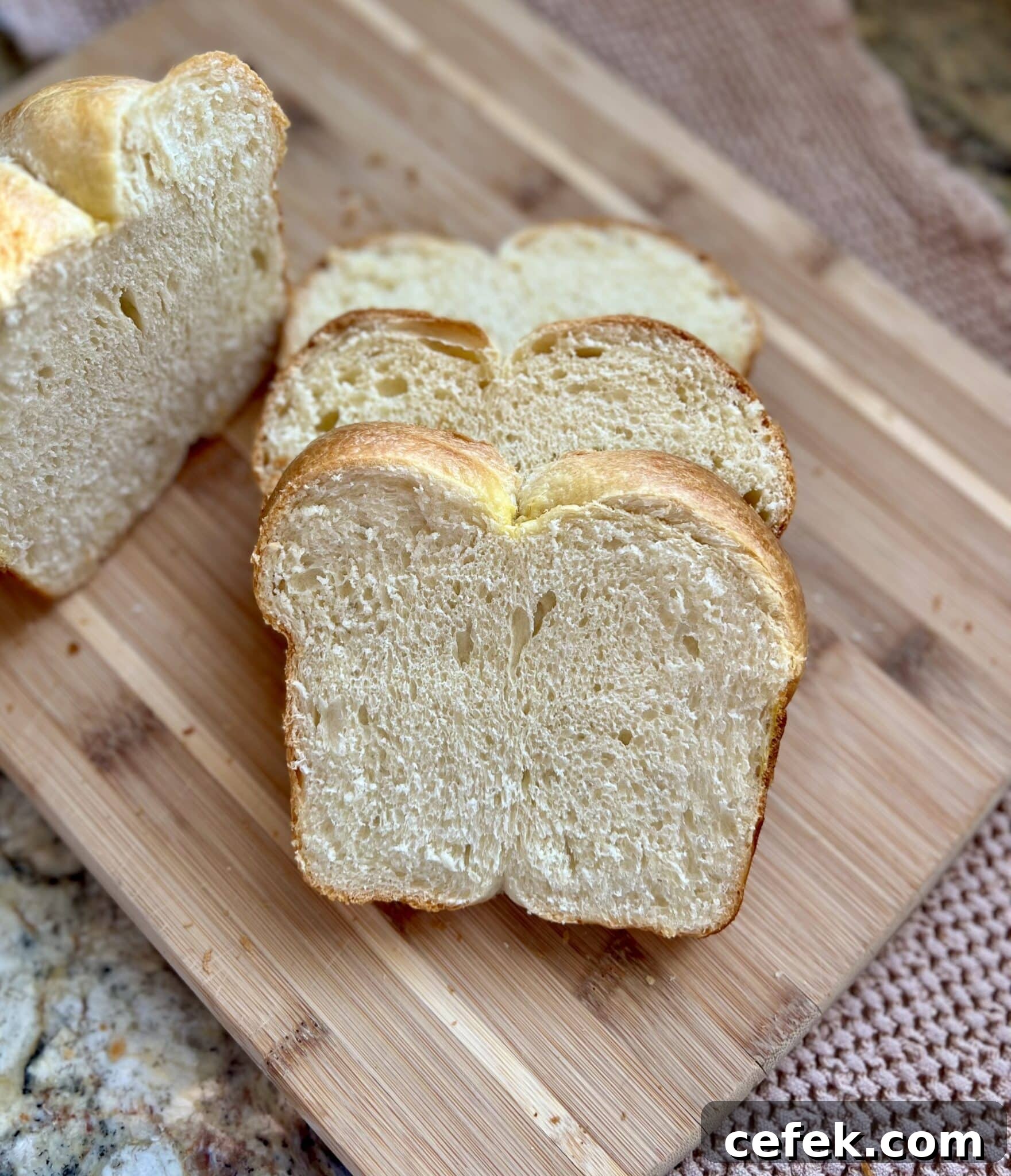
Super soft, light and tender—it’s hard to find words that do justice to this sourdough brioche. Think croissant-like flavor with an impossibly cloud-like texture: buttery, pillowy, and the softest bread you’ll taste—this is Sourdough Brioche.
This brioche is wonderful plain, with homemade jam, or turned into French toast. It’s also ideal for elevated sandwiches, similar to a Sweet Braided Sourdough Loaf. If you want the same pillowy texture with a sweeter profile, try chocolate chip or babka variations—each brings its own delicious twist.
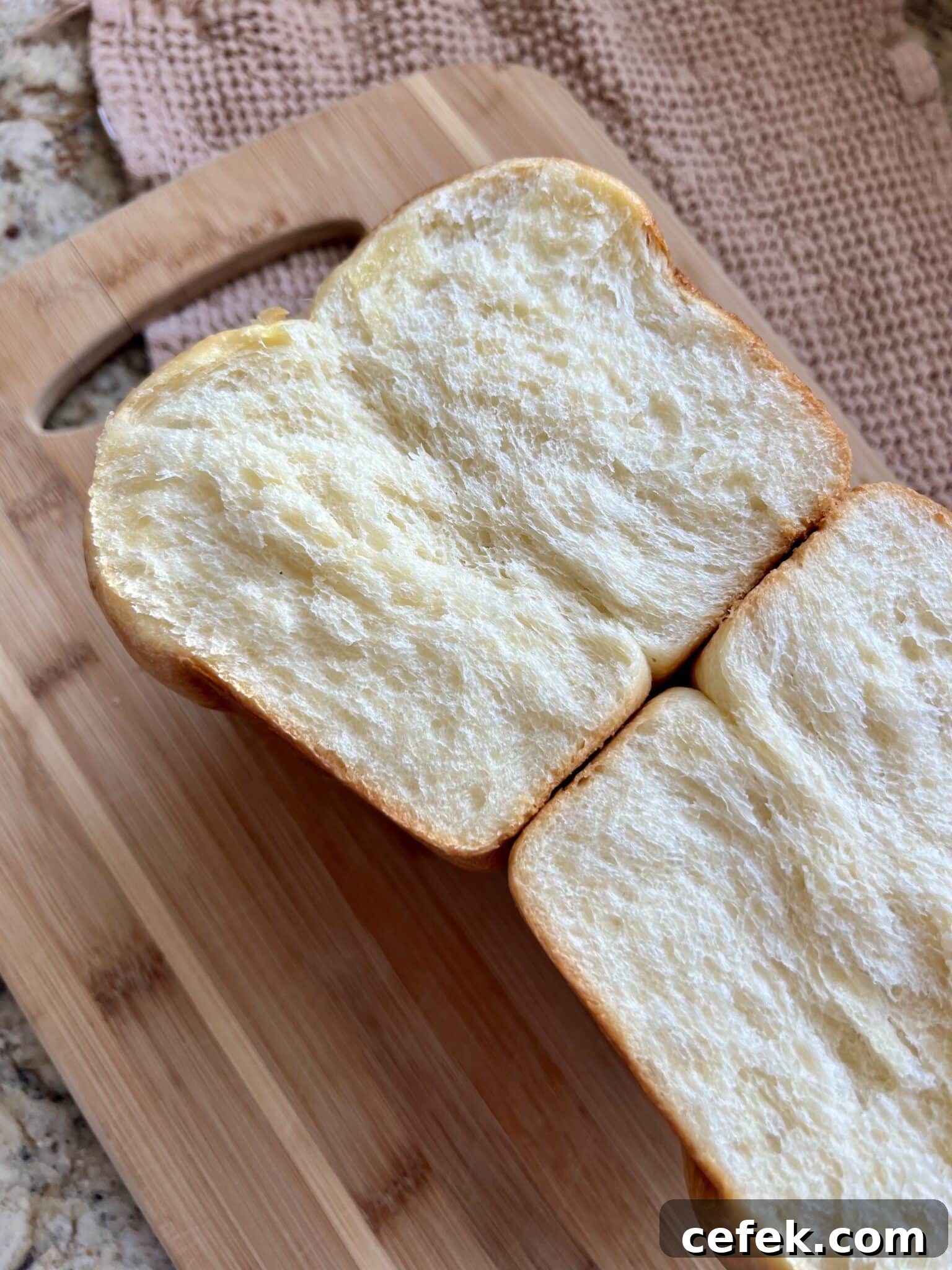
Table of Contents
- Quick Look: Sourdough Brioche
- Why You’ll Love Sourdough Brioche
- Important Ingredients
- Substitutions
- Sourdough Baker’s Timeline
- How to Make Sourdough Brioche
- How to Store Leftovers
- Amy’s Recipe Tip
- Frequently Asked Questions
- Favorite Sourdough Recipes
- Sourdough Brioche Recipe
Quick Look: Sourdough Brioche
- Prep Time: 45 minutes
- Fermentation Time: 30 hours (includes overnight rests)
- Bake Time: 45 minutes
- Total Time: 31.5 hours (mostly hands-off)
- Servings: 2 loaves, about 30 slices
- Calories: ~217 kcal per slice (approximate)
- Cook Method: Baked in two 9×5 loaf pans
- Flavor & Texture: Buttery, pillowy crumb with a tender, soft interior
- Difficulty: Advanced — long knead, long rise, and temperature control required
SUMMARIZE AND SAVE THIS RECIPE CONTENT ON:
Why You’ll Love Sourdough Brioche
- Pillowy Soft – This brioche has a cloud-like texture that makes exceptional French toast and an extraordinary sandwich loaf.
- Enriched Dough – With eggs and a generous amount of butter, the enriched dough yields a tender, light crumb unlike ordinary breads.
- 100% Sourdough – Fermented with natural sourdough for flavor and structure; it’s a worthwhile approach for those who prefer naturally leavened breads.
- Worth the Challenge – This is an advanced recipe that rewards patience and attention to temperature. A stand mixer is recommended for best results.
New to sourdough? Start with a sourdough starter and beginner guides if you’re unfamiliar—naturally fermented dough takes longer but offers excellent flavor and texture.
Important Ingredients
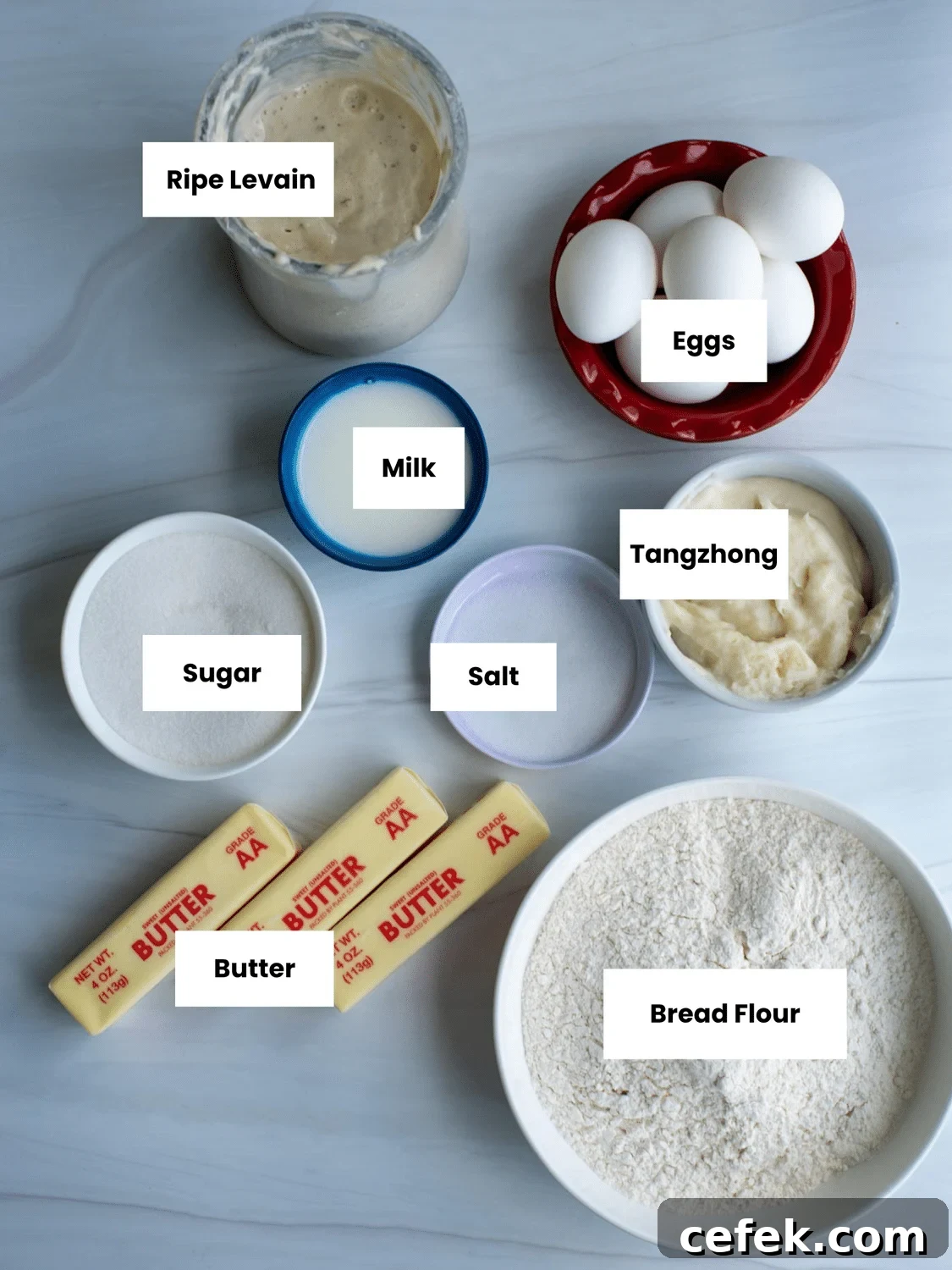
- Levain – A sweet levain (ripe starter, flour, water and a little sugar) gives lift while keeping the flavor mild.
- Tangzhong – A cooked flour-and-milk paste that improves softness and shelf life.
- Milk – Whole milk yields the richest crumb.
- Sugar – Adds mild sweetness and balances flavor.
- Eggs – Provide richness, color and structure.
- Salt – Essential for flavor balance and proper fermentation.
- Bread Flour – Builds strong gluten for structure; all-purpose can work with adjustments.
- Unsalted Butter – Use cool-but-pliable butter added after initial mixing to preserve gluten development.
- Egg Wash – For a shiny, golden crust after baking.
See the recipe card below for full ingredient amounts and details.
Substitutions
- Sourdough Starter: Ripe starter at 100% hydration can replace the levain if desired—ensure it is active and bubbly.
- Bread Flour: Use all-purpose with added vital wheat gluten if you need to boost protein, or accept a slightly softer texture with straight all-purpose.
- Butter: Unsalted is preferred. Salted butter can work if you reduce added salt slightly; do not substitute oil.
Sourdough Baker’s Timeline
A sample schedule helps plan the bake since sourdough rises more slowly. This timeline assumes a dough temperature of about 78–80ºF.
| Day 1 | Mix levain, make tangzhong, mix dough, bulk ferment, then cold ferment overnight. |
| 8:00–11:30 AM | Build levain; keep warm until doubled and bubbly (3–4 hours). |
| 10:30 AM | Make tangzhong and cool. |
| 11:30–12:00 PM | Mix dough (without butter), then add butter and continue mixing. |
| 12:00–4:00 PM | Bulk fermentation at ~78–80ºF. |
| 4:00 PM–Next Morning | Cold fermentation in the refrigerator. |
| Day 2 | Shape, proof, and bake. |
| 8:00 AM–2:00 PM | Shape into balls, place in loaf pans, and proof in a warm spot until airy (6–7 hours at 80ºF). |
| 2:00 PM | Bake. |
How to Make Sourdough Brioche
Mix the Levain
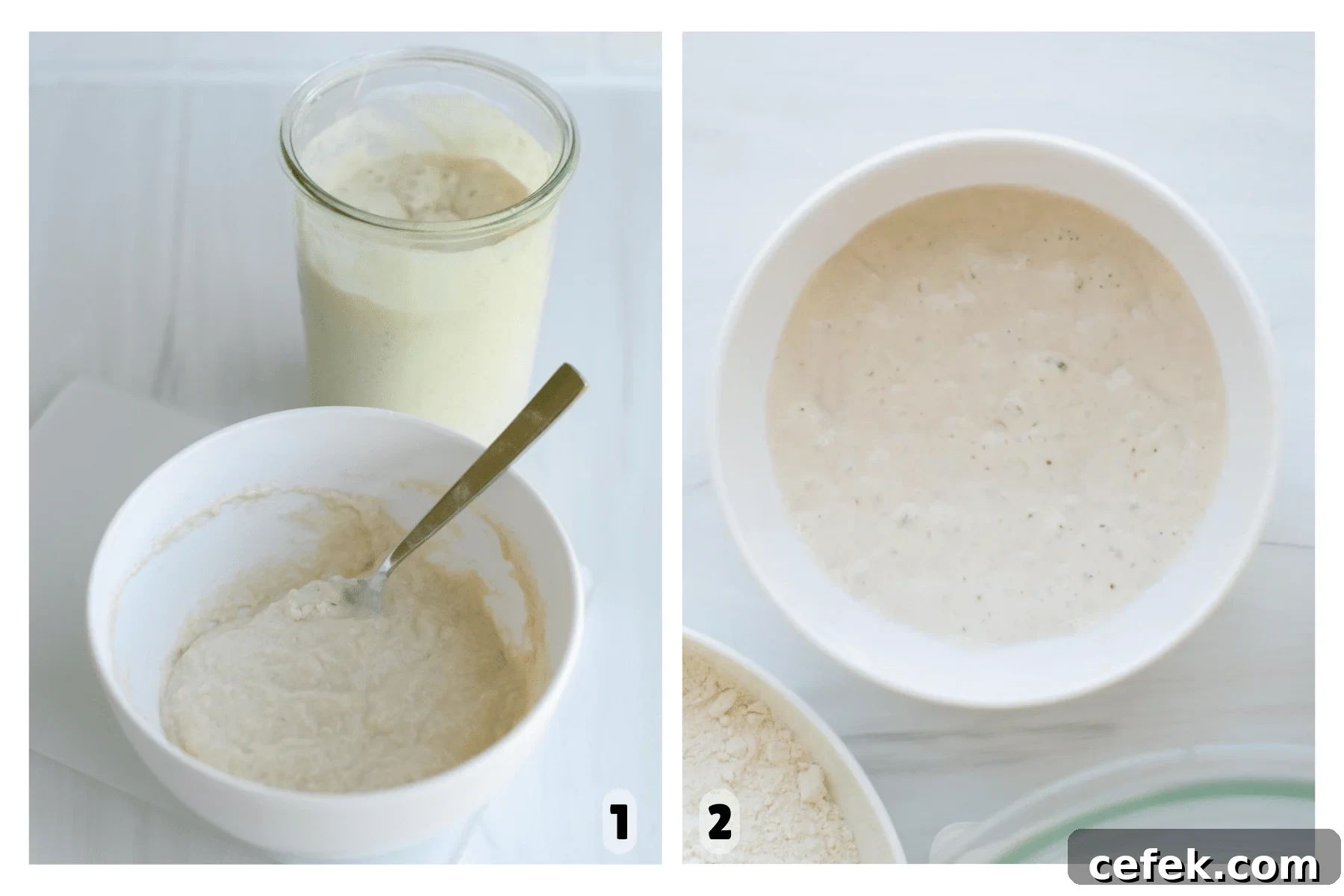
Step 1: Mix levain. Mix ripe starter with flour, water and a small amount of sugar. Keep at 78–80ºF for about 3–4 hours until doubled, bubbly and slightly peaked. This sweet levain helps the enriched dough rise while keeping the flavor mild.
Mix the Tangzhong
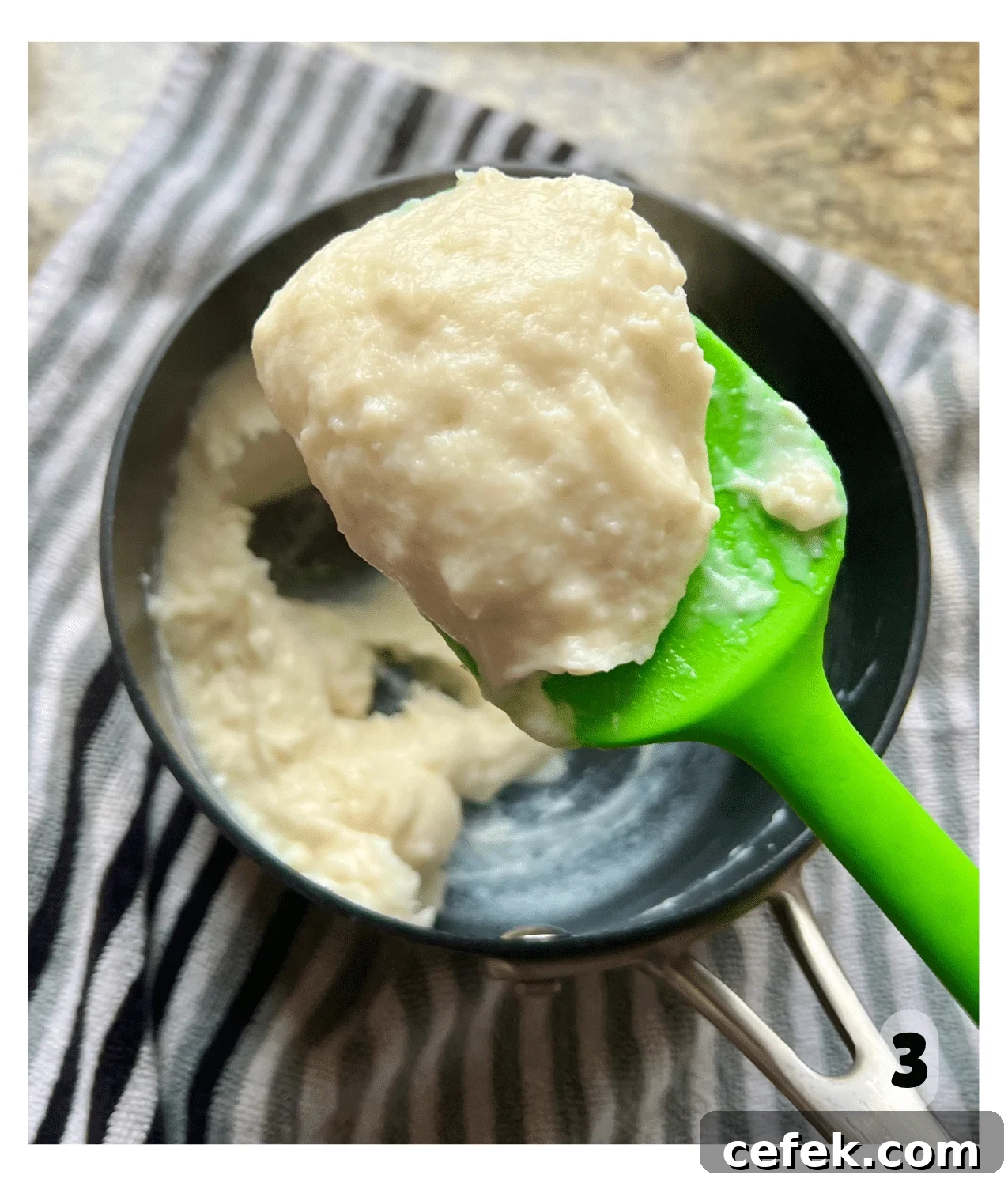
Step 2: Make tangzhong. Whisk flour and milk in a small saucepan over medium heat until it thickens into a paste, then remove from heat and cool. Tangzhong gives the loaf added softness and helps retain freshness.
Mixing the Dough
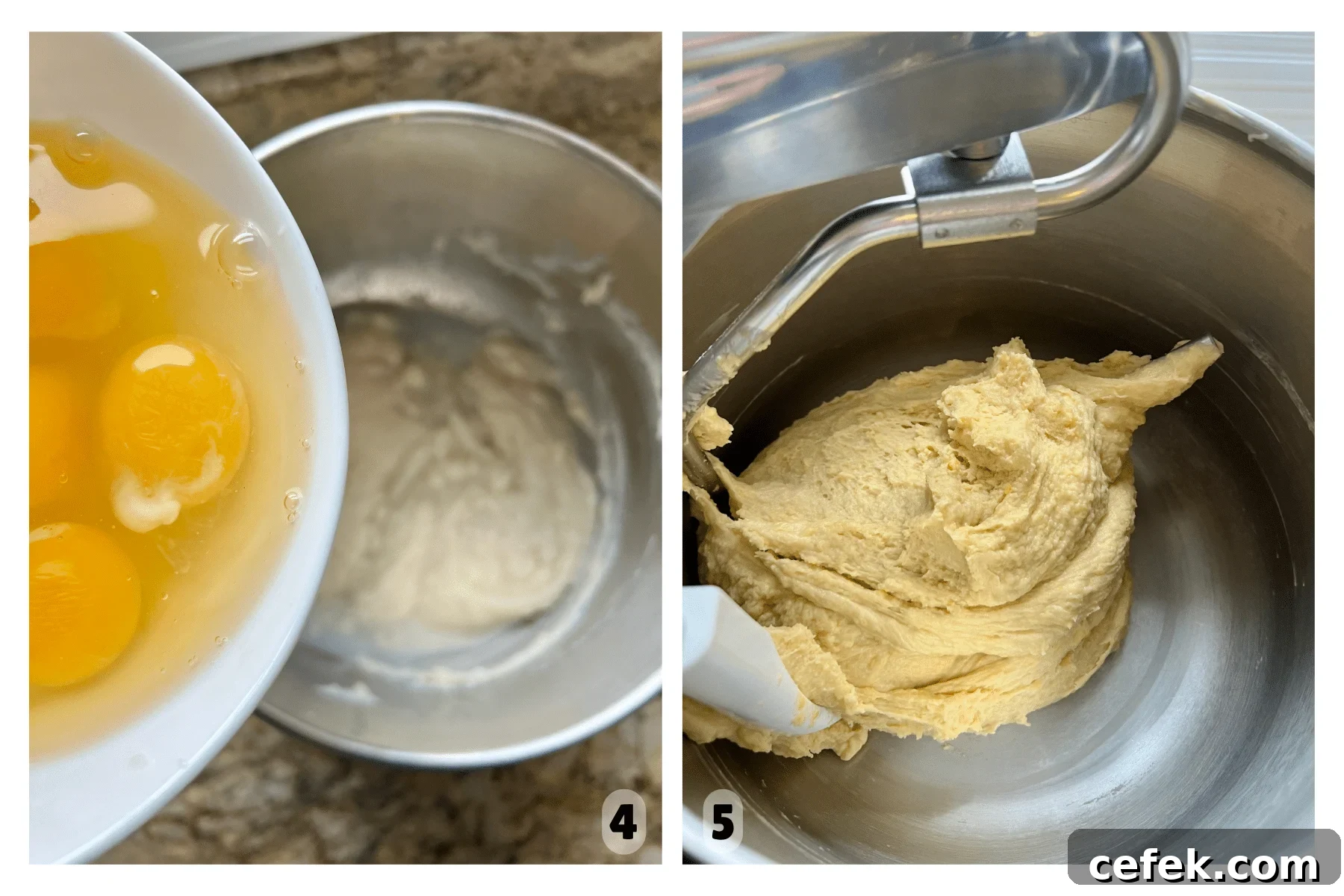
Step 3: Mix the dough. Combine cooled tangzhong, ripe levain, milk, sugar, eggs, salt and bread flour in the bowl of a stand mixer fitted with a dough hook. Knead on low to form a cohesive dough (about 5–7 minutes) before adding butter.
Adding the butter: With the mixer running, add cool-but-pliable unsalted butter in small chunks. The dough will become slack and sticky at first; continue mixing 20–30 minutes (depending on your mixer) until the dough strengthens and can pass the windowpane test.
Windowpane test: Stretch a small piece of dough—when it stretches thin enough to let light through without tearing, the gluten is developed.
Bulk Fermentation or First Rise
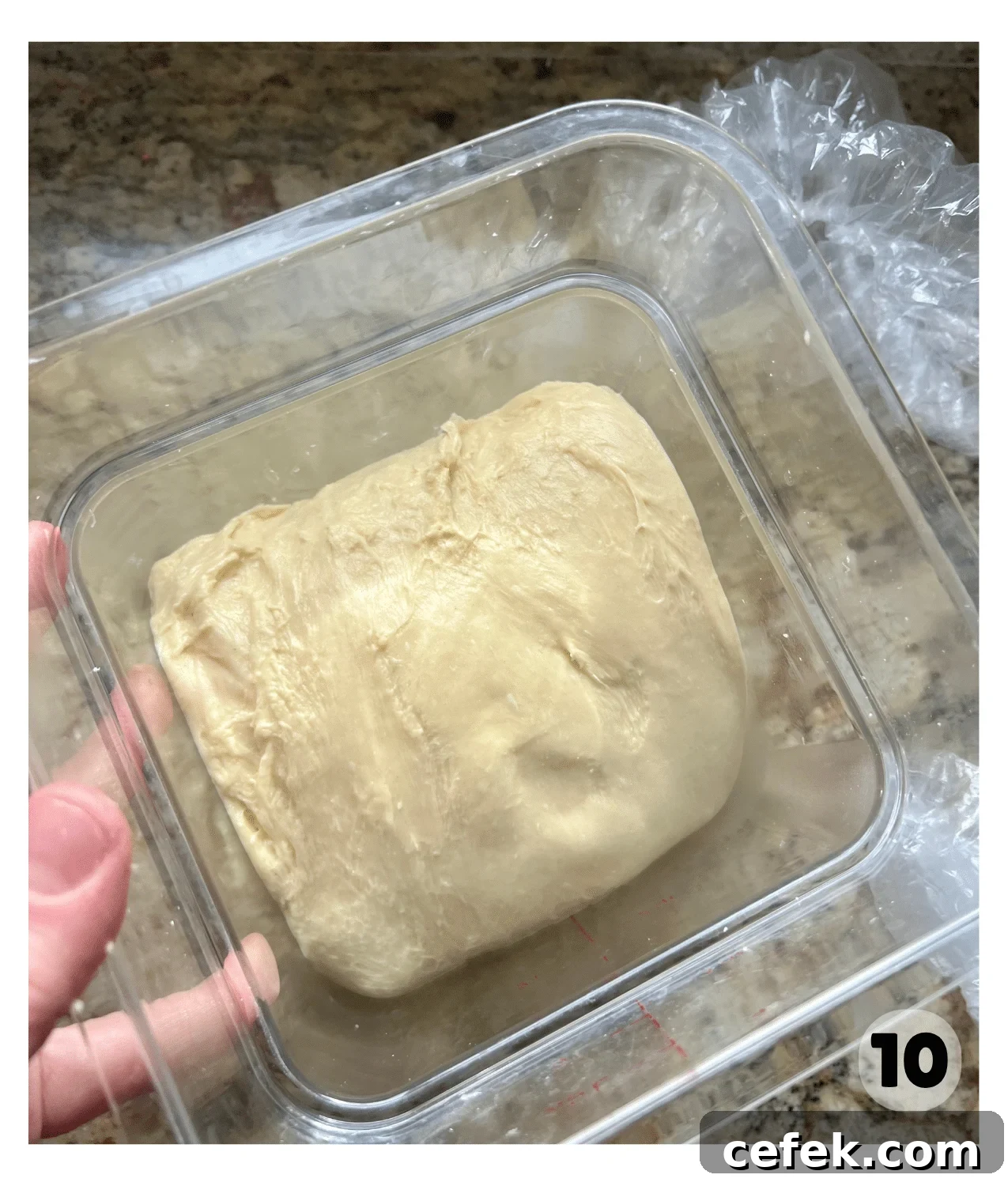
Step 4: Bulk ferment. Transfer the dough to a covered container and ferment at about 78ºF for 4–5 hours. You’re aiming for slight aeration rather than a full double. Keep temperatures steady; if the dough warms above 80ºF, chill briefly to prevent butter from melting.
Cold Fermentation or Refrigerated Rest
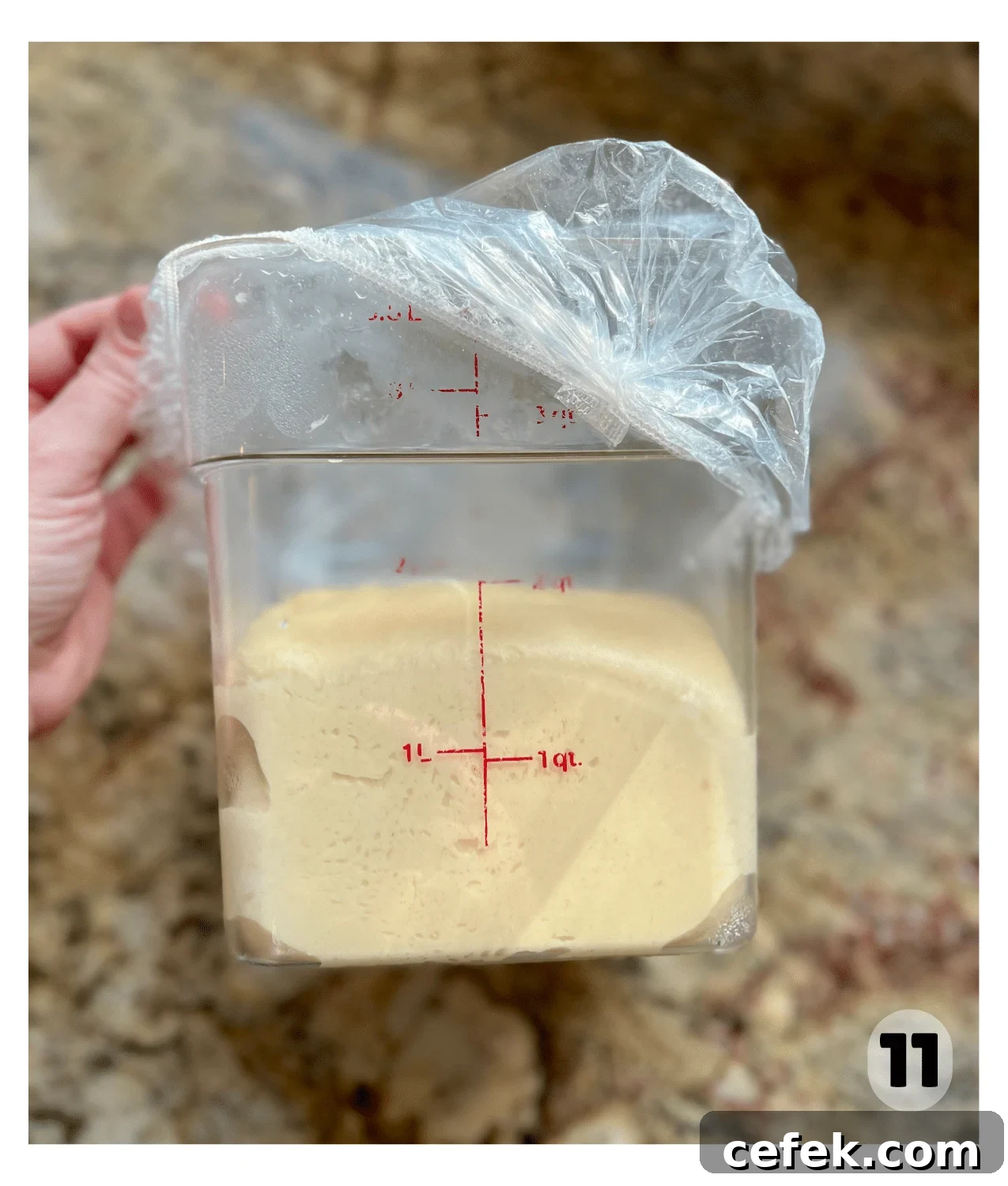
Step 5: Cold rest. Refrigerate the covered dough overnight (or up to 48 hours). Chilled dough is far easier to handle because of the high butter content. If short on time, chill at least 2 hours before shaping.
Shaping the Brioche Dough
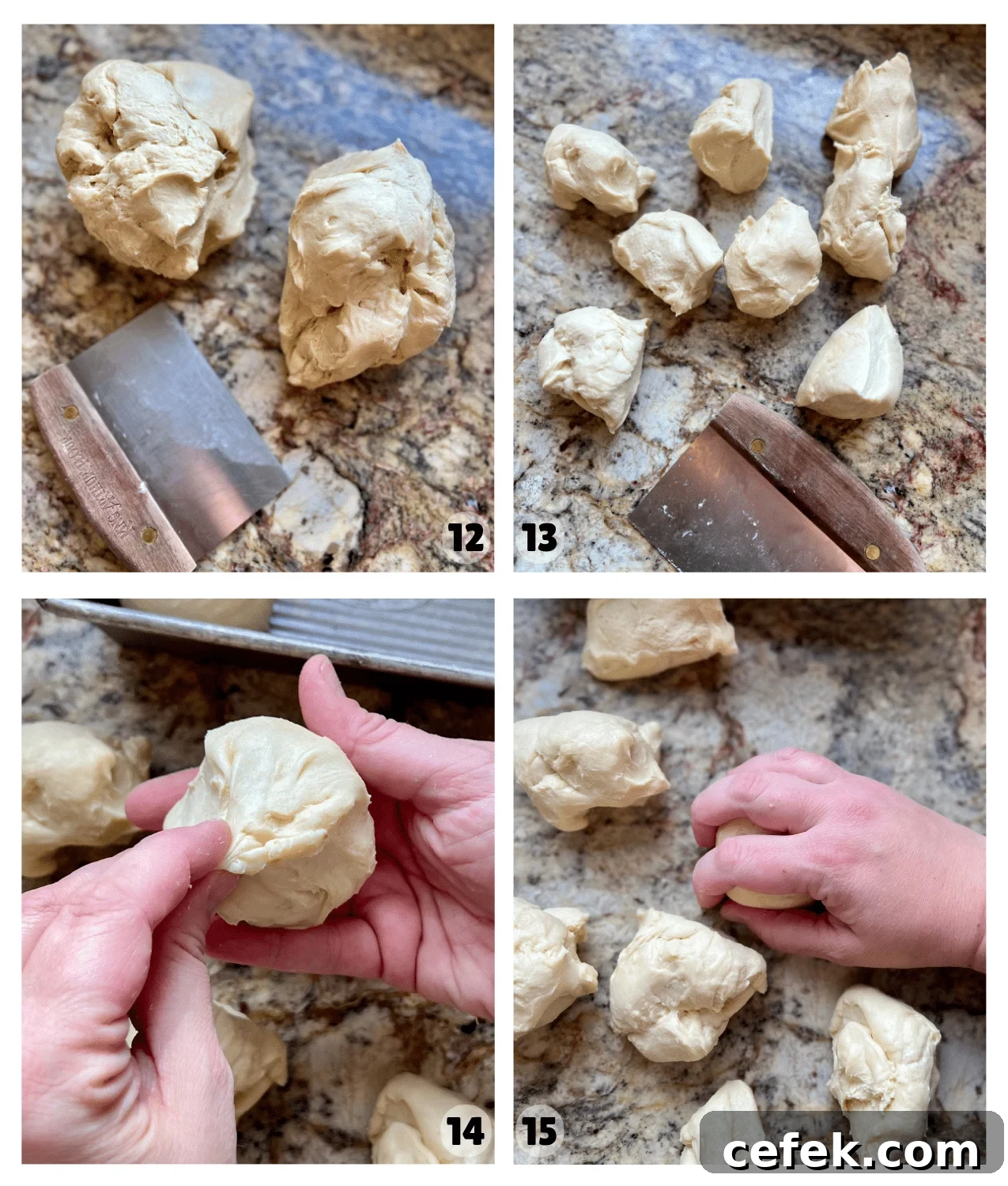
Step 6: Shape. Line two 9×5 loaf pans with parchment. Divide chilled dough in half, then cut each half into eight equal pieces. Shape each piece into a tight ball by pulling the edges up and rolling to create surface tension. Place eight balls into each pan, fitting them snugly together.
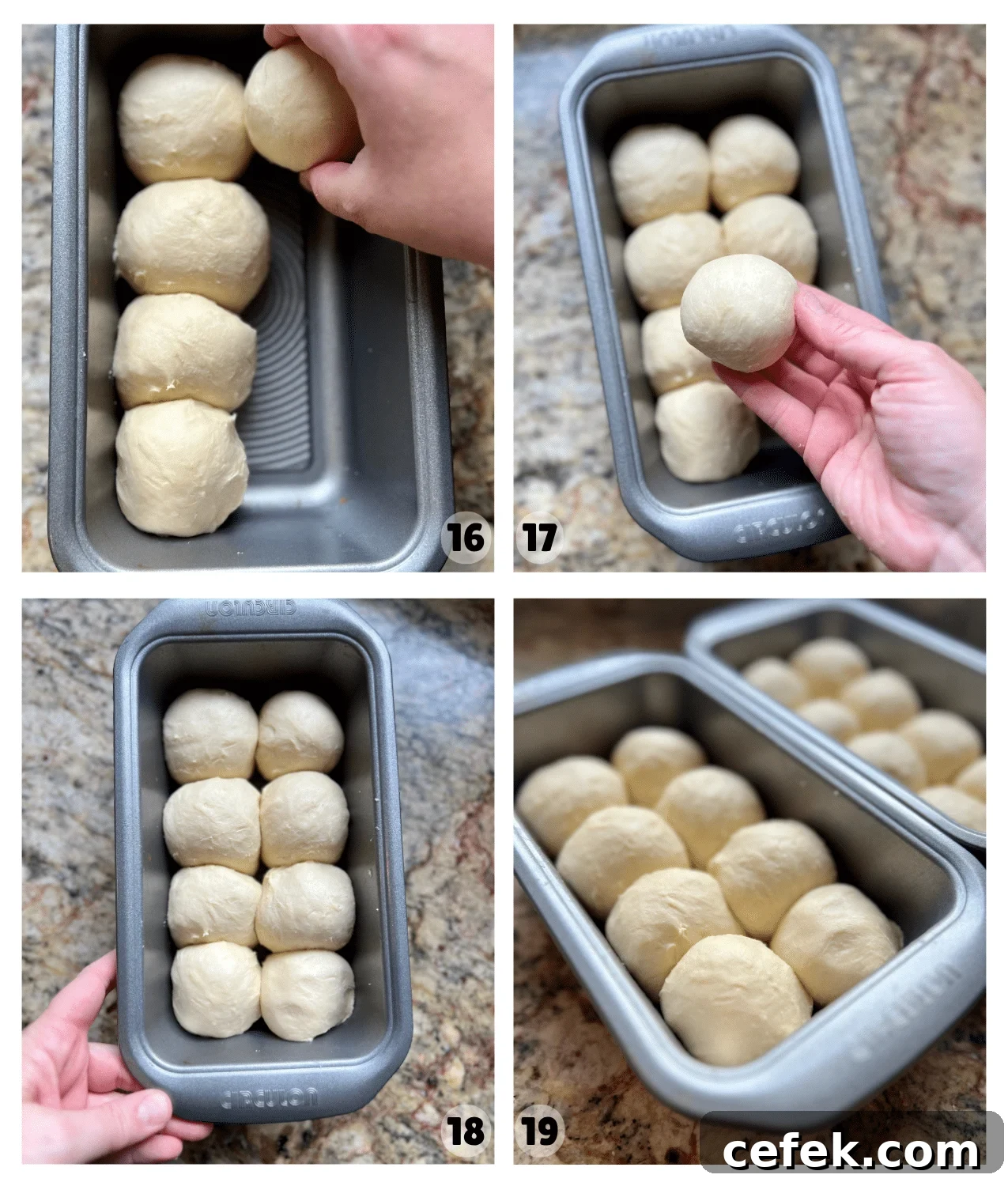
Final Brioche Rise
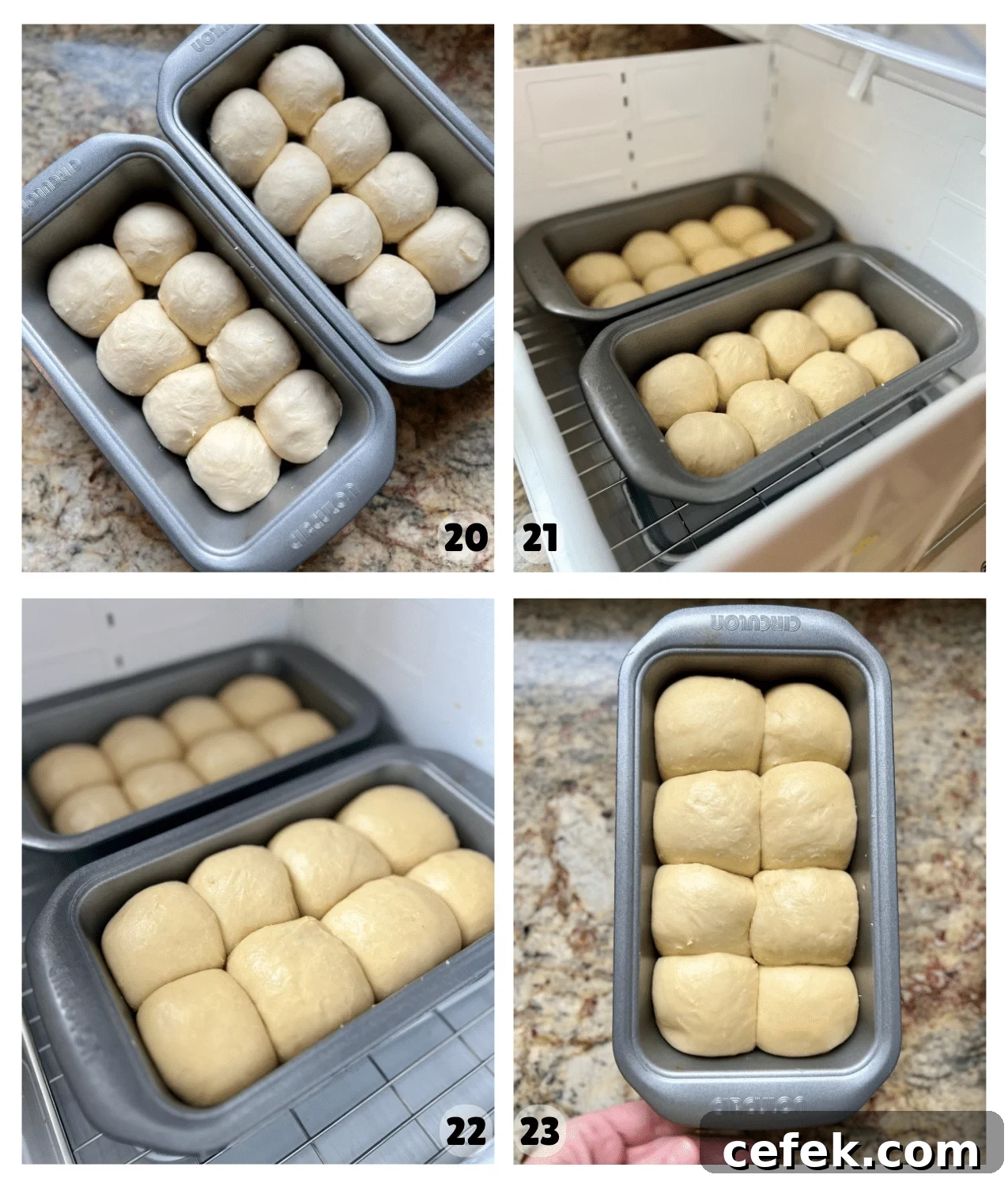
Step 7: Proof. Proof the shaped loaves in a warm, humid environment at about 80ºF. With steady warmth, the loaves typically take 6–7 hours to become light, airy and well risen. Look for a substantial rise and a mostly retained indentation when gently pressed.
Baking the Sourdough Brioche
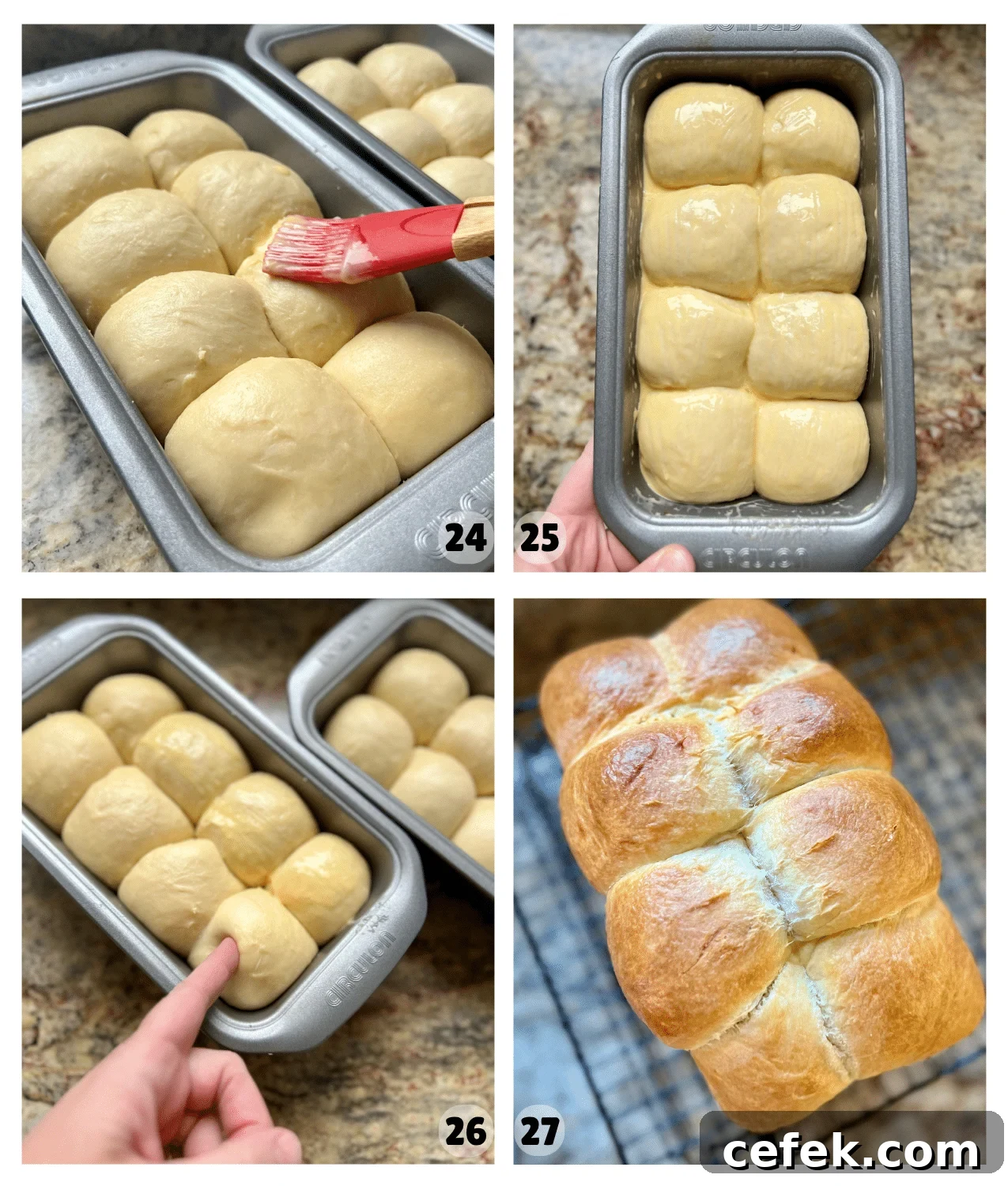
Step 8: Bake. Preheat oven to 375ºF. Whisk one egg with a splash of heavy cream or water and gently brush the tops for color. Bake 40–45 minutes until golden and an internal temperature of 190–195ºF is reached. If the crust browns too quickly, tent with foil for the last 10–15 minutes. Cool completely before slicing.
How to Store Leftovers
Cool loaves completely, then store at room temperature in a zip-top bag for a couple of days. For longer storage, slice and freeze. Thaw slices at room temperature or warm briefly before serving.
Amy’s Recipe Tip
Temperature and patience are key. Keep the dough warm while proofing or use a proofer. Do not bake until the loaves show a clear, significant rise—under-proofed brioche will bake dense and flat.
Frequently Asked Questions
No, tangzhong is optional, but it noticeably improves softness and shelf life. For a richer, softer brioche it’s worth the few extra minutes to make the tangzhong.
It’s delicious plain, with jam, or transformed into the best French toast. It’s also wonderful as special sandwich bread.
There are other enriched bread recipes that are simpler or use commercial yeast. This sourdough version is more time-intensive but yields exceptional texture and flavor.
Yes. Halve all ingredients and bake in a single 9×5 loaf pan instead of two.
Favorite Sourdough Recipes
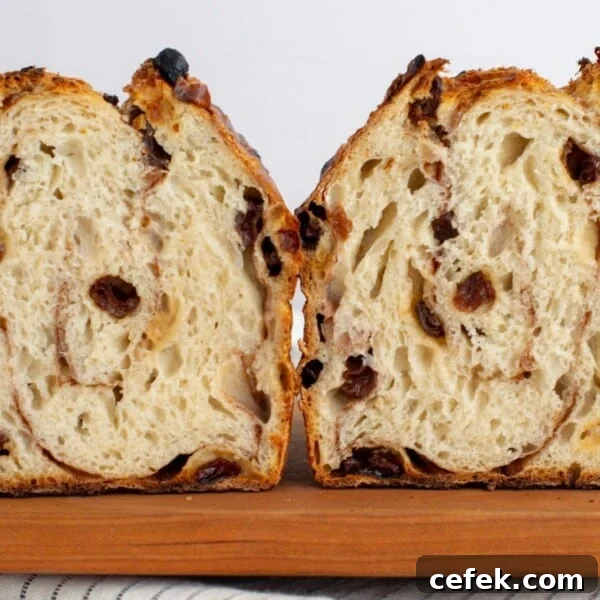
Sourdough Cinnamon Raisin Bagel Bread
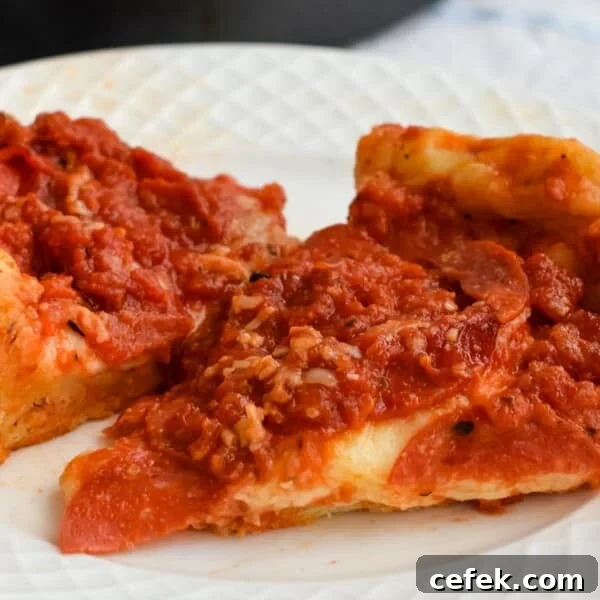
Sourdough Deep Dish Pizza
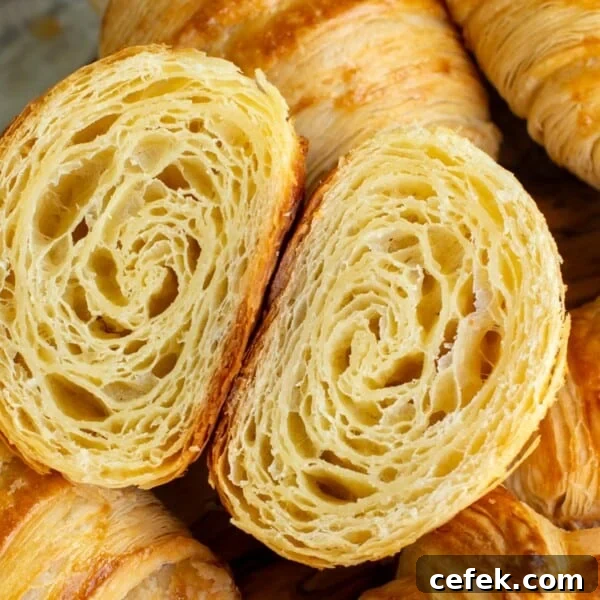
Sourdough Discard Croissants
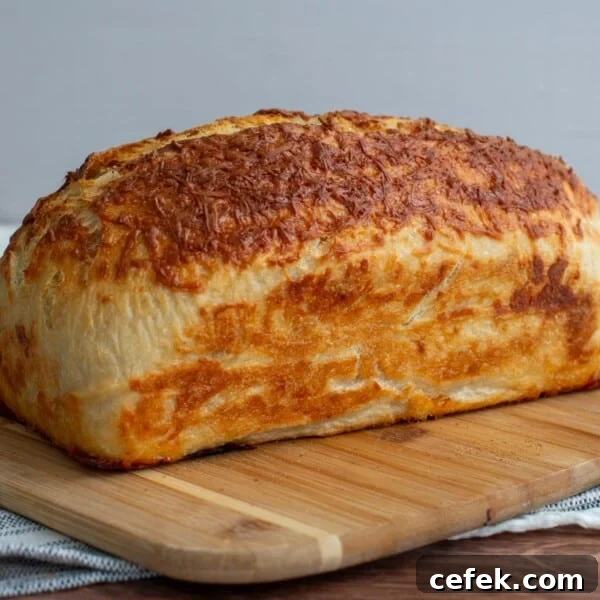
Asiago Sourdough Bagel Loaf
If you tried this Sourdough Brioche or any other recipe, leave a star rating and share how it went in the comments. Happy baking!
Sourdough Brioche
Equipment
- mixer
- 2 × 9 by 5 loaf pans
Ingredients
Levain (1:1:1 — about 3–4 hours at 78ºF)
- 65 g ripe sourdough starter
- 65 g water
- 65 g bread flour
- 15 g sugar
Tangzhong
- 50 g all-purpose flour
- 250 g milk (whole or 2%)
Sourdough Brioche
- 180 g ripe levain
- all cooled tangzhong
- 45 g cold milk
- 90 g granulated sugar
- 6 large eggs (about 300 g)
- 20 g salt
- 750 g bread flour
- 339 g unsalted butter, cool but soft (about 1½ cups)
Egg Wash
- 1 large egg
- splash heavy cream or water
Instructions
Mix Levain (1:1:1)
- Mix starter, flour, water and sugar. Cover and let rise until doubled, bubbly and peaked.
Tangzhong
- Whisk 50 g flour with 250 g milk in a saucepan. Cook over medium heat, whisking, until it thickens into a paste (1–2 minutes). Remove and cool before using.
Sourdough Brioche
- Mix the dough: In a stand mixer, combine cooled tangzhong, levain, milk, sugar, eggs, salt and bread flour. Knead about 5 minutes until smooth.
- Add butter: Add butter in chunks while mixing. Butter should be cool but soft. Continue adding until fully incorporated.
- Knead until windowpane: Knead 20–30 more minutes until the dough stretches thin without tearing. If dough heats up, chill briefly and continue.
- Bulk ferment: Place dough in a covered container and ferment at 78–80ºF for about 4 hours; you want slight aeration, not a full double.
- Cold fermentation: Refrigerate the covered dough overnight or up to 48 hours.
- Shape loaves: Line two 9×5 pans with parchment. Divide dough into two portions, then cut each into eight pieces. Shape each into a tight ball and place eight in each pan.
- Proof: Proof in a warm place until doubled, light and airy (about 6–7 hours at 80ºF).
- Bake: Preheat oven to 375ºF. Brush with egg wash and bake 40–45 minutes until internal temperature reaches 190–195ºF. Cool completely before slicing.
Notes
Sourdough starter: Active ripe starter can substitute for levain if preferred.
Mixer: This dough requires extensive mixing; a strong stand mixer is recommended.
Unsalted butter: Use good-quality, medium-soft butter for best texture and flavor.
Bread flour: Higher-protein bread flour gives better elasticity; all-purpose will work with slightly different texture.
Nutrition
Nutrition information is an approximation.
Like this? Leave a comment below!