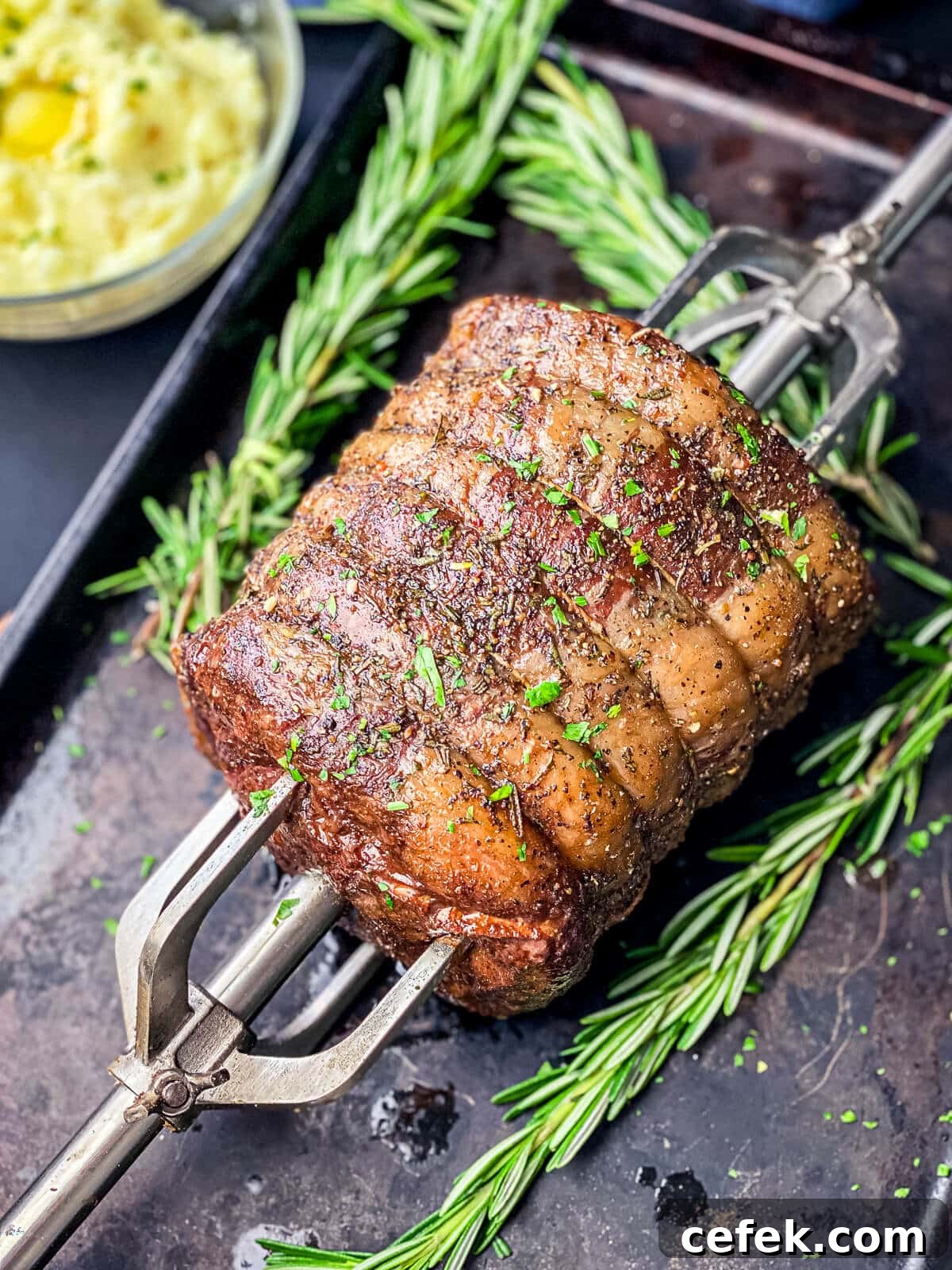
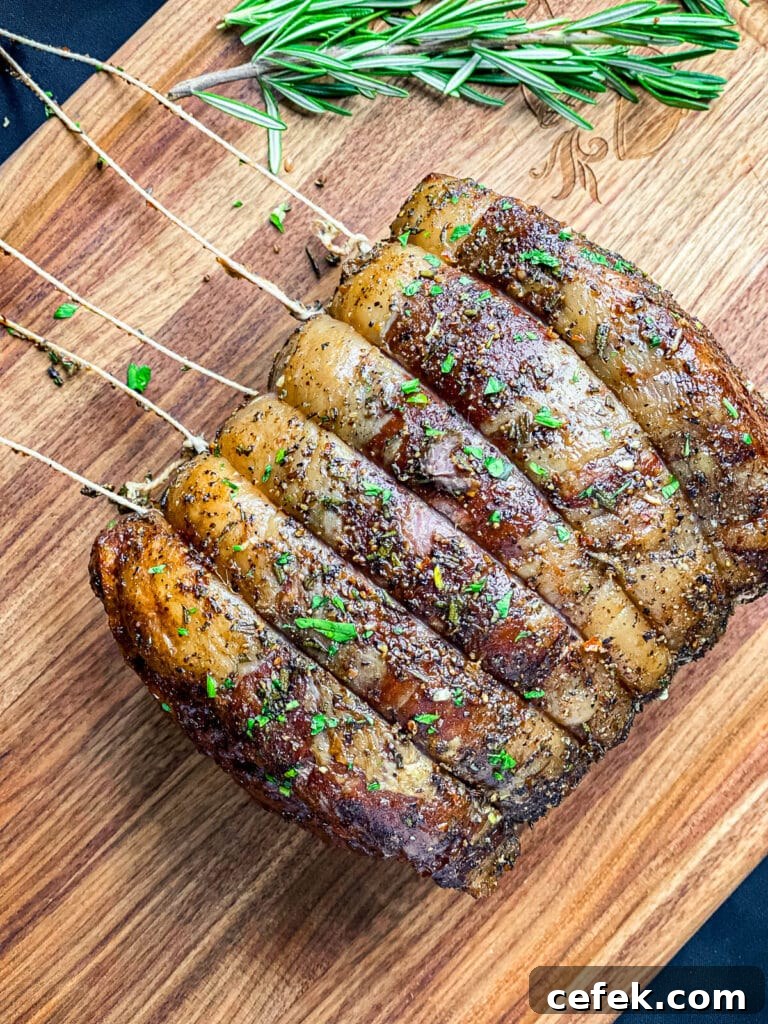
Prime rib is widely regarded as the pinnacle of celebratory dining. If you want a show-stopping centerpiece for a holiday or special gathering, cooking a prime rib on a rotisserie will impress your guests and deliver exceptional flavor and texture.
Follow the clear steps below to achieve a medium-rare rotisserie prime rib that’s moist, evenly cooked, and beautifully browned. With a little preparation and patience, you’ll quickly become known as a confident and capable griller.
Jump to Recipe
What’s Better, Bone-In or Boneless Prime Rib?
Bones act as insulators during cooking, protecting nearby meat from direct heat and helping to prevent overcooking. The additional flavor from a bone is concentrated very close to it, generally within an eighth of an inch.
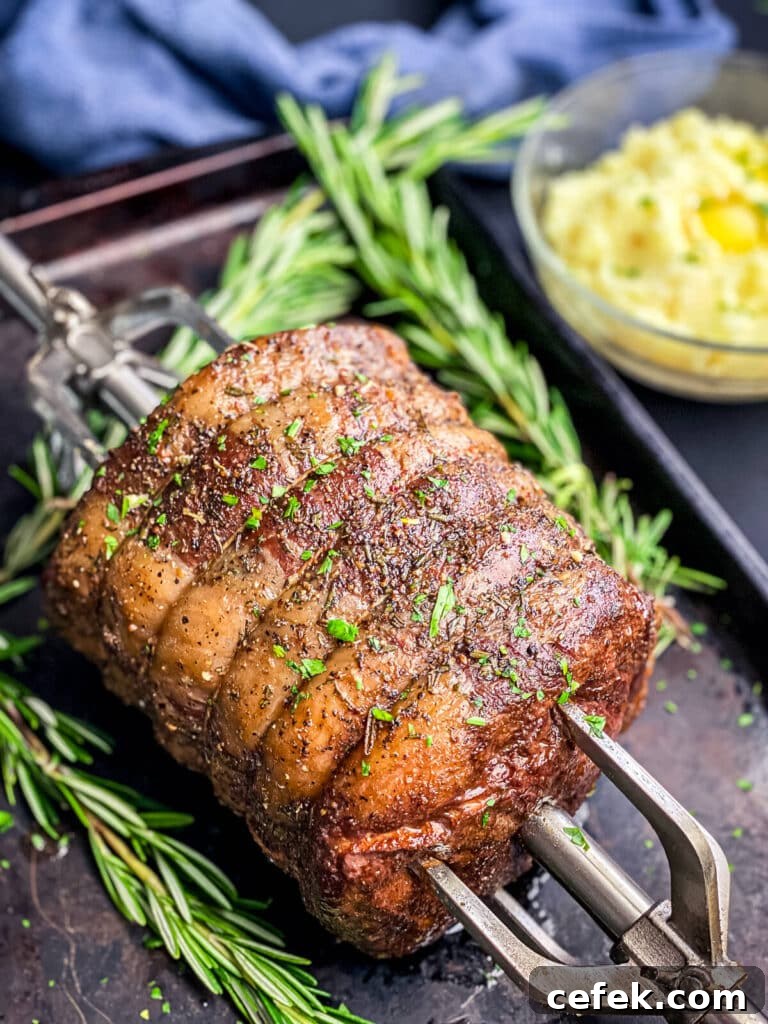
For direct grilling, bone-in prime rib can be excellent. For rotisserie cooking I prefer boneless prime rib: removing the bones makes it far easier to truss the roast into a uniform cylinder. A cylindrical shape spins more evenly and promotes consistent doneness. Bones can also make the rotisserie unbalanced; repeated uneven loading may shorten the motor’s life.
Why Use A Rotisserie?
A rotisserie offers a number of benefits that many cooks find worth the extra setup:
- Self-basting: As the roast turns, rendered fat and juices continuously baste the surface, helping retain moisture.
- Even cooking: Continuous rotation exposes the meat to heat uniformly, reducing hot spots and uneven doneness.
- All-over browning: The rotating motion encourages a consistent crust across the entire roast.
- Flavorful drippings: Juices that fall onto the heat source create aromatic steam that enhances the roast’s flavor; alternately, a drip pan can be used to capture juices for au jus.
- Visual appeal: A roast slowly turning over the fire is dramatic and entertaining for guests.
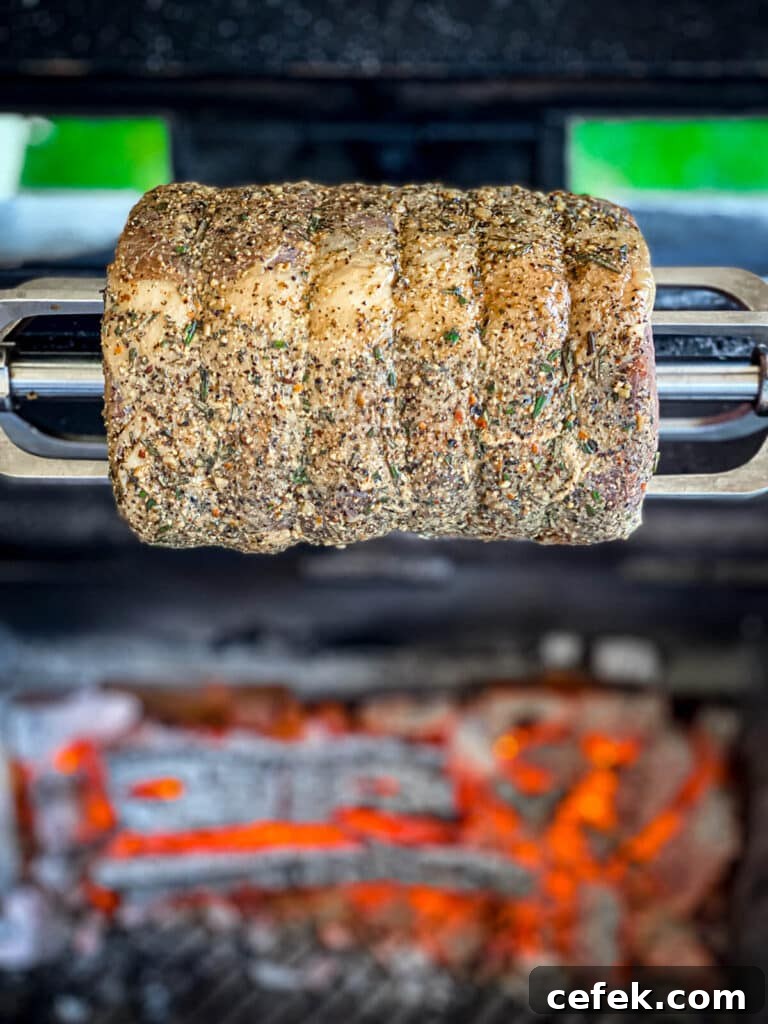
There are some downsides to consider as well:
- Cleanup: The spit and forks require thorough cleaning after use.
- Handling: The spit assembly becomes very hot and can be awkward to maneuver—plan for a drip pan and heat-safe tools.
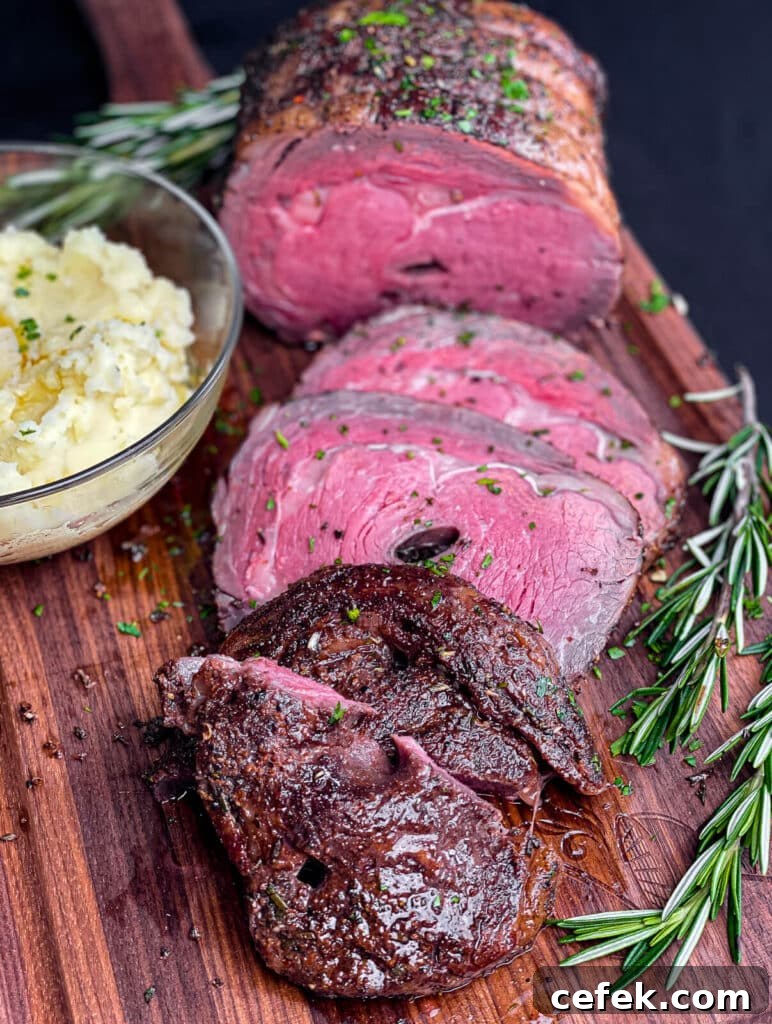
- Presentation: Slicing a rotisserie roast leaves a hole where the spit passed through, which is normal but worth knowing when plating.
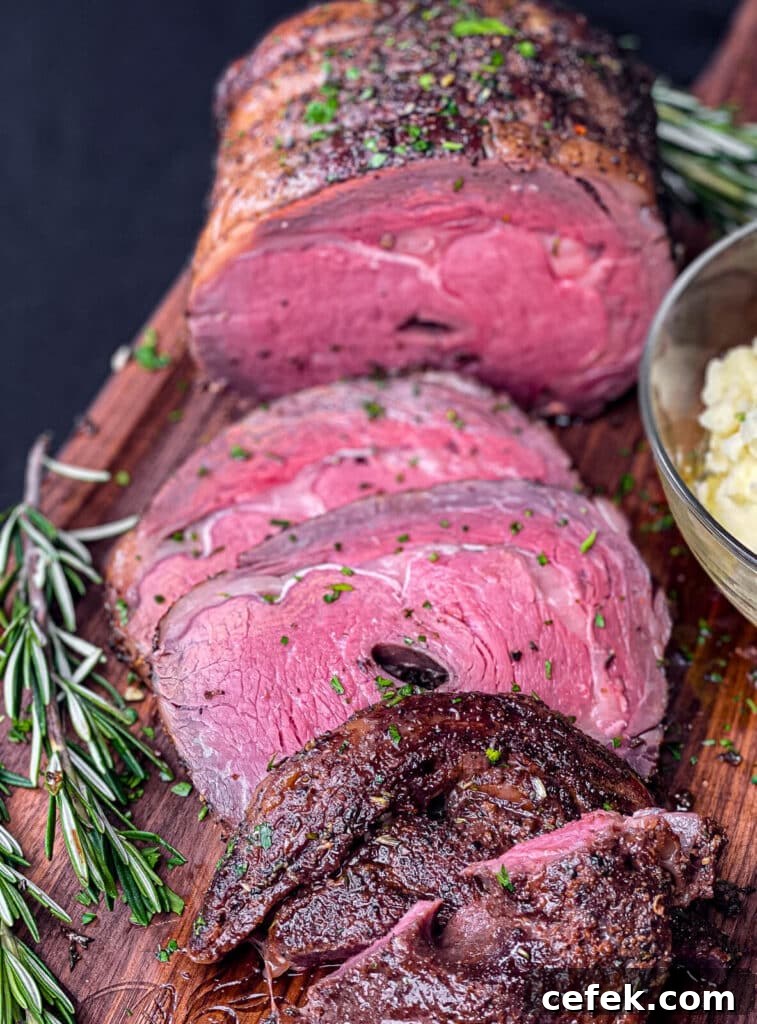
How Long Does Prime Rib Take On a Rotisserie?
Timing varies with many variables, so internal temperature should always guide you. As a rough rule plan for about 15–18 minutes per pound, but factors like grill temperature, roast size and shape, meat grade, and ambient conditions all influence cook time.
Use a reliable instant-read or probe thermometer and cook to the desired internal temperature rather than relying solely on time.
Do You Close the Grill Lid When Using a Rotisserie?
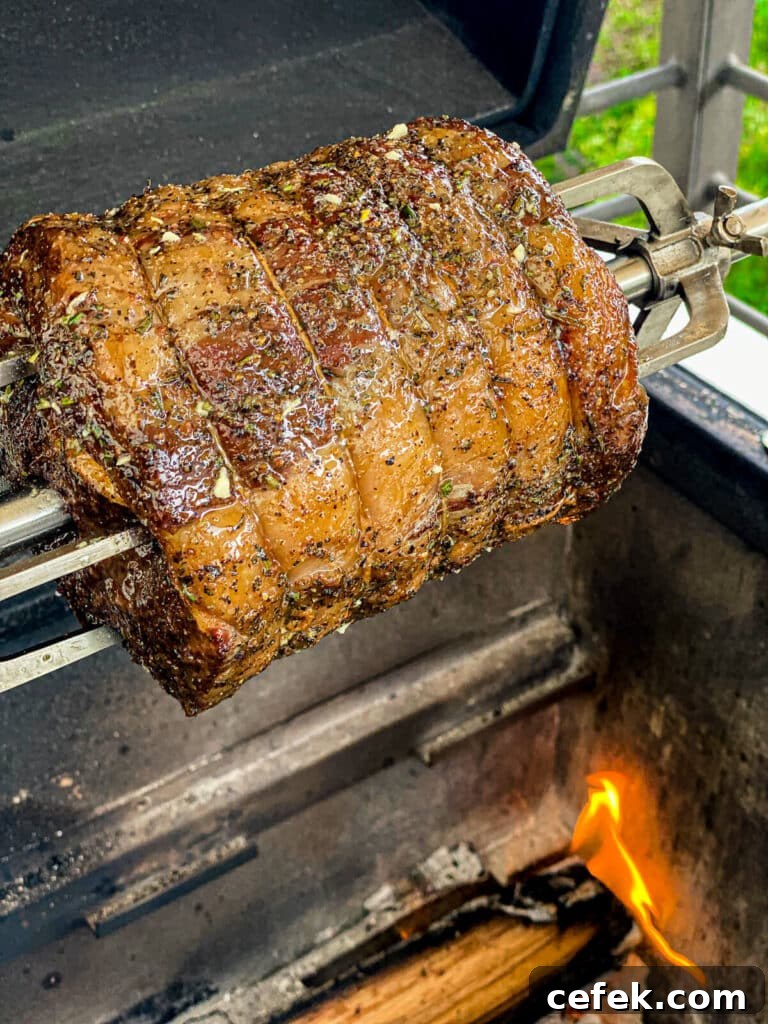
Closing the lid promotes faster, more consistent cooking by trapping heat and creating an oven-like environment. Leaving the lid open is also acceptable—some cooks prefer watching the roast turn and enjoy the open-flame experience. Expect a longer cook and slightly higher fuel usage with the lid open.
Tips For Making Rotisserie Prime Rib
- Remove the roast from the refrigerator about an hour before cooking to bring it closer to room temperature.
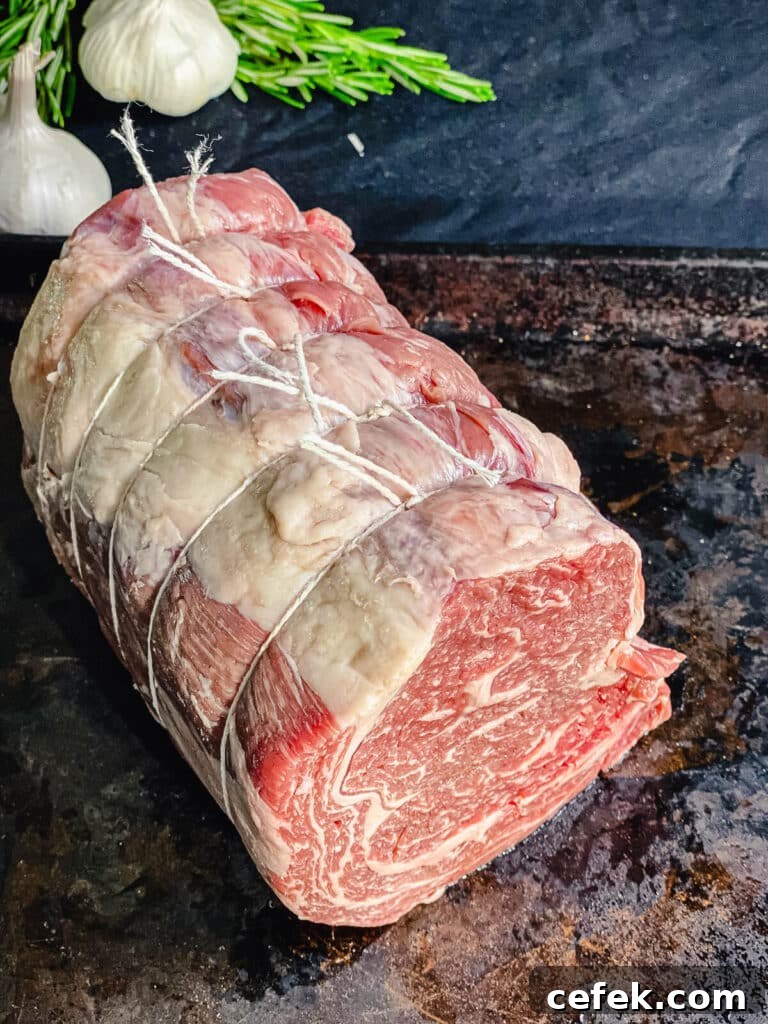
- Truss the roast tightly with butcher’s twine into a cylindrical shape to promote even cooking; an oval roast will cook unevenly on a rotisserie.
- Mount the roast on the spit before seasoning to avoid losing rub to the spit hardware while securing the forks.
- When using charcoal, build a hot, even coal bed before starting—the coals may take 20–30 minutes to reach ideal temperature.
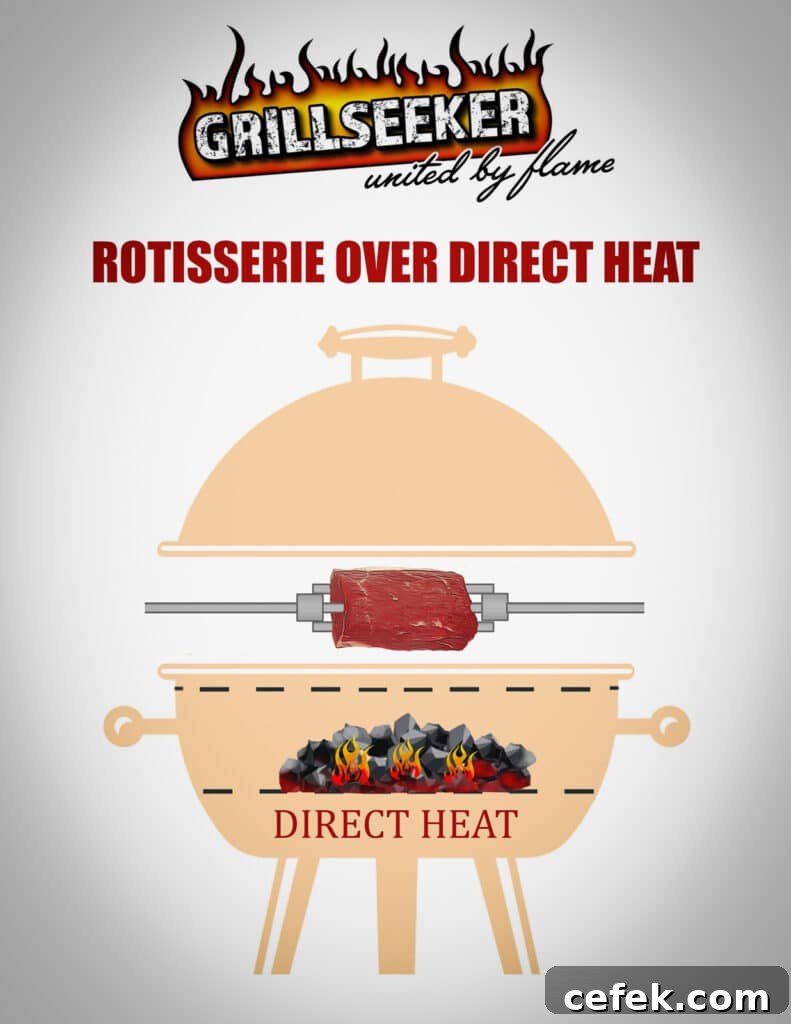
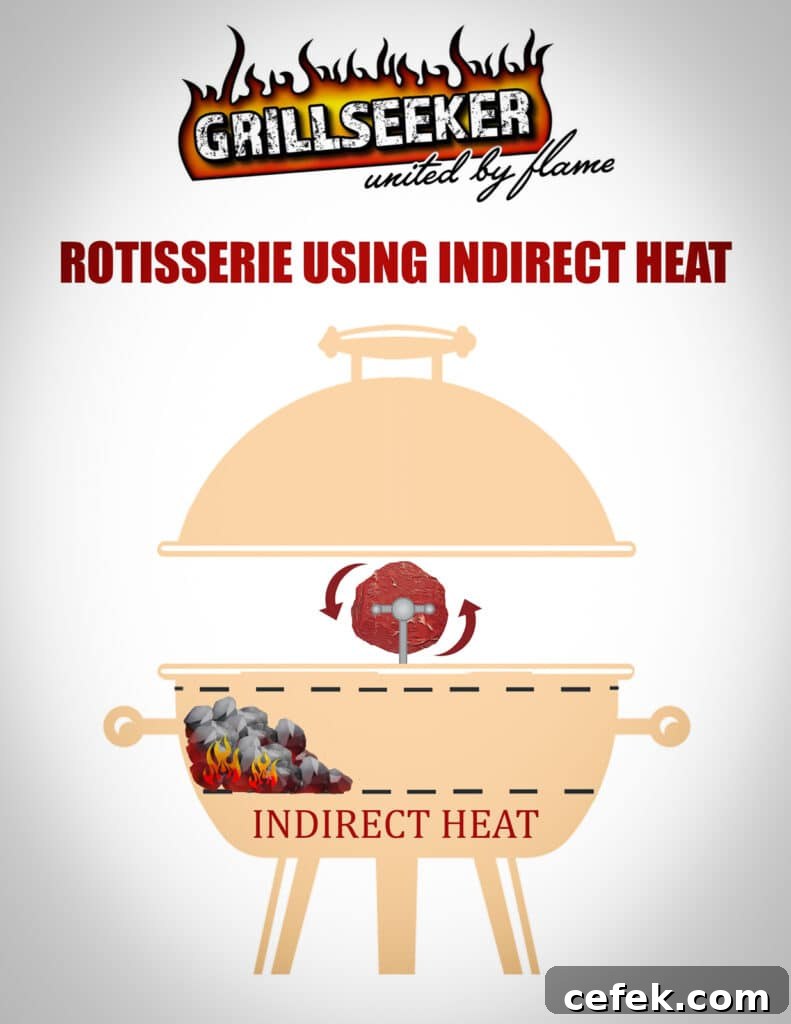
- Position the roast 18–24 inches above hot coals for direct heat, or 12–18 inches away from indirect coals, depending on your grill and desired sear rate.
How To Cook Prime Rib On A Rotisserie
Serves: 6–8 | Prep Time: 15 minutes | Cook Time: 60–90 minutes
Ingredients
- 1 boneless prime rib roast, 4–5 lb
- 1/4 cup Dijon mustard
- 2 tbsp coarse kosher salt
- 2 tbsp freshly ground black pepper
- 1 tbsp garlic powder or granulated garlic
- 2 tsp crushed red pepper flakes (optional)
- 3 sprigs fresh rosemary, stripped and finely chopped
- 2 cups horseradish cream sauce (optional, for dipping)
Butter Baste
- 1 stick unsalted butter
- 1/4 cup beef tallow (or additional butter if preferred)
- 4 cloves garlic, minced
- 1 sprig fresh rosemary, stripped and finely chopped
- 2 tsp anchovy paste (adds umami; optional)
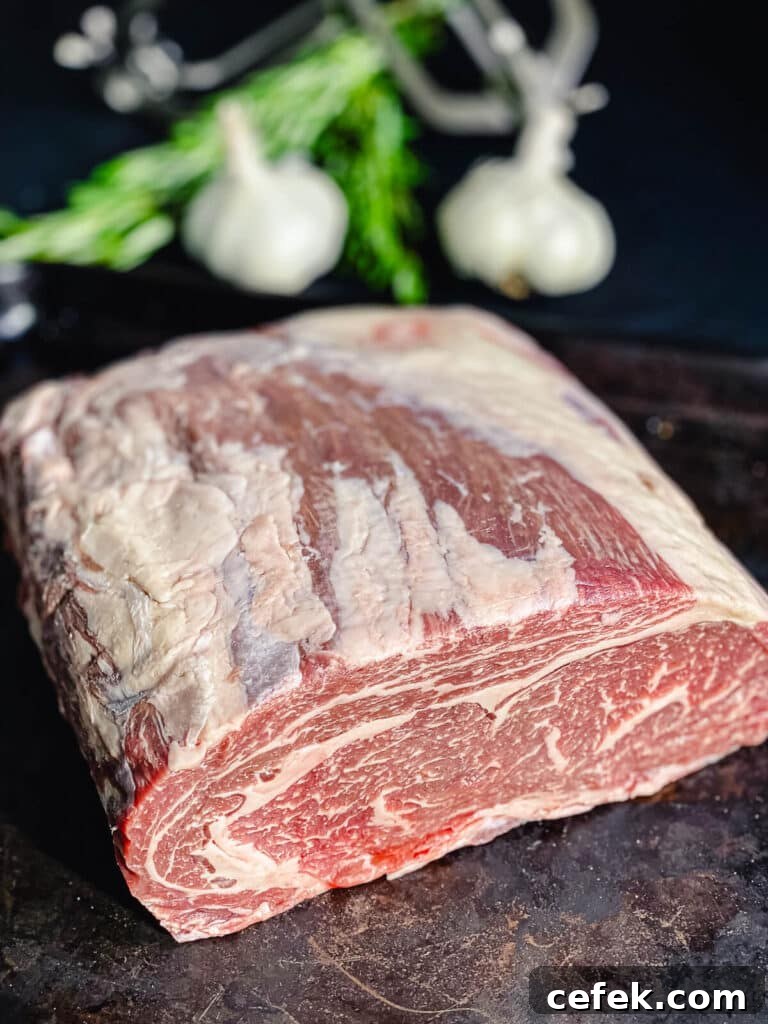
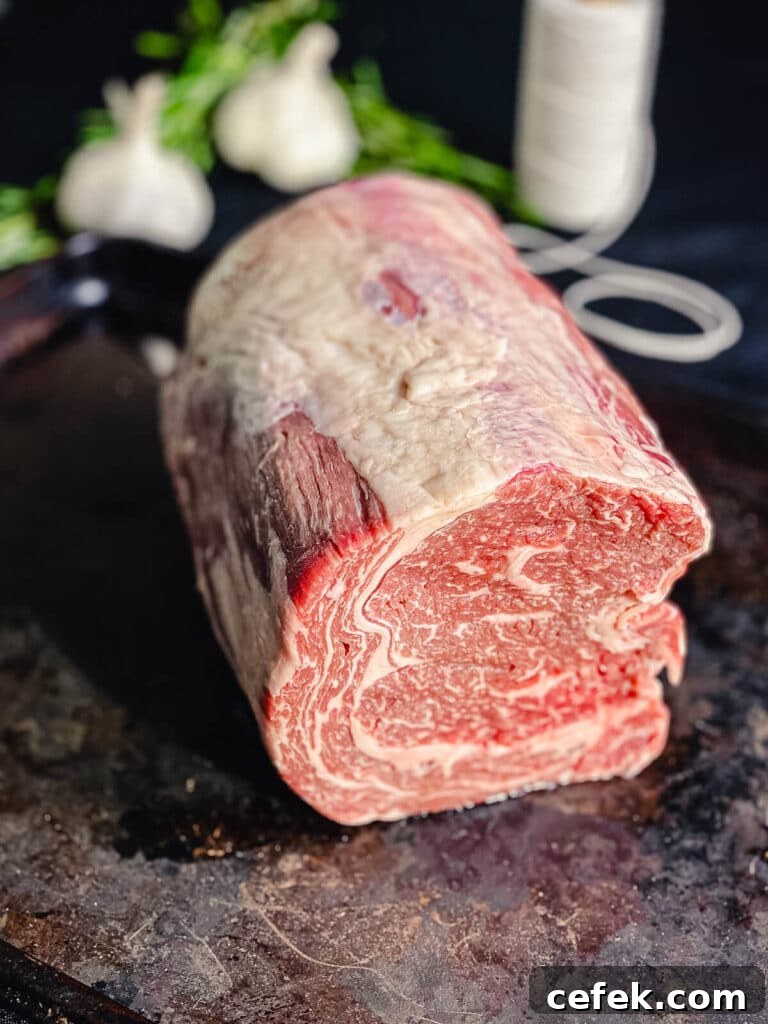
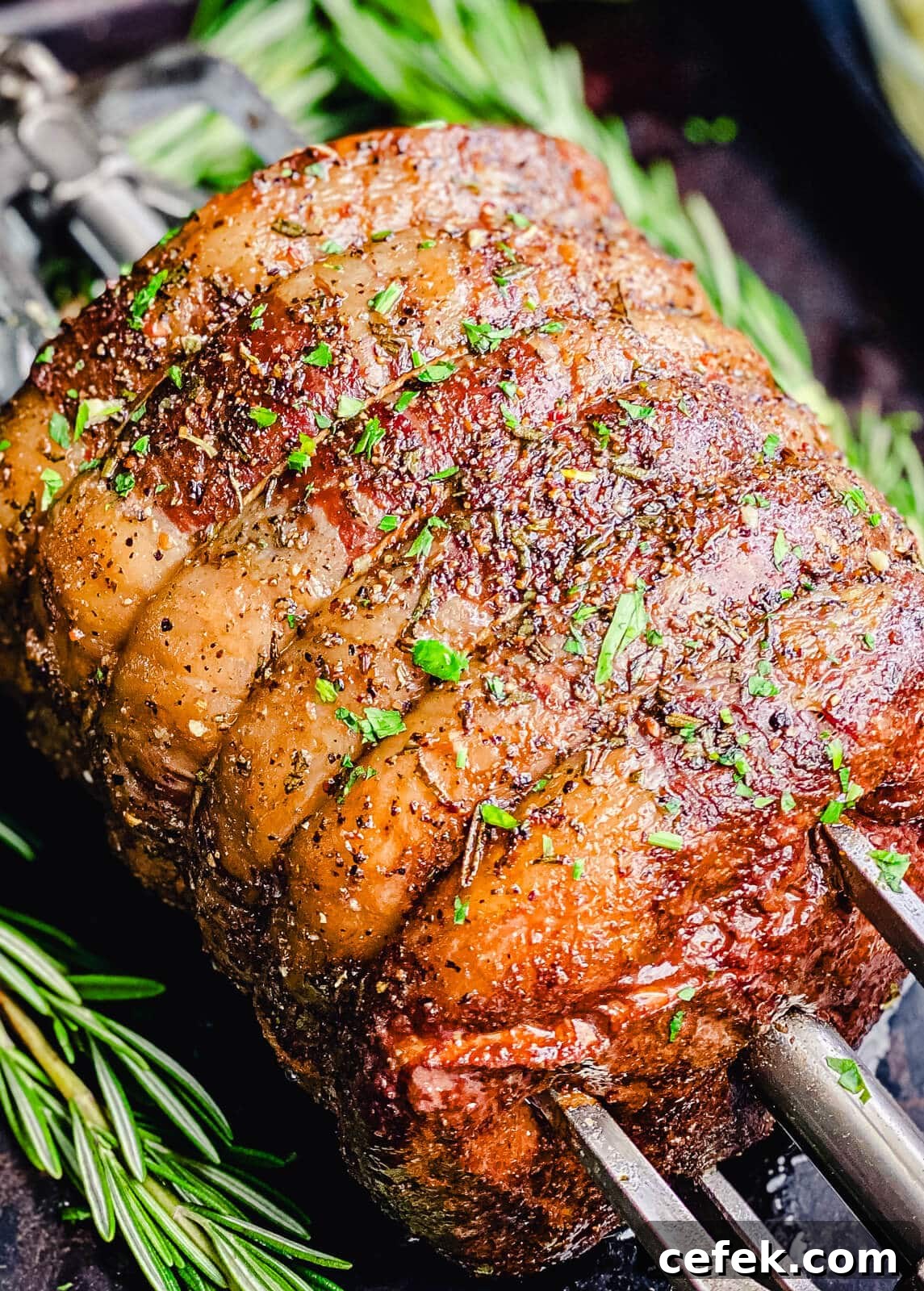
Step 1: With clean hands, shape the boneless rib roast into a tight cylinder. Use butcher’s twine to tie the roast so it holds that shape for even rotation.
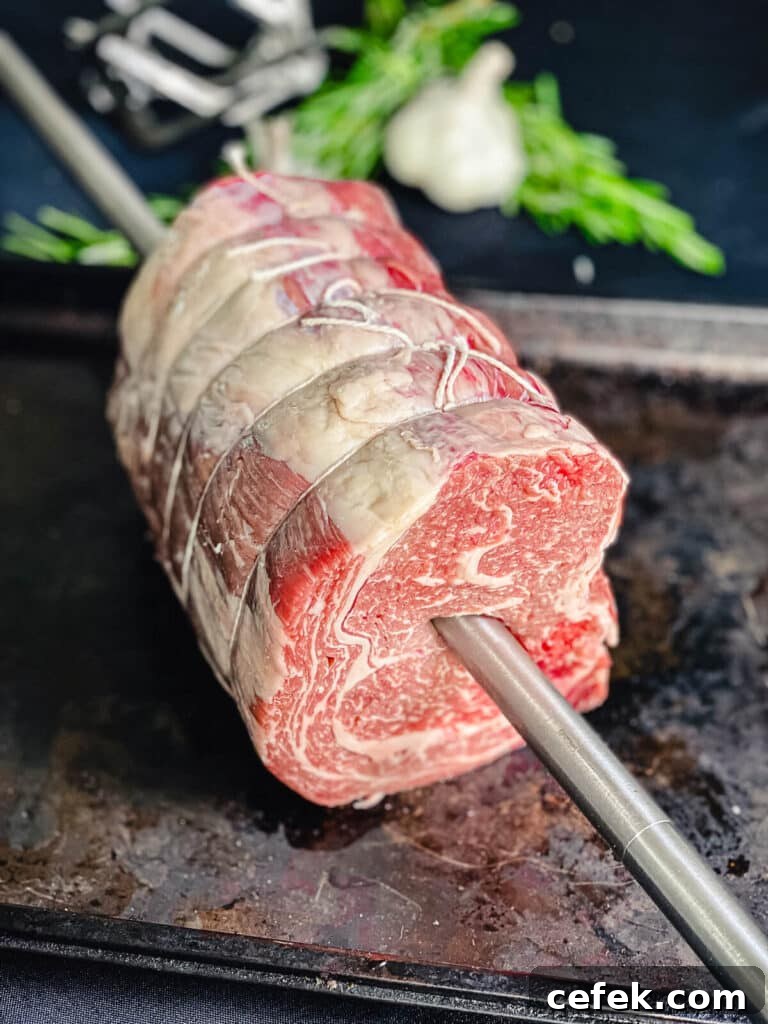
Step 2: Secure the roast on the rotisserie spit using the forks, making sure it is balanced and held firmly.
Step 3: In a small bowl, combine the salt, black pepper, garlic powder and chopped rosemary. Mix well and set aside.
Step 4: Coat the roast evenly with Dijon mustard, then apply the seasoning mixture, covering the entire surface including the ends.
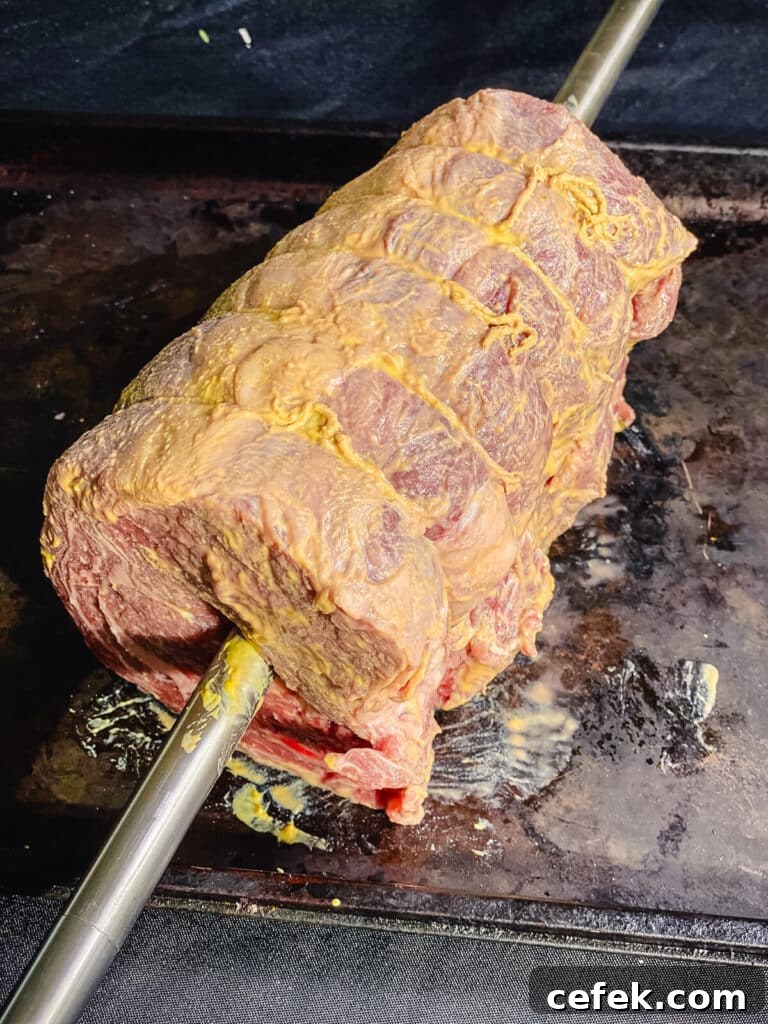
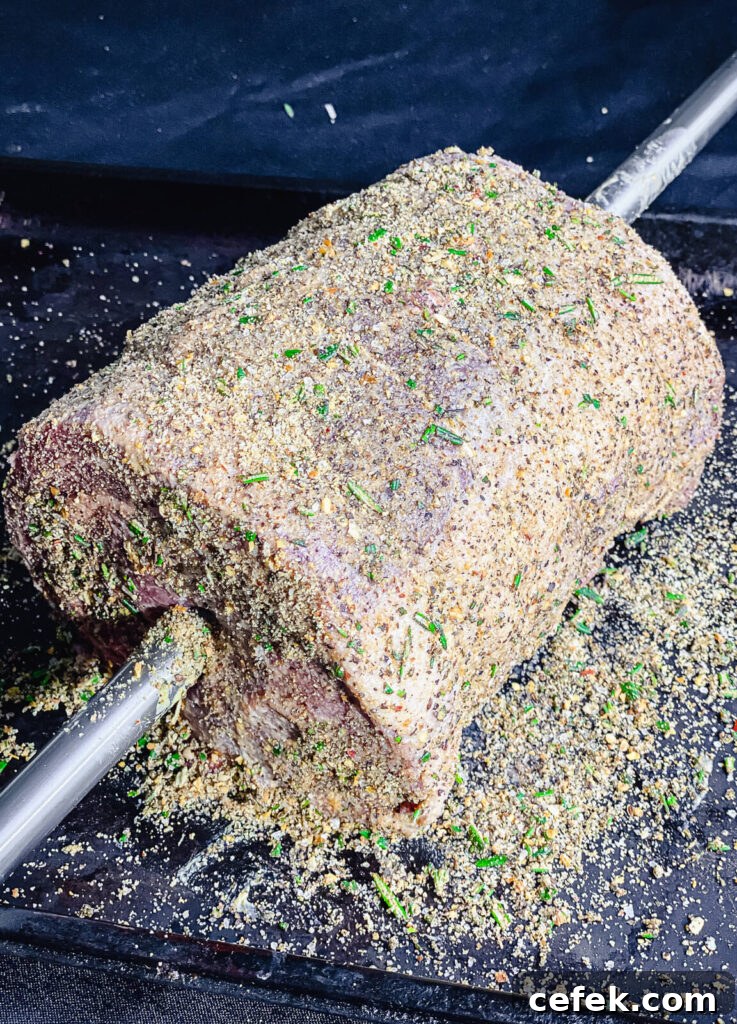
Step 5: Place the spit into the preheated grill and start the rotisserie motor. Ensure the roast rotates smoothly and remains balanced.
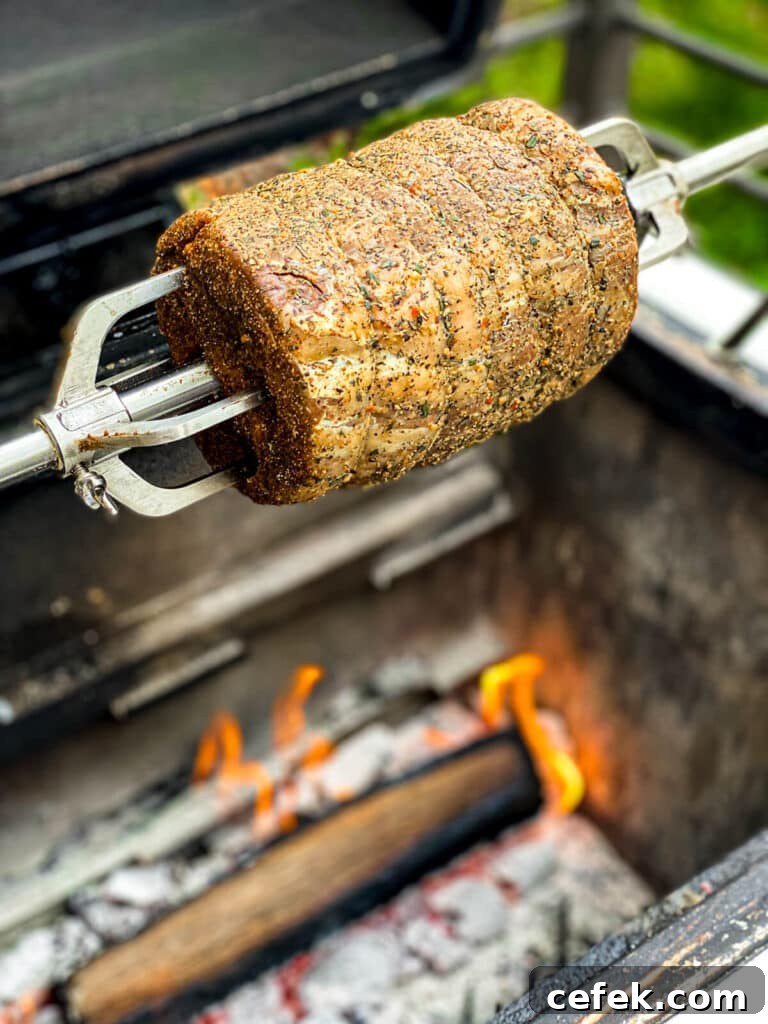
Step 6: While the roast turns, prepare the butter baste: melt butter and tallow together over medium-low heat, whisk in minced garlic, chopped rosemary and anchovy paste if using. Keep warm.
Step 7: Let the roast rotate until the internal temperature reaches about 100°F. Begin basting the roast with the warm butter mixture every 5–7 minutes. Continue basting until the roast’s internal temperature is roughly 5°F below your final target temperature (carryover will raise it during resting).
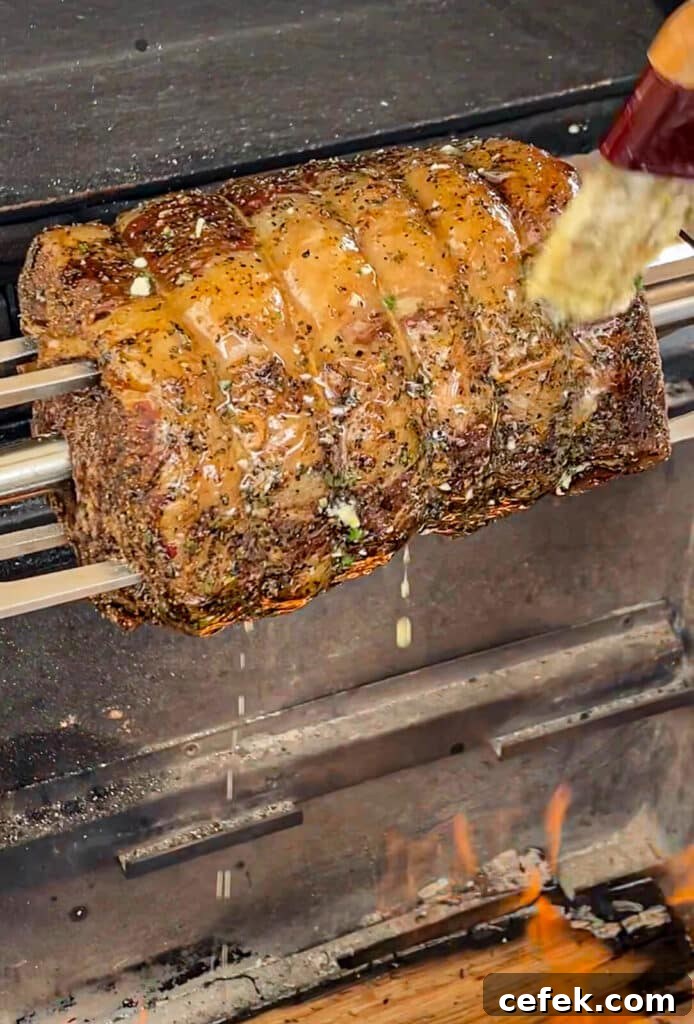
Step 8: Remove the roast from the grill and tent it loosely with aluminum foil. Rest for 10 minutes to allow juices to redistribute.
Step 9: Remove the roast from the spit, cut and remove the butcher’s twine, carve into slices and serve. Classic accompaniments include horseradish cream or garlic mashed potatoes.
Rotisserie Prime Rib
15 minutes
1 hour 30 minutes (approx.)
8
Ingredients
- 1 boneless prime rib roast (4–5 lb)
- 1/4 cup Dijon mustard
- 2 tbsp coarse kosher salt
- 2 tbsp freshly ground black pepper
- 1 tbsp garlic powder
- 2 tsp crushed red pepper flakes (optional)
- 3 sprigs fresh rosemary, stripped and finely chopped
- 2 cups horseradish cream sauce (optional)
Butter Baste
- 1 stick unsalted butter
- 1/4 cup beef tallow or extra butter
- 4 cloves garlic, minced
- 1 sprig fresh rosemary, stripped and finely chopped
- 2 tsp anchovy paste (optional)
Instructions
- Form the boneless roast into a tight cylinder and tie with butcher’s twine to hold the shape.
- Mix salt, pepper, garlic powder and chopped rosemary in a small bowl and set aside.
- Place the roast on the spit, secure with forks, coat with Dijon mustard, then apply the seasoning evenly.
- Heat the grill and start the rotisserie motor, ensuring the roast is balanced and turning smoothly.
- Prepare the butter baste by melting butter and tallow together, then whisk in garlic, rosemary and anchovy paste if using. Keep warm.
- Rotate the roast until the internal temperature reaches 100°F, then baste every 5–7 minutes until the roast is about 5°F below your desired final temperature.
- Remove the roast from the grill, tent loosely with foil and rest for 10 minutes.
- Remove from the spit, cut away the twine, slice and serve with your favorite sides.