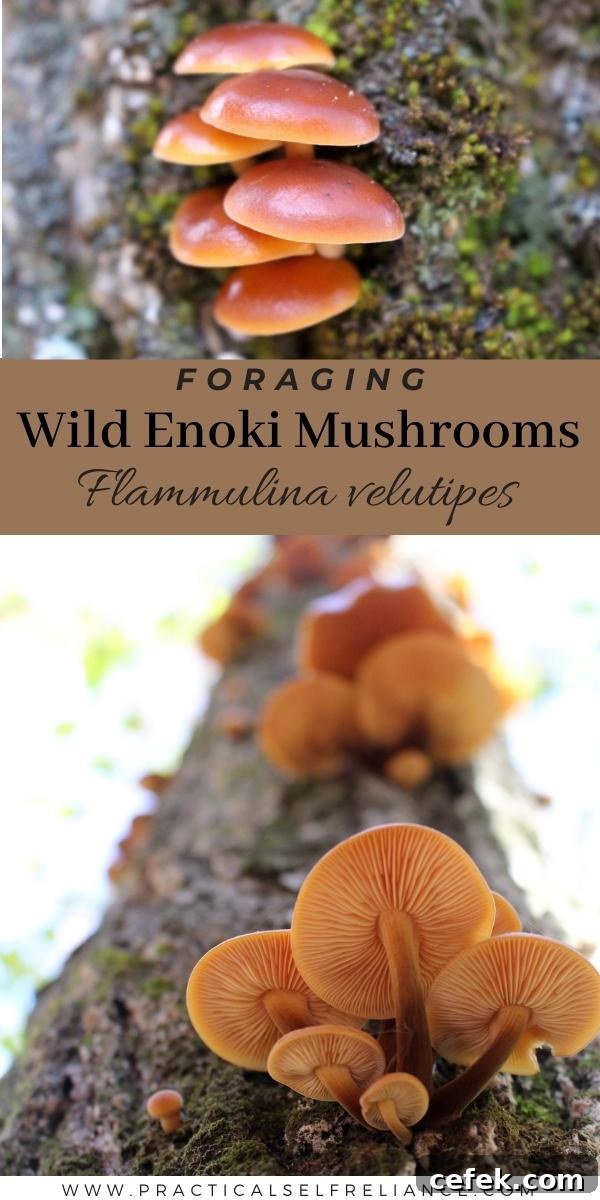
Enoki mushrooms (Flammulina velutipes), also called enokitake or velvet foot, are a common cold‑season species found in many parts of the world.
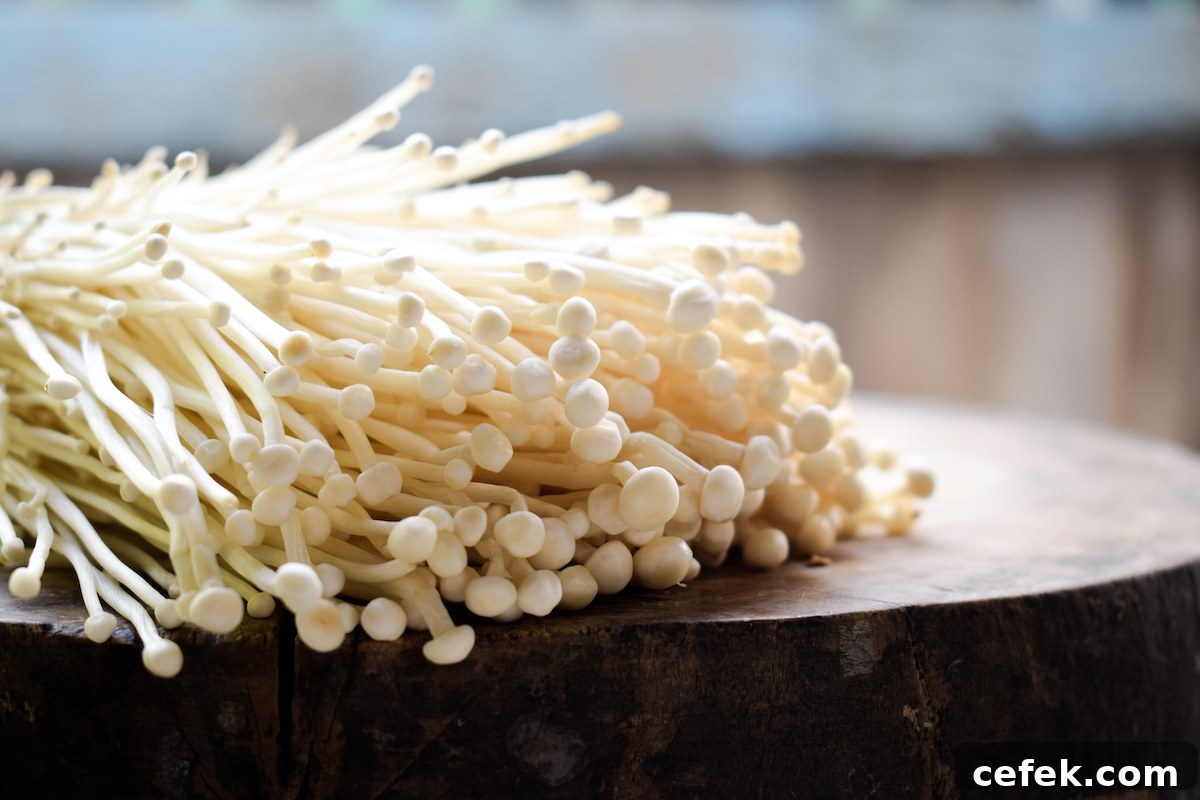
Wild enoki look different from the cultivated varieties sold in stores — commercial enoki are grown in low‑light, low‑oxygen conditions to produce the long, delicate white stems used in Asian cooking. This difference is mostly cosmetic; the flavor is similar.
Important: wild enoki have deadly look‑alikes. Proper identification requires a spore print. Exercise extreme caution when harvesting wild specimens.
I usually avoid writing guides on mushrooms that have deadly look‑alikes. For practical, safe foraging advice I focus on species that are easy to identify, such as:
- Chicken of the Woods
- Dryad’s Saddle (Pheasant Back)
- Lion’s Mane
- Puffballs
- Shaggy Mane
- Witch’s Butter
- Chaga
- Birch Polypore
Some species with look‑alikes — like morels and chanterelles — can be safely foraged by those who are careful and experienced. But wild enoki are different: their toxic counterparts can appear nearly identical and consuming the wrong species can be fatal.
Enoki are a winter and early‑spring mushroom that attract attention because they are often one of the few edible fungi available in cold months. In colder regions they can appear as early as late autumn and persist into January; in milder climates they can be found throughout winter.
I see photos of wild enoki on identification forums all winter, and they often get shared on social media. Given the interest, it’s worth discussing them — but remember: never eat a wild enoki unless you are 100% certain of the identification.
It’s perfectly fine to identify mushrooms for the enjoyment of learning and observation without harvesting them. Many naturalists appreciate species in the field without taking them home; mushrooms can be valued the same way.
What are Enoki Mushrooms?
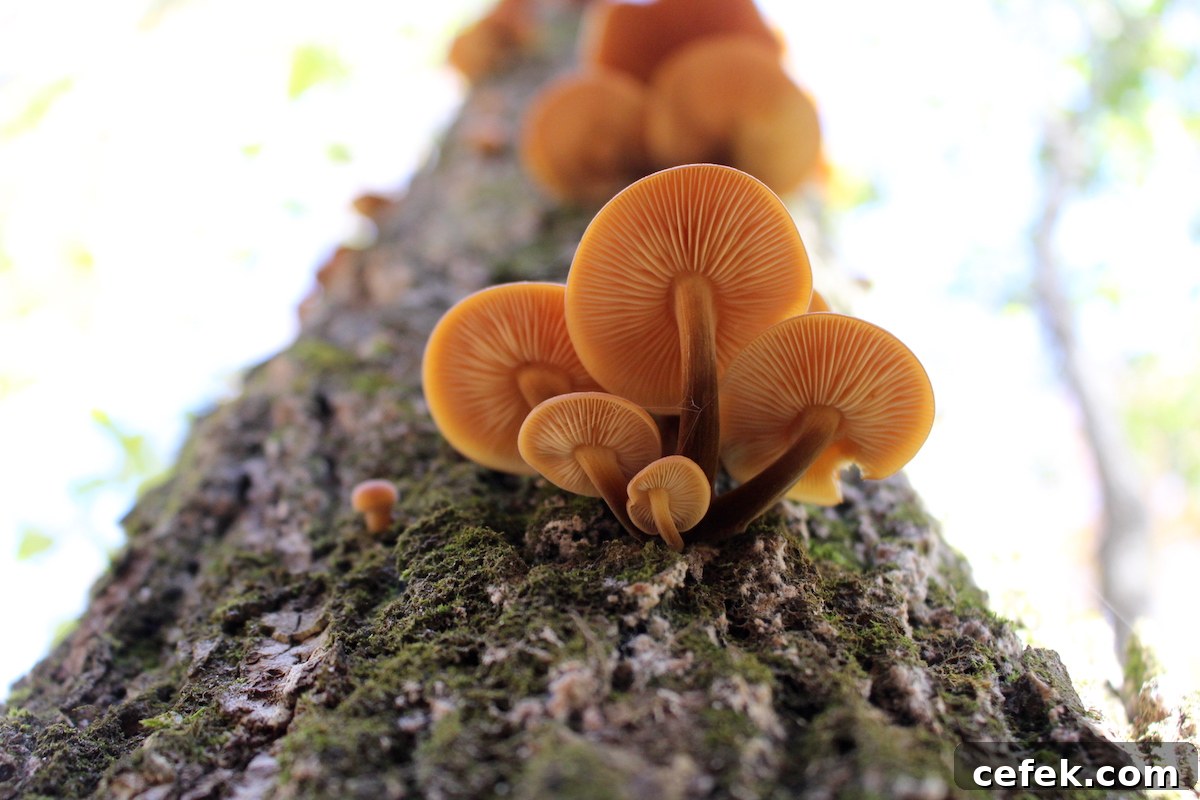
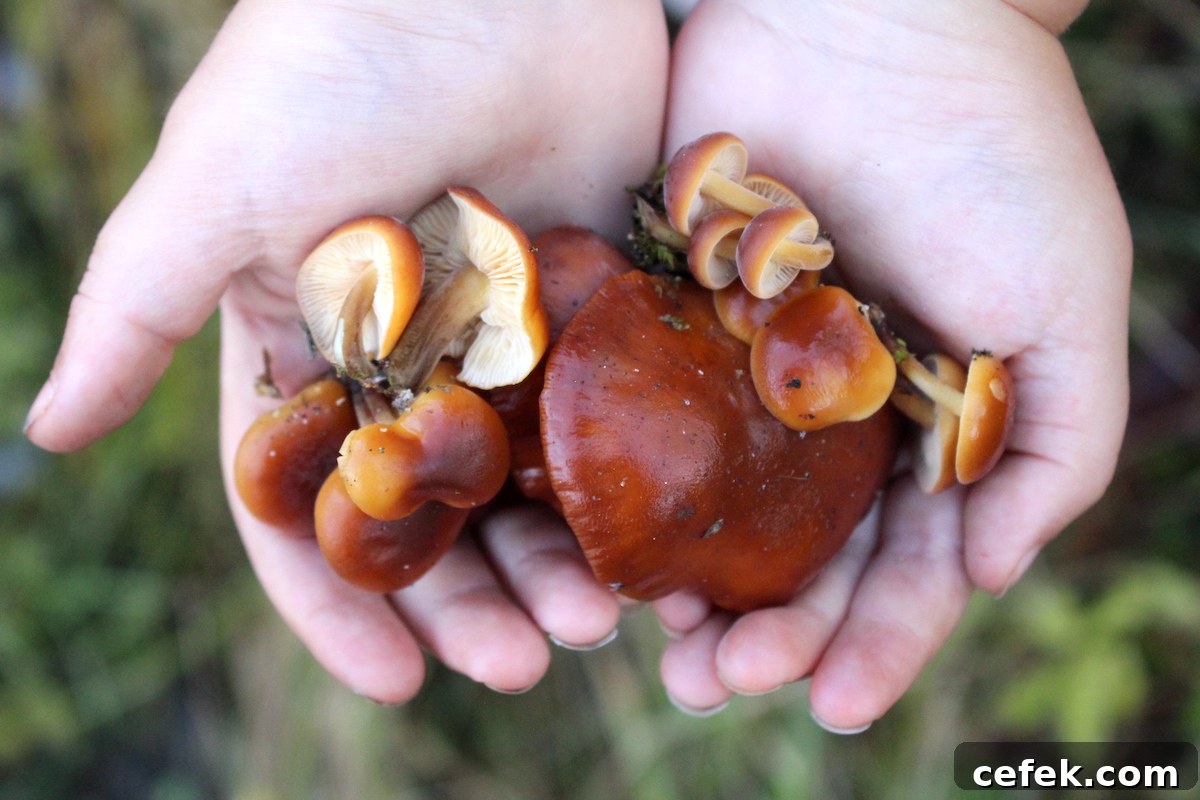
Wild enoki are small, reddish‑brown mushrooms that form dense clusters on dead wood. Cultivated enoki, common in Asian cuisine, look quite different — long, thin white stems and tiny caps — because they are grown in the dark. Despite the different appearance, cultivated and wild enoki have a similar taste.
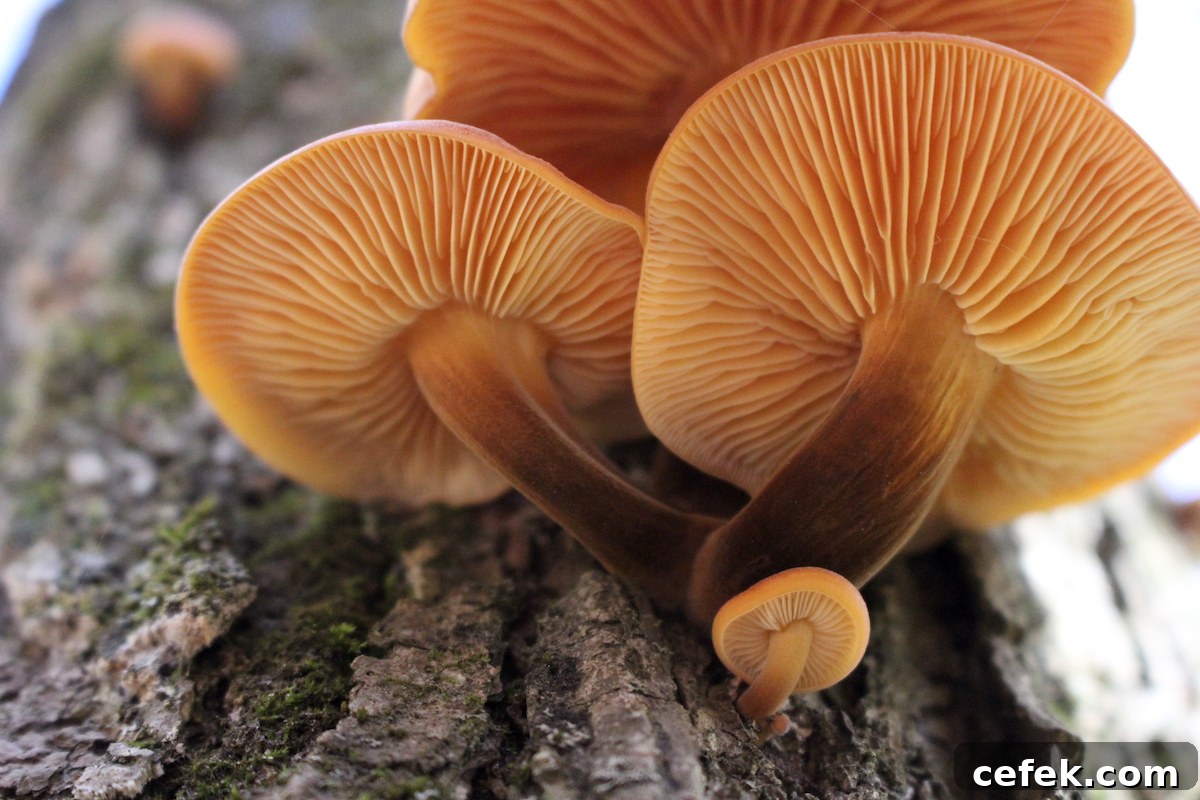
In the wild they usually fruit in cool, brighter conditions during late fall or early spring, and in milder areas they can appear through winter. The wild form is often called “velvet foot” or “velvet stem” due to a fine, fuzzy texture at the base of the stem.
Where and When to Harvest Enoki Mushrooms
Enoki are a cold‑season species, appearing very early in spring and in late autumn. In temperate zones they often fruit before morels and after other cold‑season species like lion’s mane. In coastal or southern regions they can be abundant through winter.
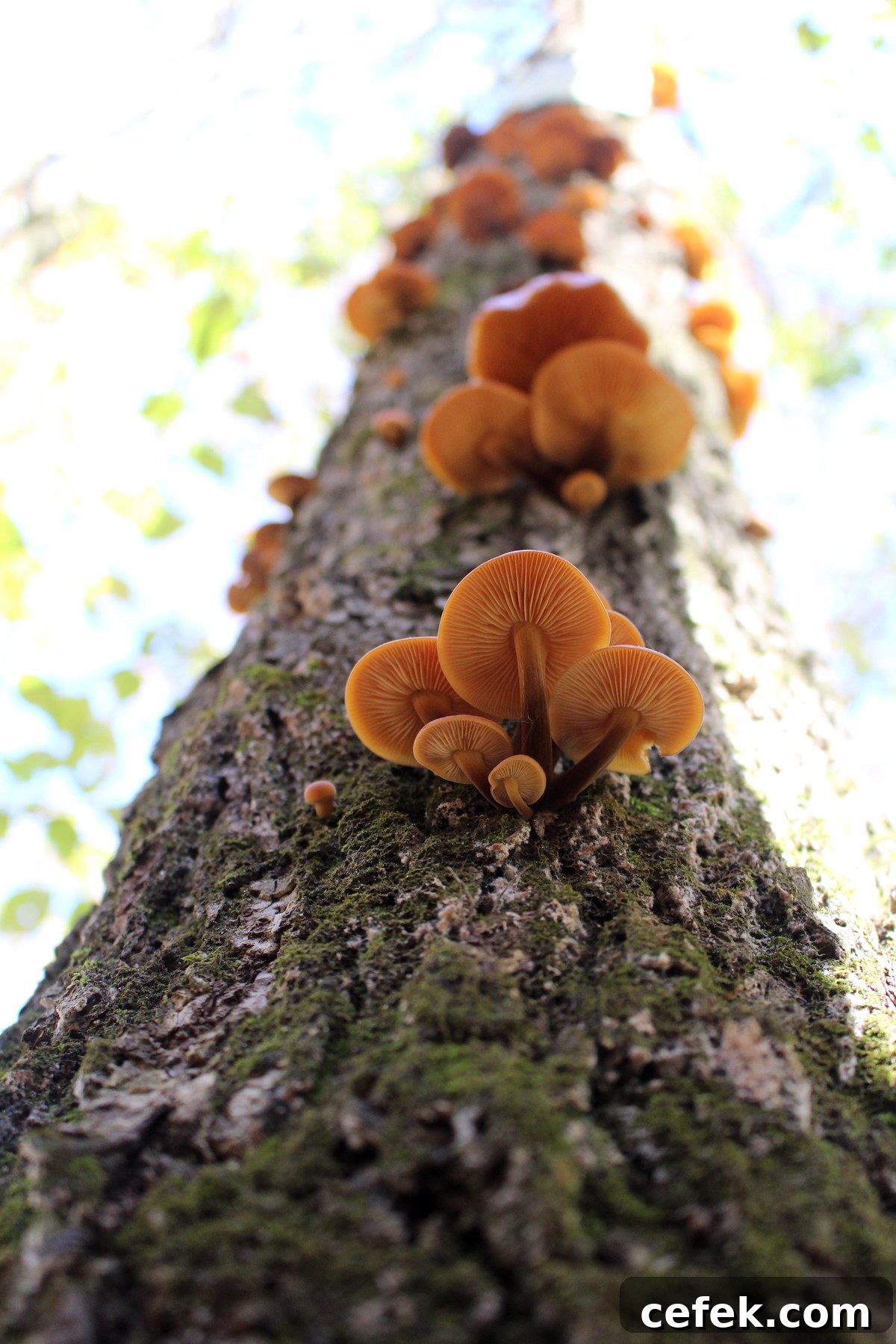
As wood‑decayers, enoki grow on dead hardwoods. They are frequently found on dead elm and willow, though they can colonize several hardwood species. Look for clusters emerging from decaying branches, stumps, and logs.
Identifying Wild Enoki Mushrooms
Enoki are small, glossy brown mushrooms that grow in clusters on dead wood. Unfortunately many small brown mushrooms share that general appearance, and some are toxic.
Key field features to look for:
- Clusters of small mushrooms arising from dead wood
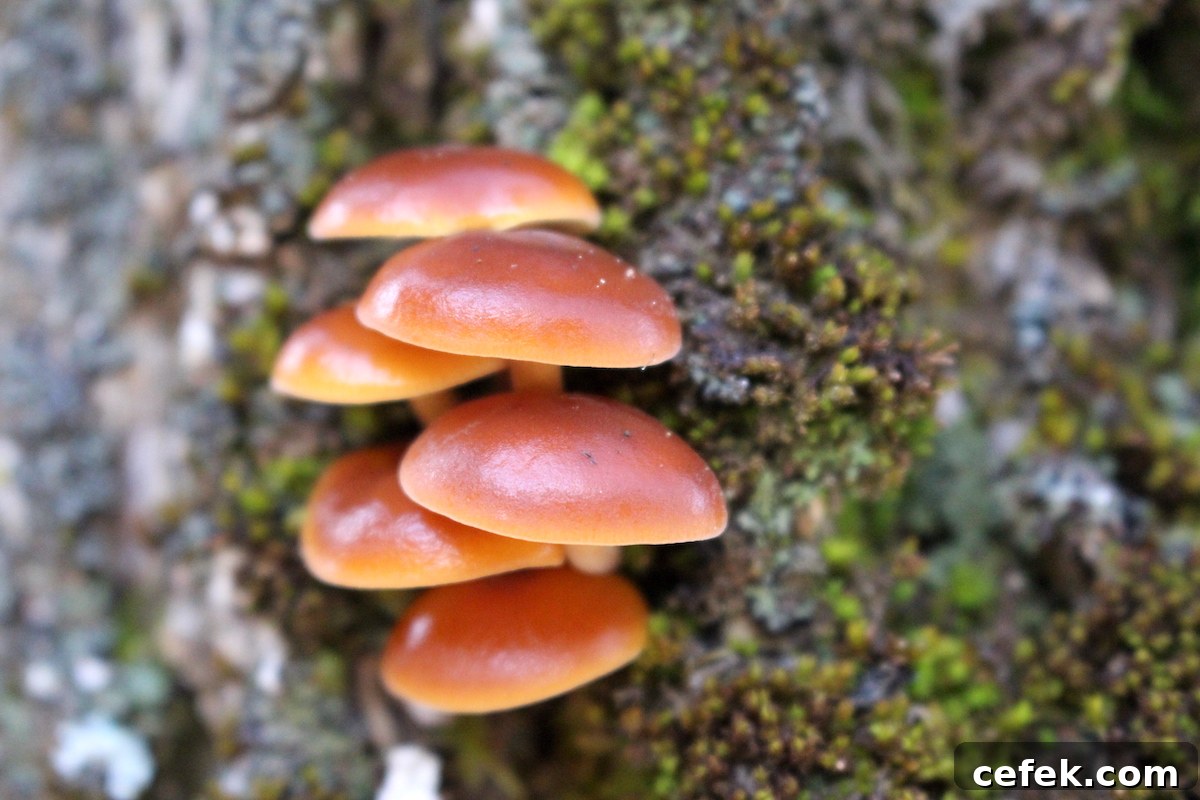
- Shiny, glossy red‑brown caps when fresh (caps dull with age)
- Darker center on the cap with paler edges
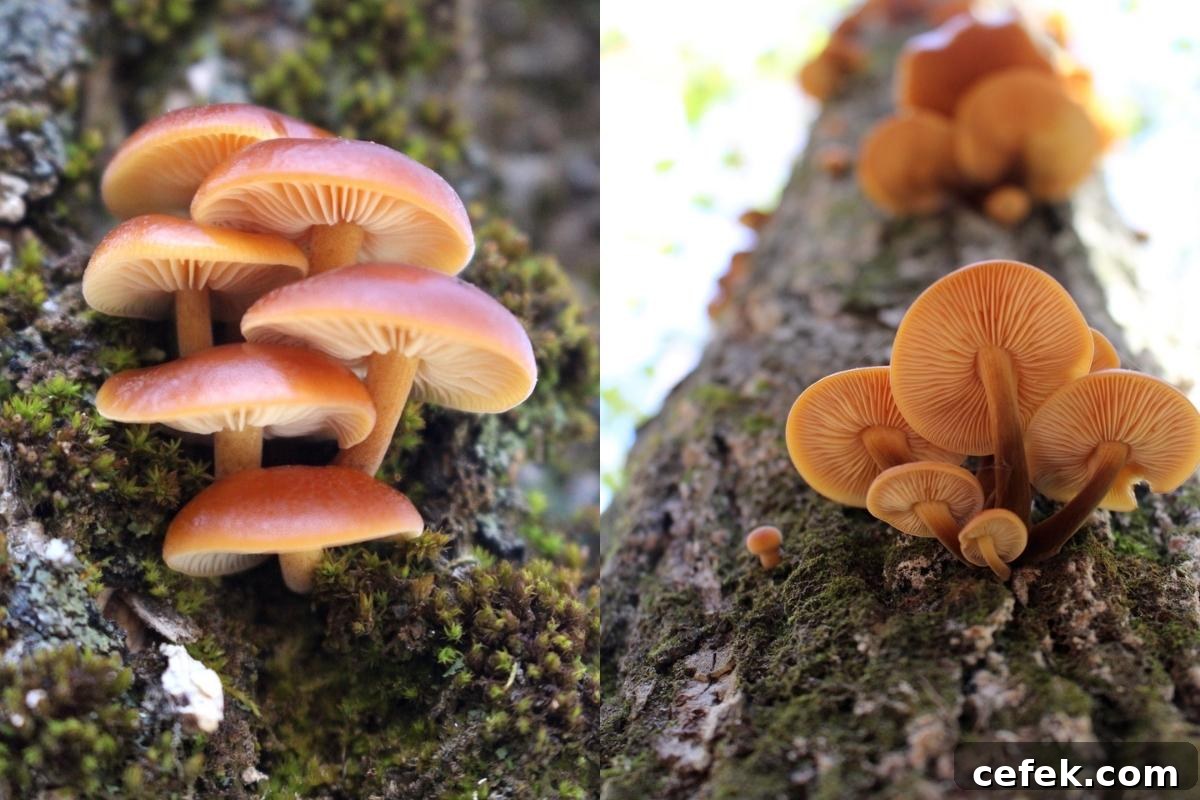
- Closely spaced white or pale yellow gills attached to the stem
- A velvety or fuzzy base on the stem, often darker near the bottom
Because many toxic species resemble enoki, the single most important step is to take a spore print for every cluster you intend to eat.
Enoki Mushroom Spore Print
A spore print is mandatory for positive identification of wild enoki. Enoki has a white spore print; if a mushroom produces a spore print of any other color it should be discarded. Never skip this step, and take a spore print from each cluster because toxic look‑alikes can grow side‑by‑side on the same wood.
To make a spore print, place the cap(s) gill‑side down on a dark surface (aluminum foil or dark paper work well) and leave them for several hours or overnight. Inspect the deposited spores: enoki will leave a white print.
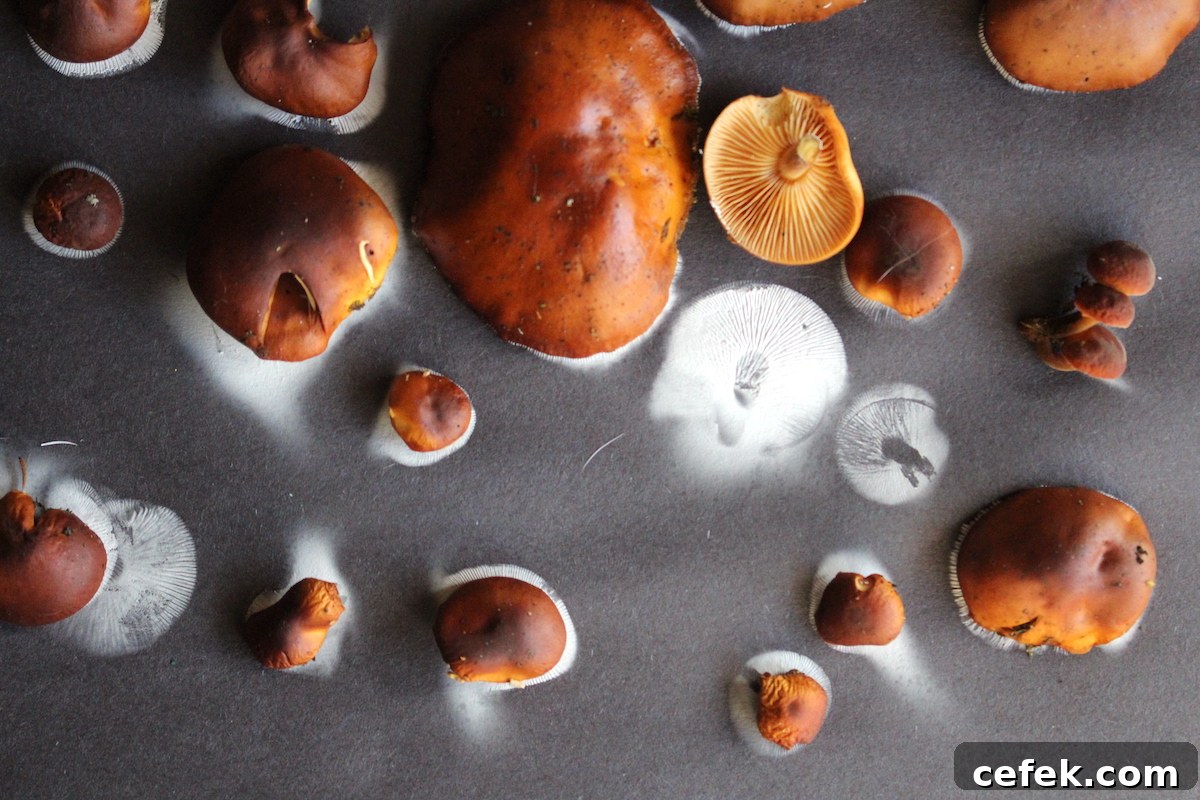
Wild enoki deteriorate quickly, so fresh specimens are best for spore printing and eating. If mushrooms are already dull and slimy they are past their prime and should be avoided.
Enoki Mushroom Look‑Alikes
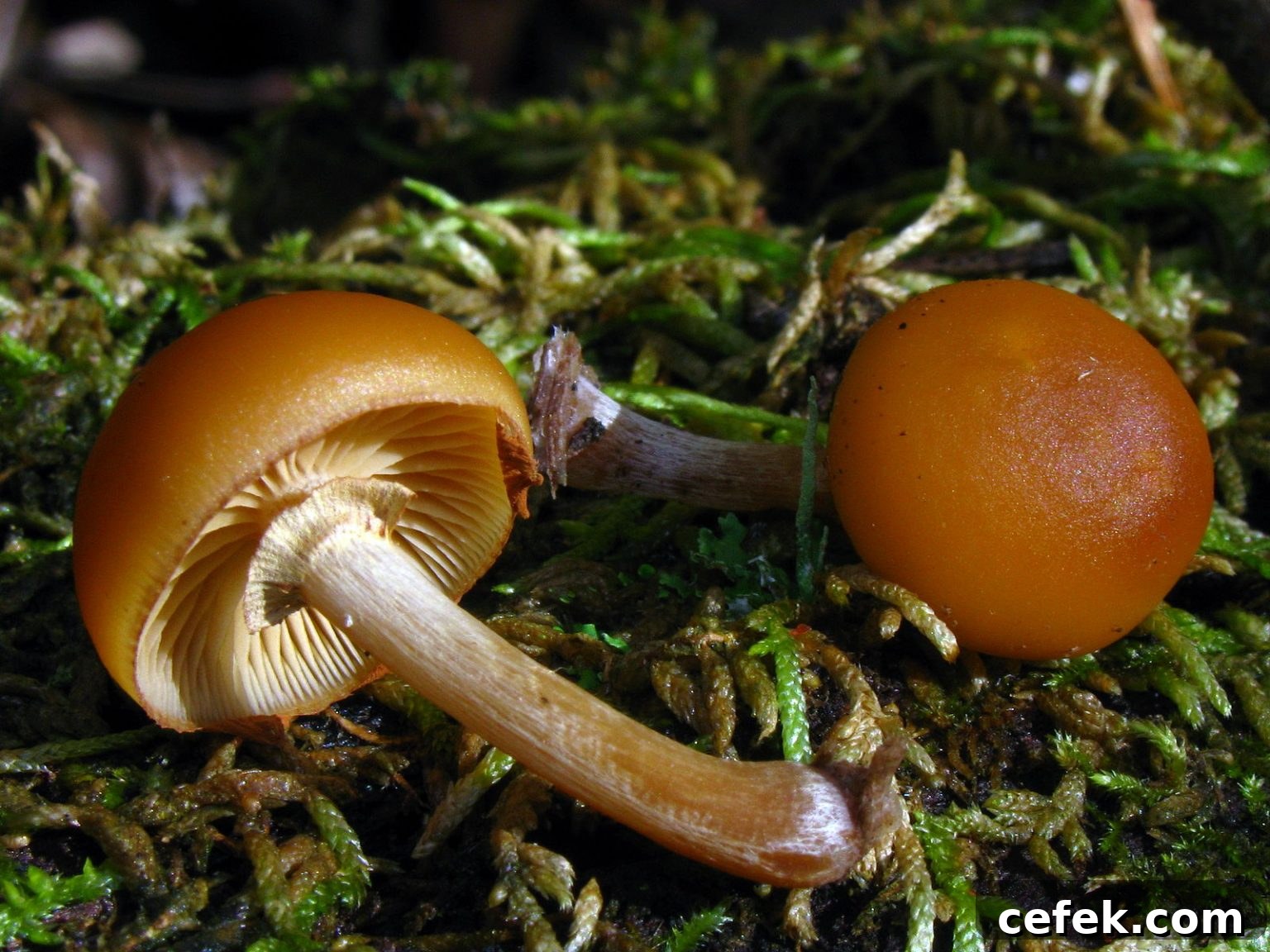
The most dangerous look‑alike is deadly Galerina (Galerina marginata). Galerina can be fatal if consumed. Differences to check:
- Galerina often has a ring (annulus) on the stem; enoki does not. Note a ring can fall off, so absence of a ring is not sufficient by itself.
- Galerina has a rusty brown spore print; enoki has a white spore print.
Because a ring may be absent on older or damaged specimens, always confirm with a spore print rather than relying solely on visible rings.
Using Wild Enoki Mushrooms
Because of the risk of deadly confusion, this species is not recommended for casual or beginning foragers. For many people the best approach is to admire and identify enoki in the field and leave them undisturbed.
If you are an experienced forager and confident in your identification (with spore prints for each cluster), wild enoki can be cooked like cultivated enoki. They are meatier than the long cultivated stems but are flavorful and versatile in soups, stir‑fries, and other dishes.
- Cook similarly to cultivated enoki: quickly sauté, add to soups, or steam
- Trim and clean well; discard any mushrooms that look aged or slimy
Foraging Guides
For more foraging resources:
- Guides to edible wild berries and fruits
- Information on poisonous berries
- Wild edible roots, tubers and bulbs
- Common edible weeds
- Winter and spring foraging guides