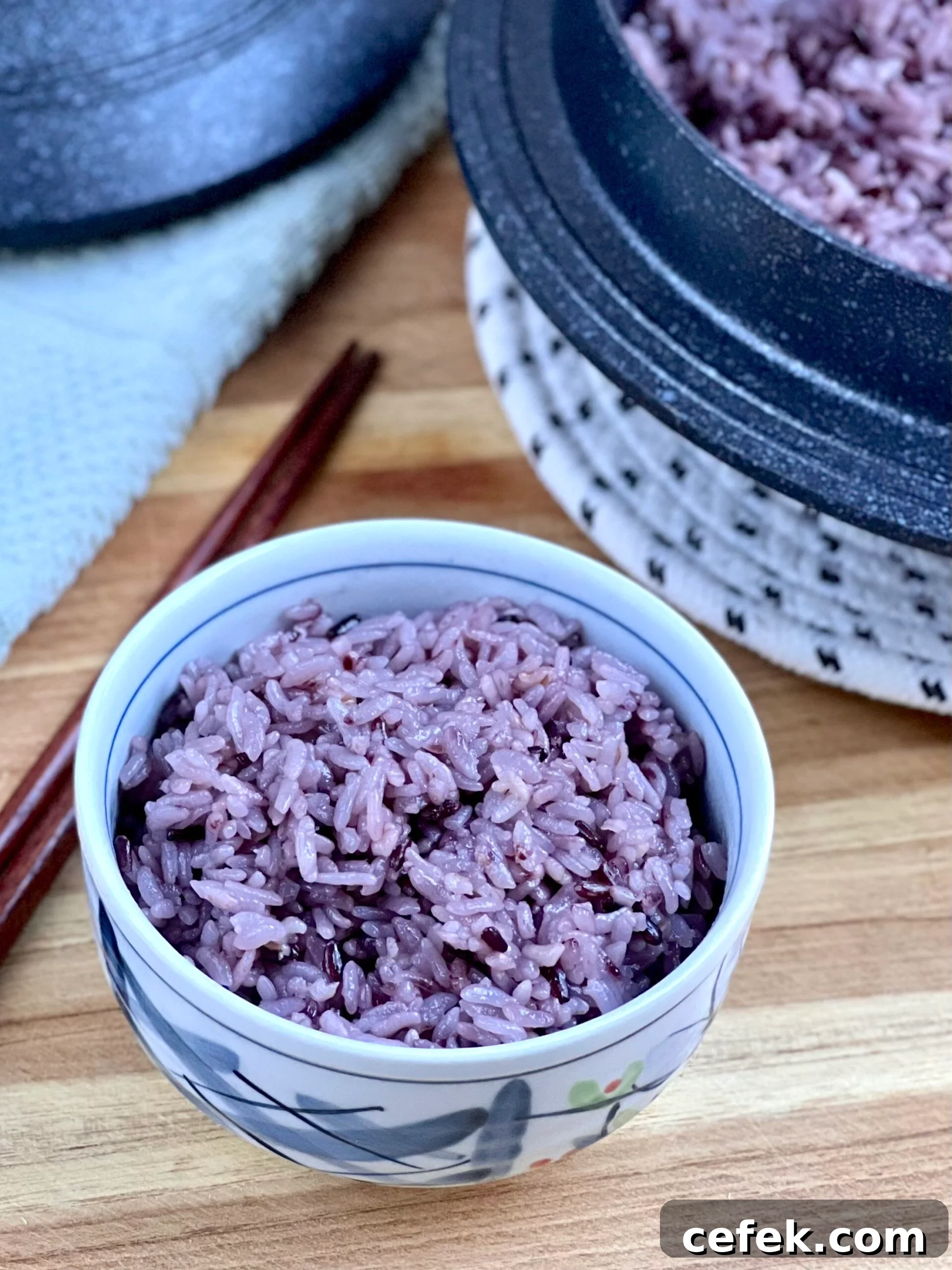
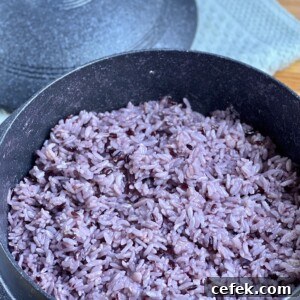
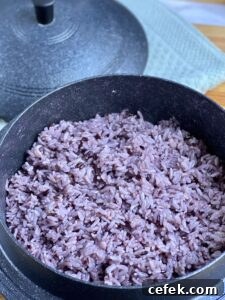
Korean purple rice has always been my favorite steamed rice, and I still make it often. The purple hue comes from mixing a small amount of black rice with short-grain white rice, creating a subtly nutty, slightly sweet multigrain bowl.
In Korean, heukmi bap (흑미밥) refers to black rice. What I prepare is technically a japgokbap (multigrain rice), though that version often includes beans. This recipe sits between the two: mostly white rice with some additional grains and black rice to tint the mixture purple. Many people ask where to buy “purple” rice—there’s no separate purple grain. A little black rice added to white rice produces the beautiful color.
I cook my rice in a gamasot (가마솥), a traditional Korean pot used for centuries. It’s versatile, durable, and in my experience makes better rice than a rice cooker. If you already own various kitchen gadgets, a heavy pot is all you need and it saves counter space and money compared to another single-purpose appliance.
Why I prefer cooking rice on the stove
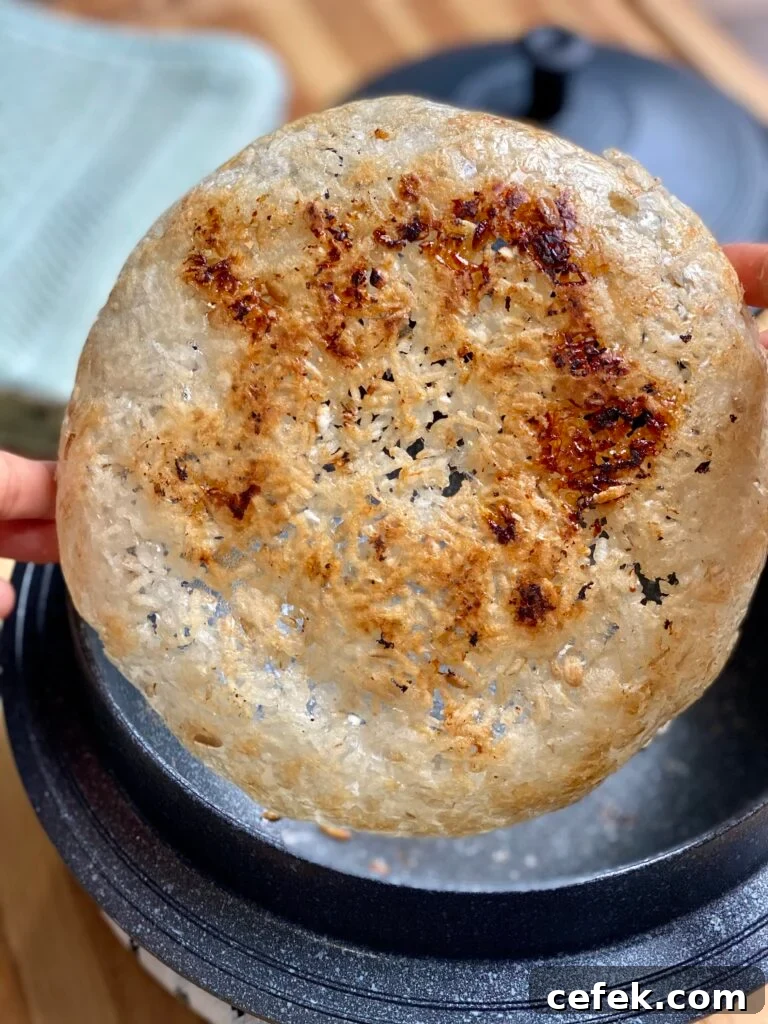
You don’t need a gamasot to get excellent results—just use any heavy-bottomed pot on the stove. One main reason I prefer this method is nurungji, the lightly scorched rice that forms at the bottom of the pot. Nurungji is crunchy and full of flavor, and making rice on the stove makes it easy to enjoy this tasty byproduct.
Another reason is versatility. Rice cookers are convenient, but they can’t easily handle every rice dish. For recipes like Mexican red rice, Cuban rice, or coconut garlic rice—where ingredients are sautéed or added at different stages—the stove offers better control and flavor development.
Ingredients:
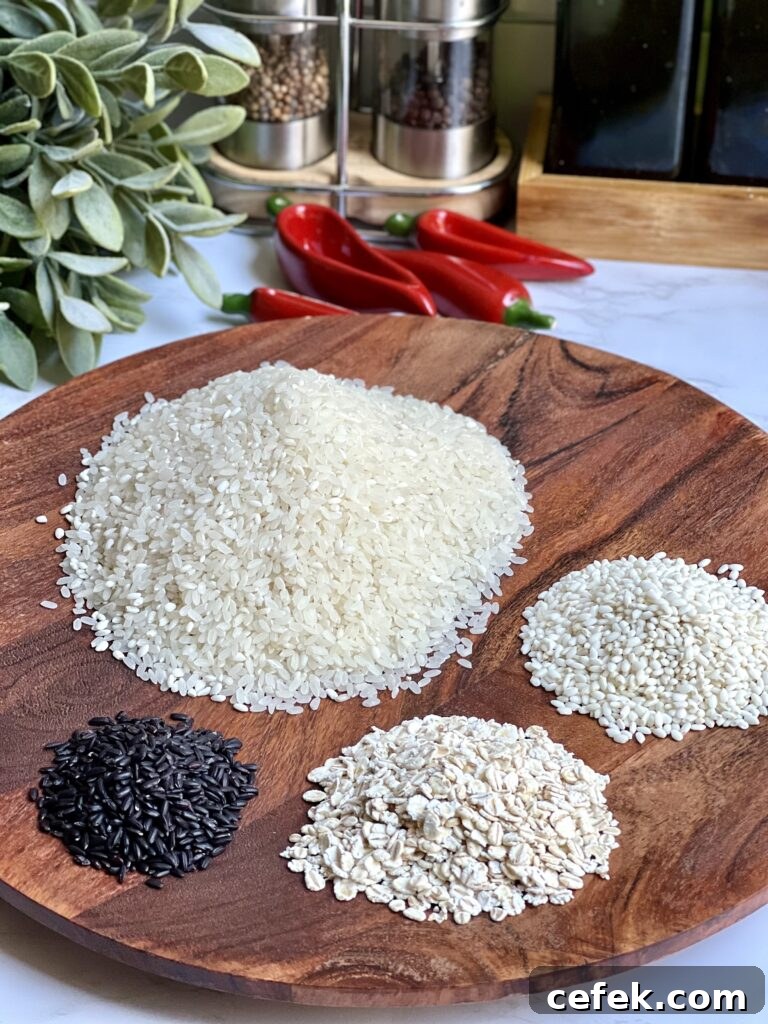
- Short grain white rice – I usually buy a Korean or Japanese brand and choose what’s on sale; any quality short-grain rice works.
- Pressed or rolled barley – adds fiber, a chewy texture, and a mild nutty flavor. This is optional but is how I like my multigrain rice.
- Sweet rice (glutinous rice) – I use the same amount as the barley. It adds a touch of sweetness and stickiness but is optional.
- Black rice – not wild rice. A small amount is enough to tint the rice purple; increase slightly if you prefer a deeper color. Black rice also contributes extra nutrients compared with white rice alone.
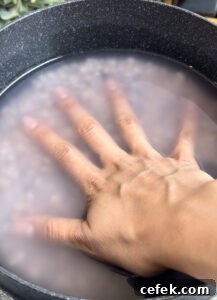
- Water – I don’t use exact water-to-rice rules; after years of cooking rice I eyeball it. A simple, reliable trick: place your hand flat on top of the rice and add water until it just covers your knuckles.
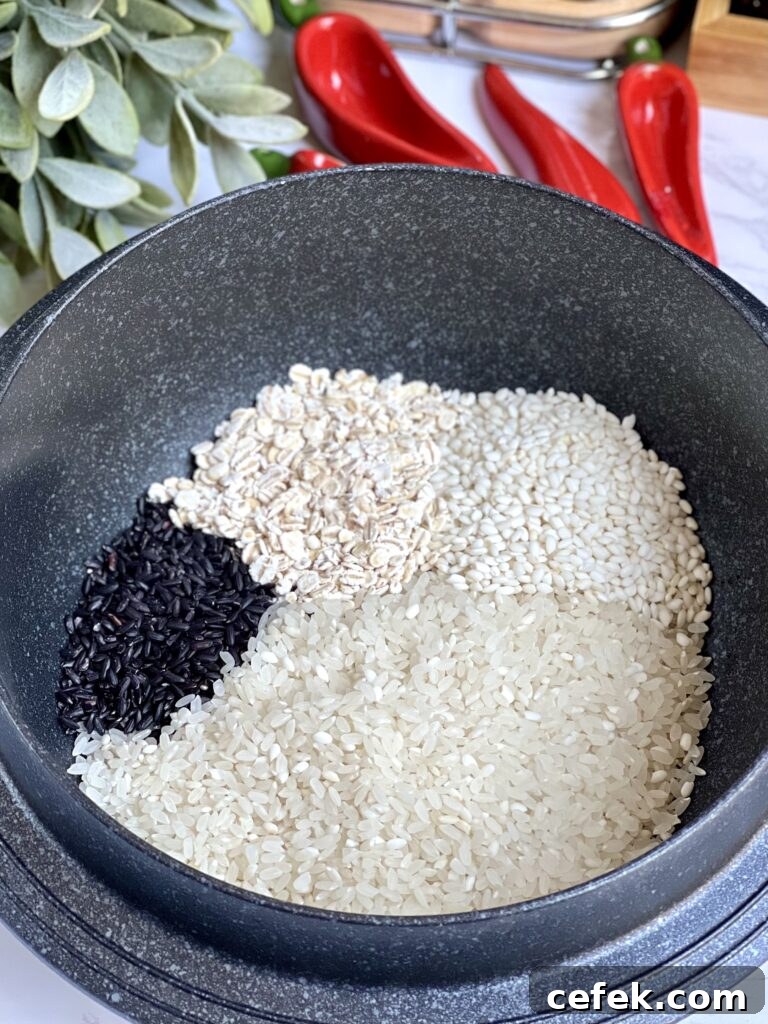
Cooking Method
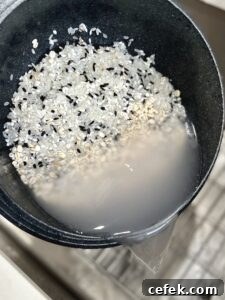
- Rinse the rice under cold water until the water runs clear, usually 3–4 rinses. This removes excess starch and prevents overly gummy rice.
- Soak the rice for 30 minutes. Soaking lets the grains absorb water, shortens cooking time, and helps the rice stay aromatic and tender.
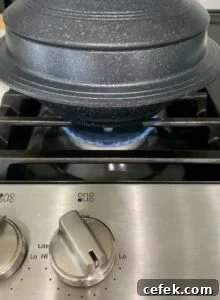
- After soaking, cook the rice covered on medium-low heat for 20 minutes. Heat levels vary by pot thickness and stove power, so adjust if needed. Keep the lid on during cooking.
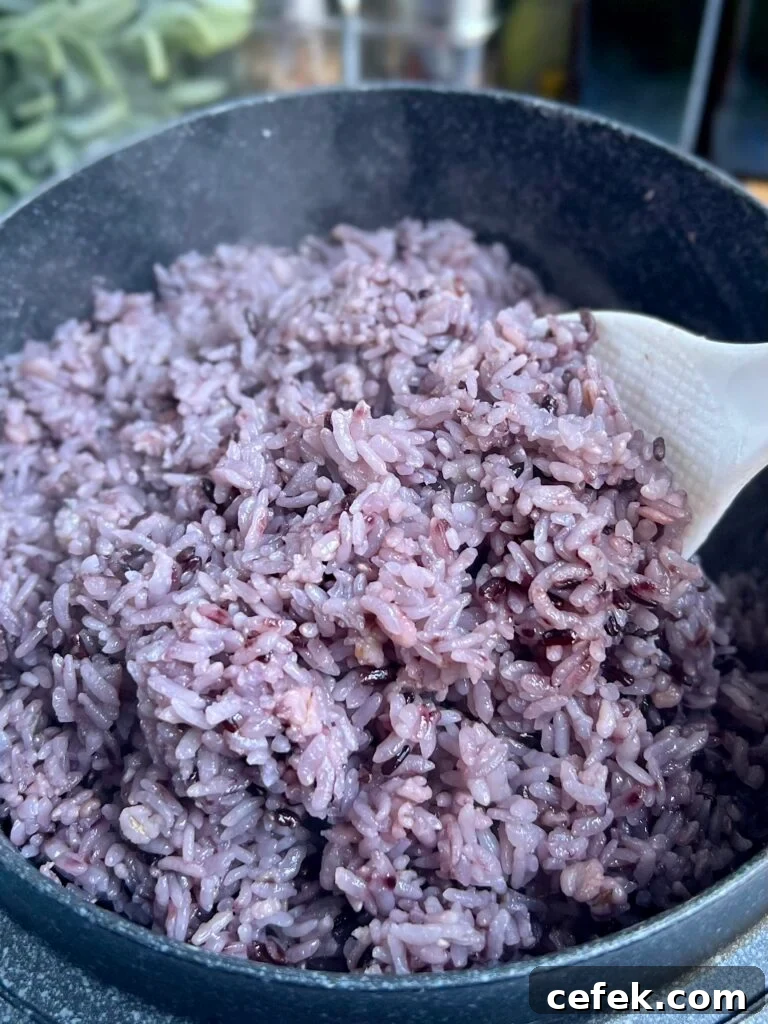
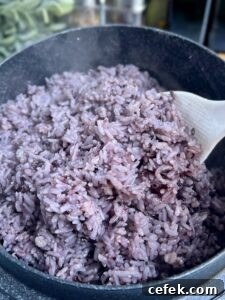
- When the 20 minutes are up, turn off the heat and crack the lid slightly. Let the rice rest for about 5 minutes, then gently fluff with a rice paddle to release remaining steam. If the rice seems a little wet, it will firm up as steam escapes.
Nurungji
Nurungji (누룽지) is the browned, crispy rice that forms on the bottom of the pot. I make it every time I cook rice and often snack on it afterward. Nurungji can be lightly toasted or more deeply browned depending on how long you leave the rice on low heat at the end. It works well with both plain white rice and purple rice.
Korean Purple Rice- 흑미밥 (Heukmi Bap)
Ingredients
- 1.5 cups short grain white rice
- 1/4 cup glutinous rice (sweet rice)
- 1/4 cup pressed barley or rolled barley
- 2 tbsp black rice
- 2.5 cups water roughly
Instructions
-
Rinse the rice under cold water until the water runs clear, about 3–4 times.

-
Place your hand flat on top of the rice and add water until it just covers your knuckles. Cover and let the rice soak for 30 minutes. (If using a rice cooker or pressure cooker, you can skip soaking.)
-
After soaking, cook the rice covered on medium-low heat for exactly 20 minutes. Adjust heat as needed for your pot and stove.
-
When time is up, turn off the heat, slightly crack the lid, and let the rice rest for about 5 minutes. Gently fluff with a rice paddle. If the rice looks wet, it will firm up as steam escapes.
-
Serve the rice when each grain appears distinct and tender—not mushy or broken.
Nutrition information is automatically calculated and should be used as an approximation.