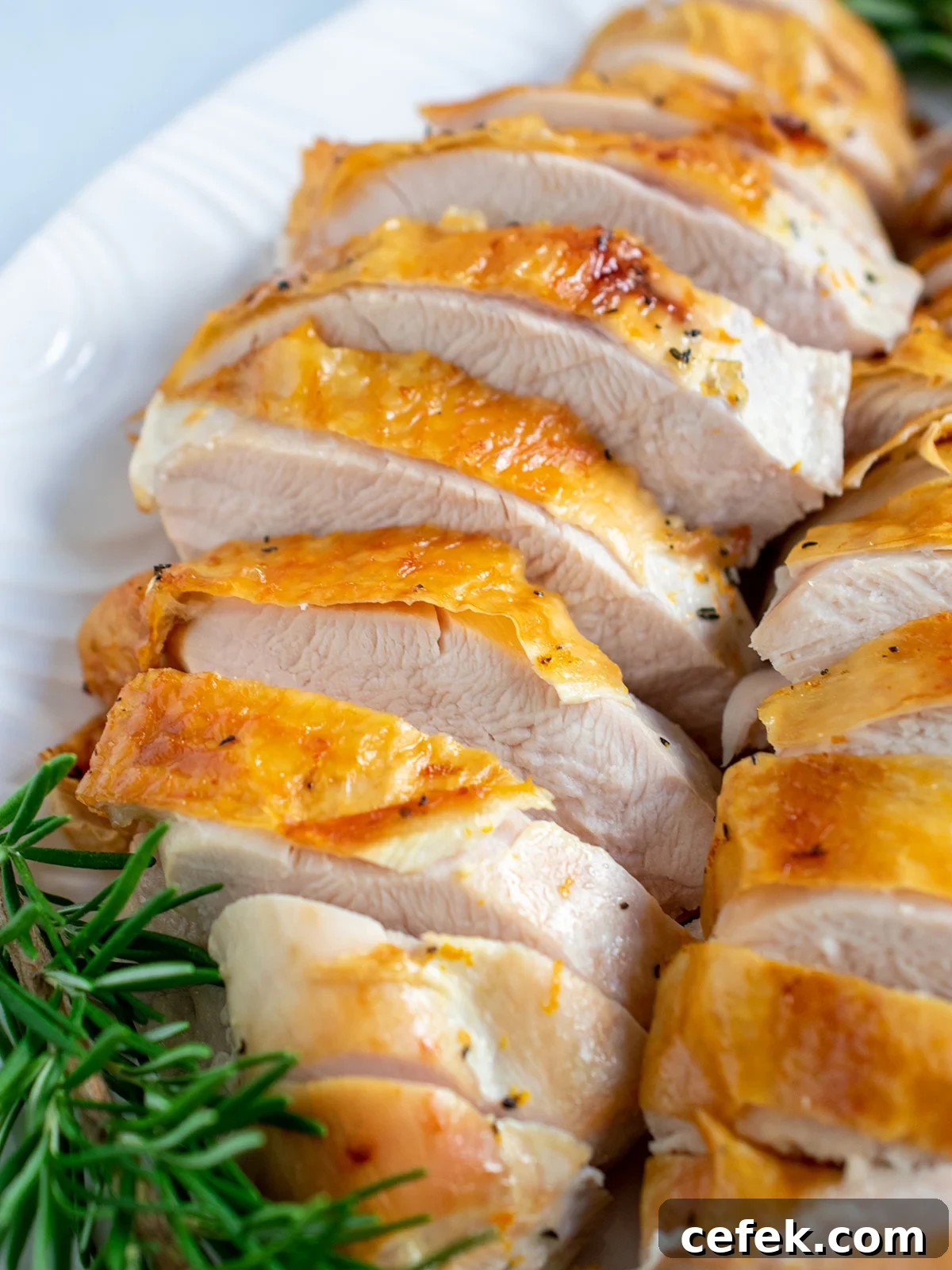
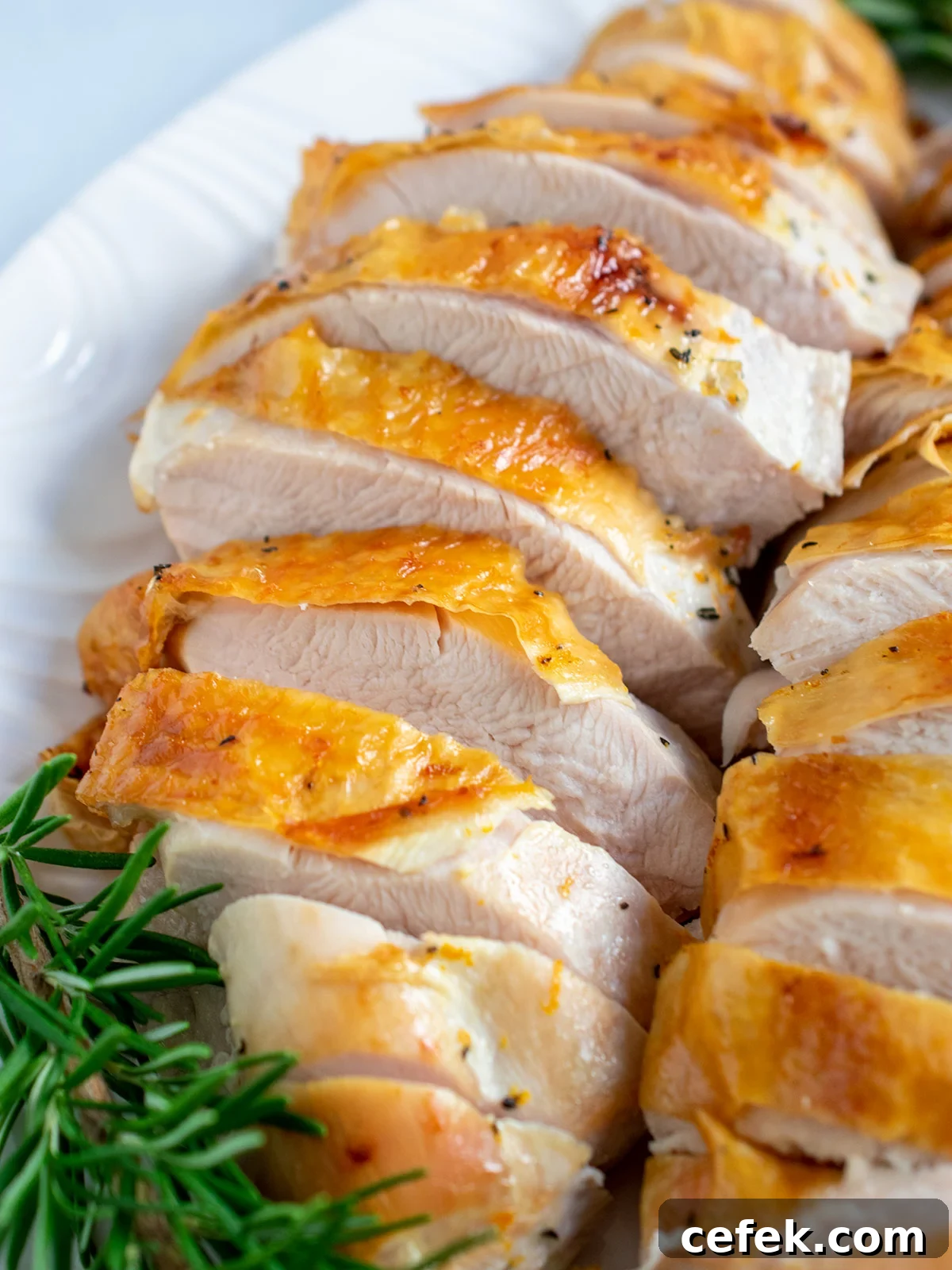
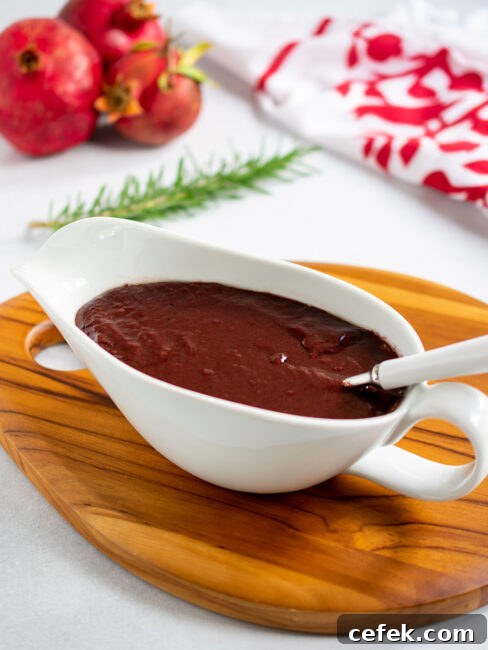
A dry-brined bone-in turkey breast is an ideal option for a smaller Thanksgiving gathering or whenever you want a taste of the holiday year-round. For an extra special touch, finish it with a bright pomegranate gravy.
This post contains affiliate links. I may earn a small commission from qualifying purchases at no extra cost to you.
Why you’ll love this recipe
Dry brining produces juicy white meat and reliably good results. The same dry brine technique that keeps a whole turkey moist works beautifully on a bone-in turkey breast. A turkey breast is easier to handle, perfect for a smaller crowd, and great when you want extra white meat without roasting a whole bird.
Ingredients and substitutions
There are few ingredients required — the salt and resting time are the most important. Use an un-injected, natural turkey breast for best results.
Dry brine turkey breast
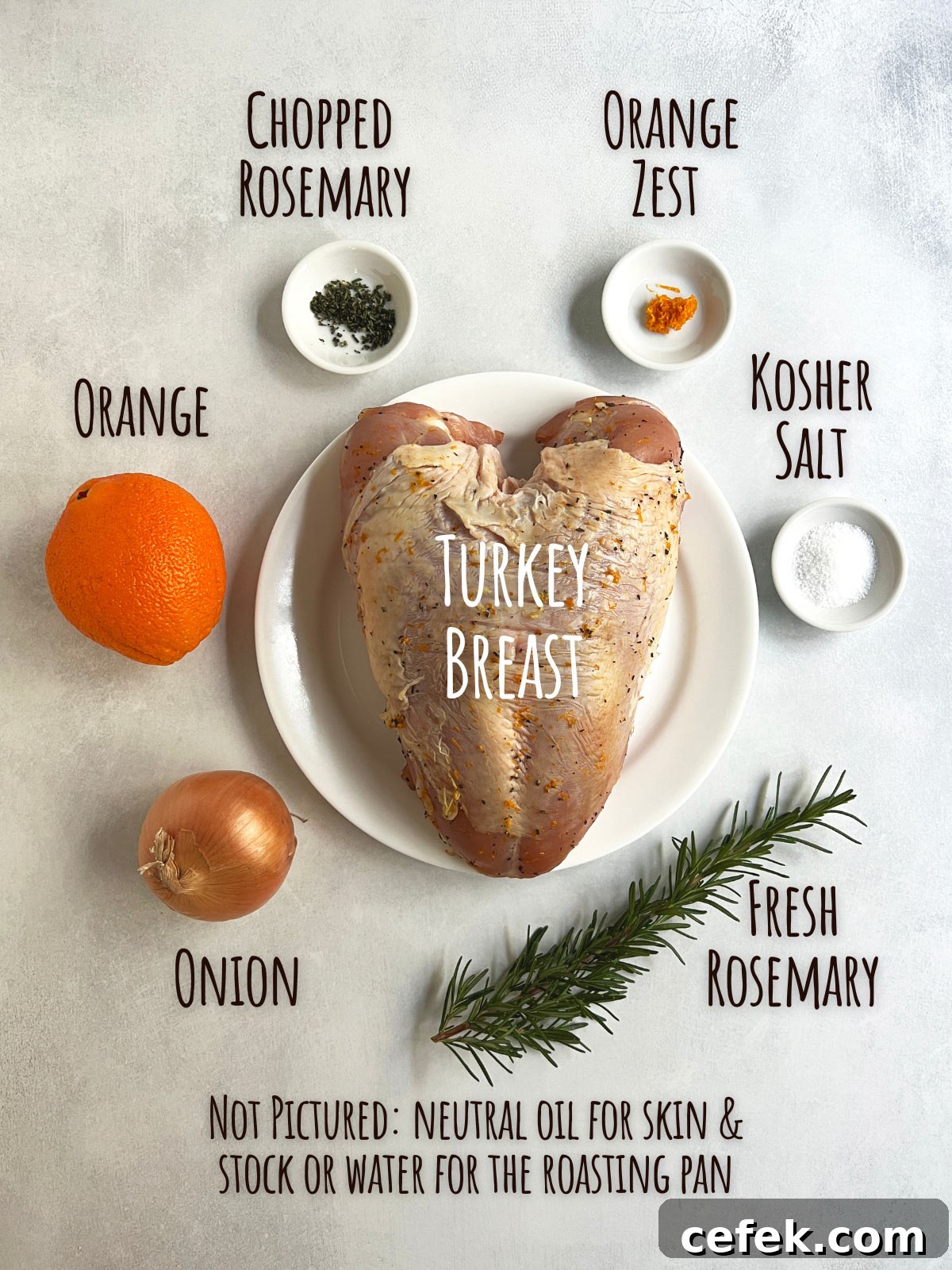
- Bone-in turkey breast: 4–6 pounds is a good size for this method.
- Kosher salt: Diamond Crystal is preferred by many cooks because it’s less dense than Morton’s. For dry brining, aim for about 1 tablespoon kosher salt per 5 pounds of turkey; adjust slightly for a larger breast.
- Orange: Use ½ teaspoon zest in the brine and slice the rest to tuck under the breast while roasting. Lemon works well as an alternative.
- Rosemary: Finely chop about ½ teaspoon for the brine and use a sprig under the breast while it roasts. Thyme or sage can substitute.
- Onion: Thick slices create a flavorful bed for roasting.
- Neutral high-heat oil: A light coating of vegetable or grapeseed oil before roasting helps the skin brown.
- Stock or water: Use low-sodium turkey or chicken stock or water in the roasting pan to keep drippings from burning.
How to make this recipe
Dry brining a breast is simple. The steps below cover brining, roasting, and carving. Finish with a gravy if you like.
Apply the dry brine
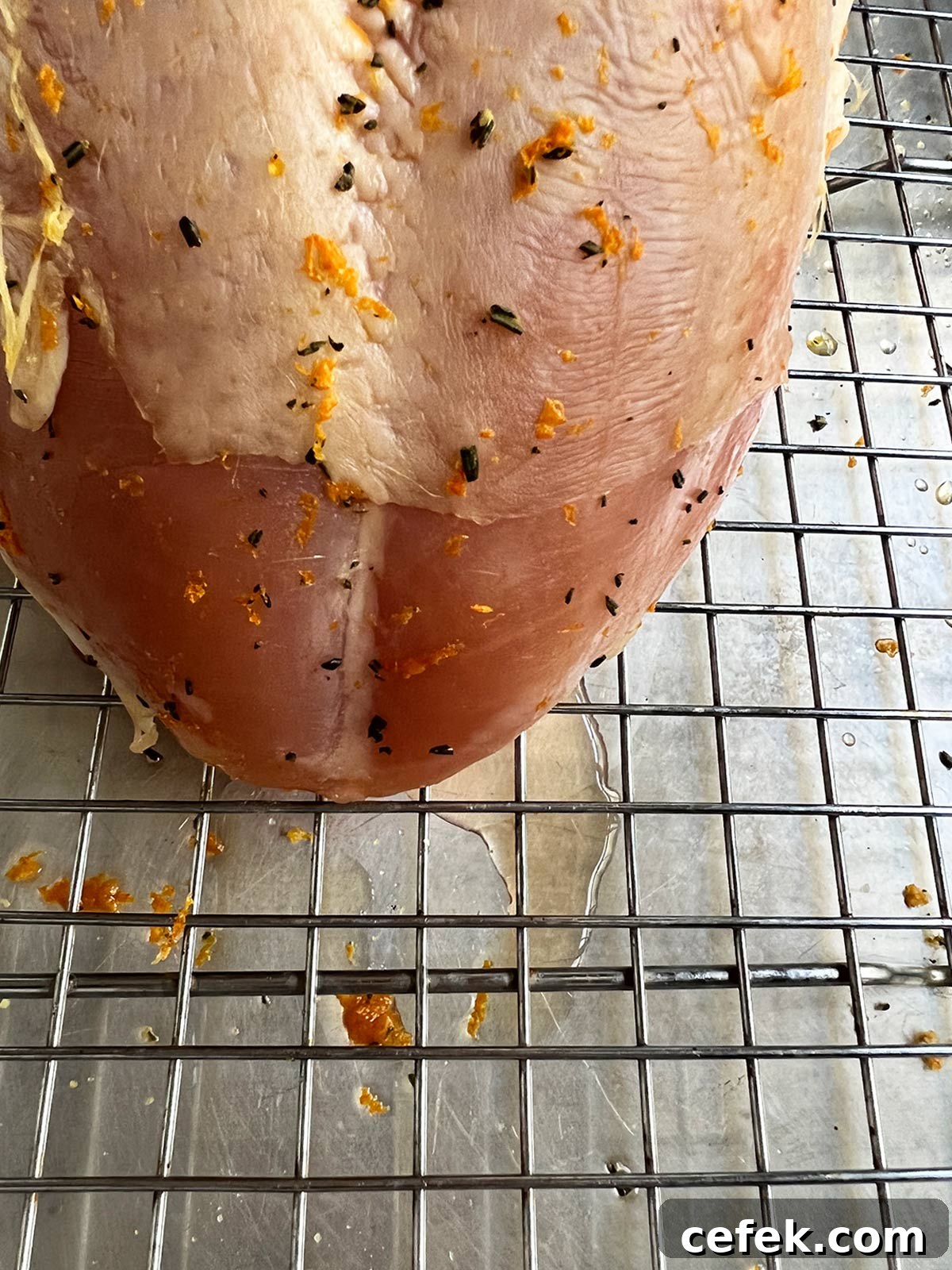
Make sure the turkey breast is fully thawed; allow at least 24 hours in the refrigerator if it arrives frozen. Mix the kosher salt, finely chopped rosemary, and orange zest to make the dry brine.
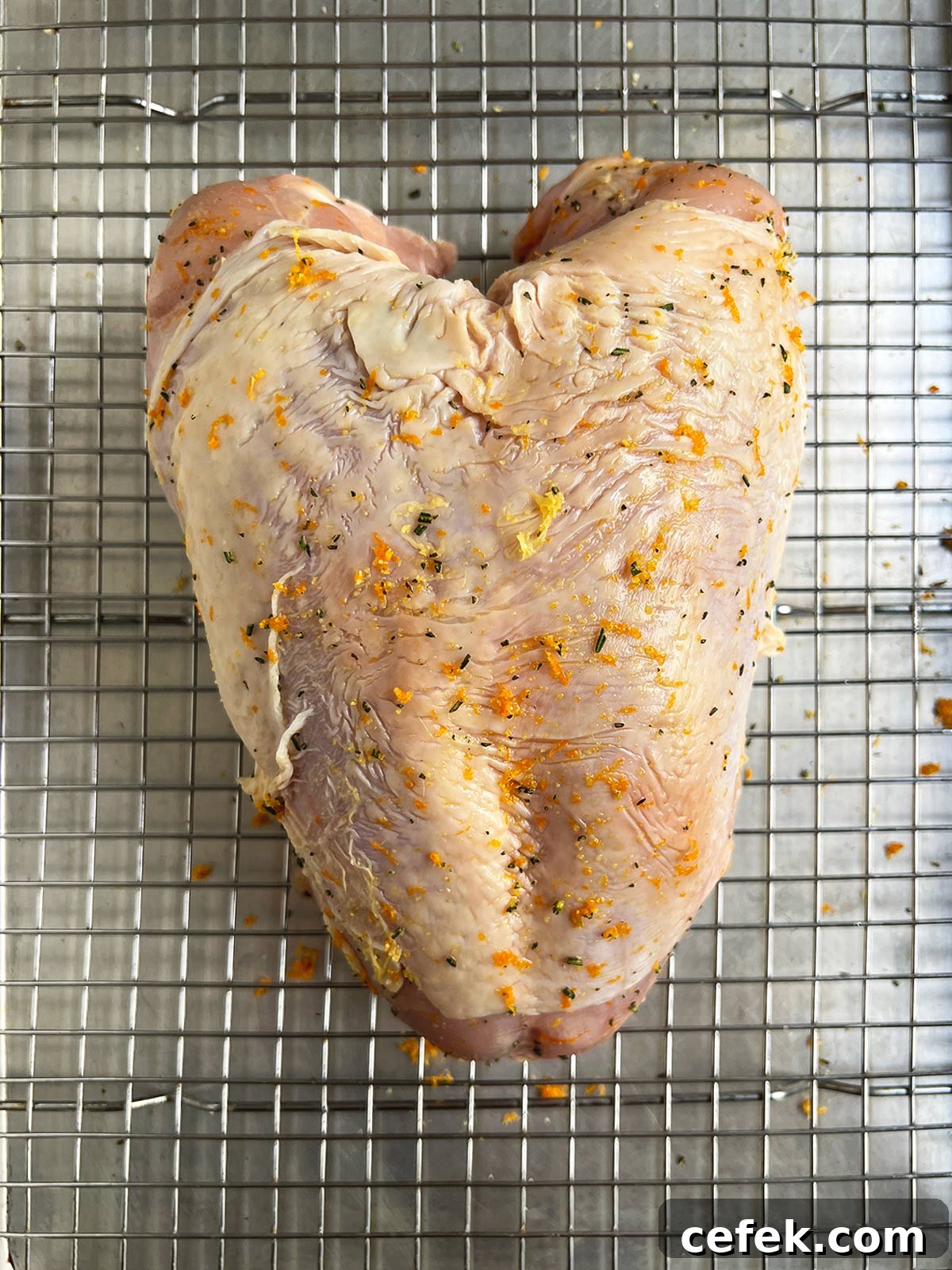
Place the breast on a plate or rack and rub the brine all over, including the underside and the ends. Refrigerate uncovered if possible for about 24 hours, turning the breast halfway through. If you must cover it, use a large plastic bag or loosely tent with foil. Leaving it uncovered helps the skin dry for better browning. You’ll notice some liquid released during the brine period — that’s normal.
Cook the turkey breast
About an hour before roasting, remove the breast from the fridge to take the chill off. Preheat the oven to 450°F with the rack one notch below center. Slice the onion and orange and arrange them in the roasting pan with a sprig of rosemary. Set the brined breast on top and pour about 2 cups of stock or water into the pan.
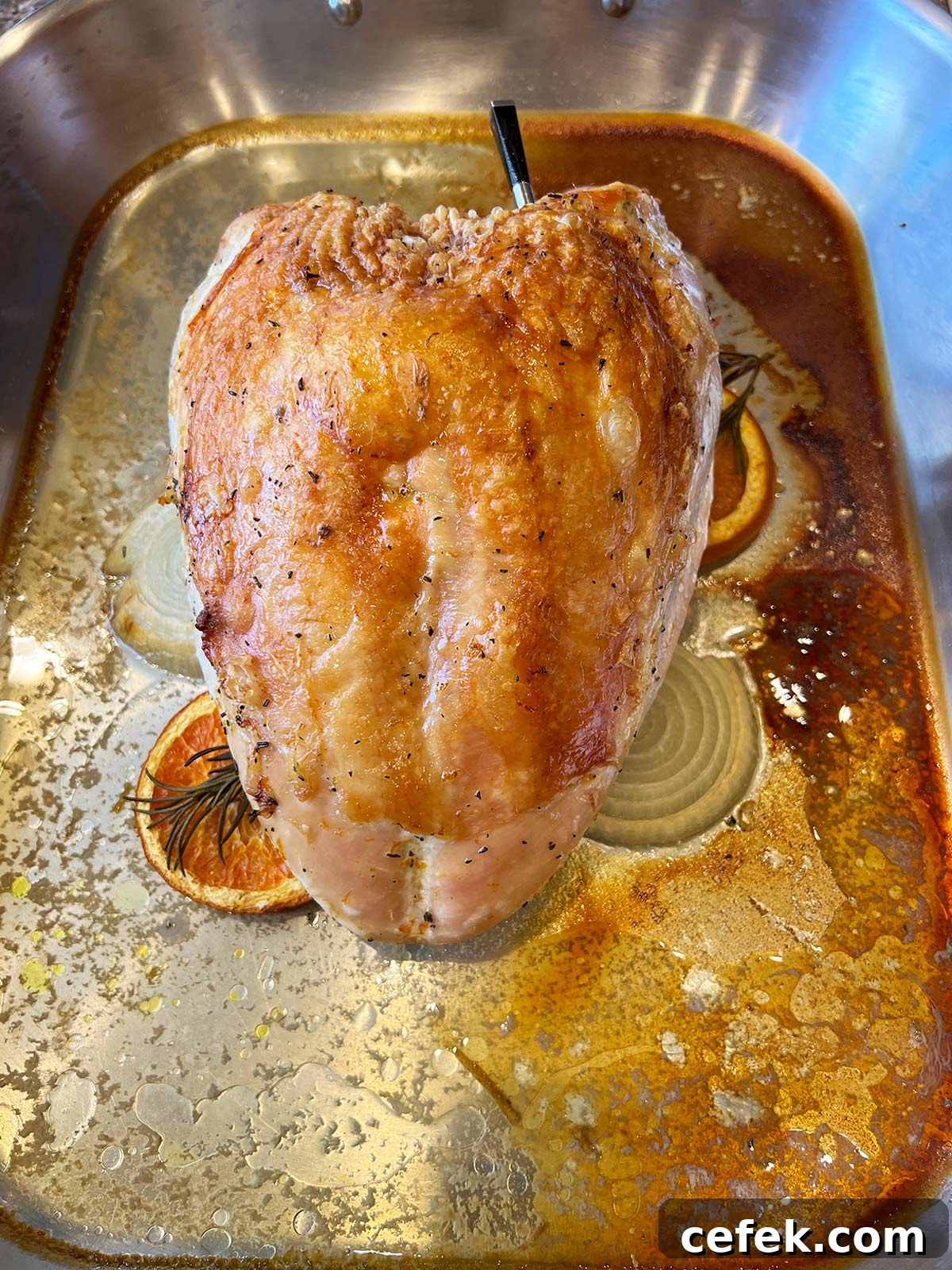
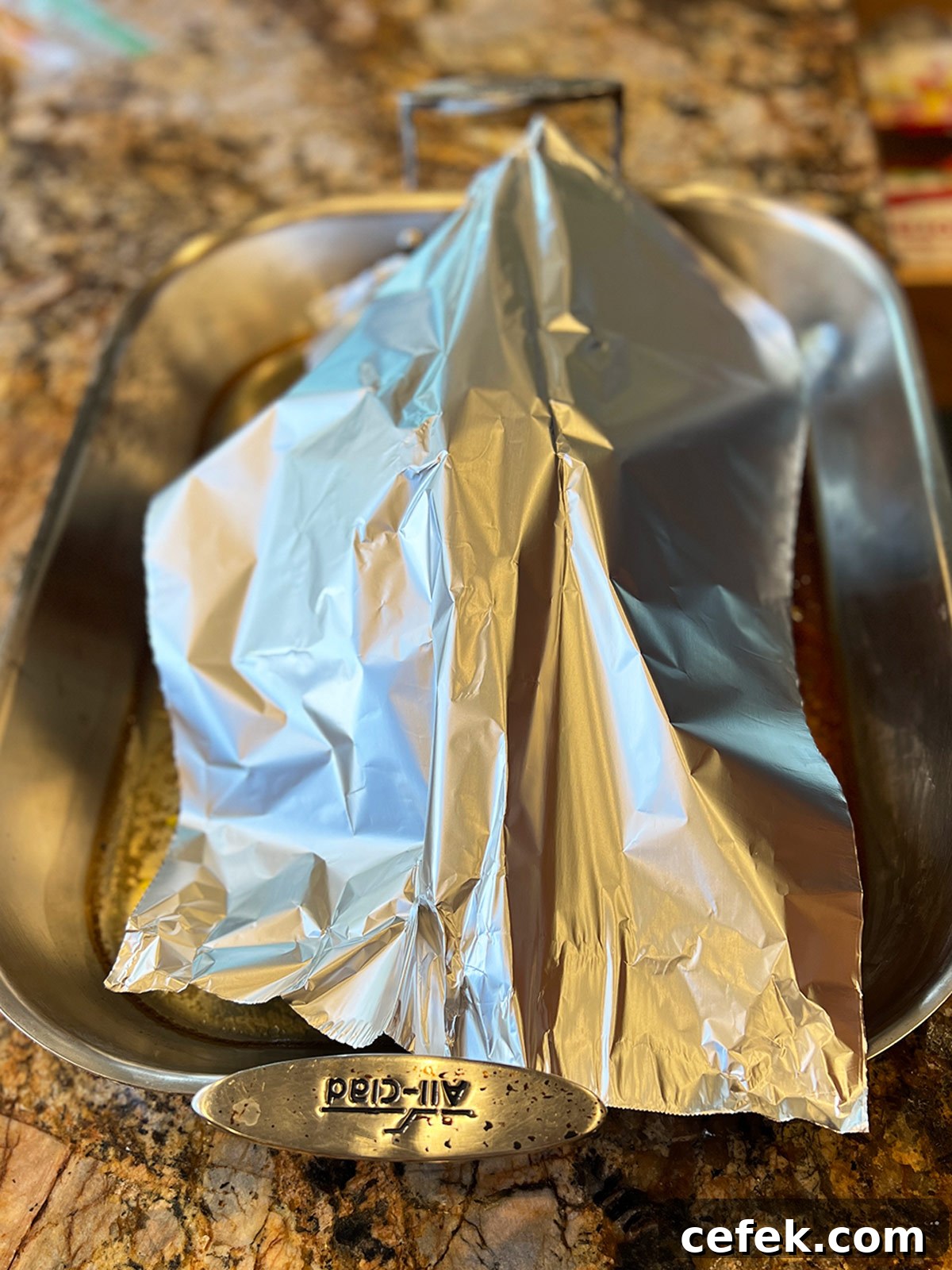
Bake at 450°F for roughly 20 minutes to jump-start browning, then reduce the oven to 350°F to finish cooking. A probe thermometer readable from outside the oven is very helpful so you don’t have to open the door. Remove the breast when the internal temperature reaches your target (see note below), then let it rest loosely covered. The residual heat will raise the temperature slightly as it rests.
Note on internal temperature: The FDA recommends 165°F for white meat. However, the science shows that holding turkey at lower temperatures for the right time achieves the same safety. We pulled our breast at 155°F and after resting it reached about 161°F with excellent texture. If you prefer to reach 165°F, remove the breast at 160°F to allow carryover cooking.
If making gravy
If you plan to make pomegranate or another gravy, you can reduce the sauce while the breast cooks or make it ahead. Finish by deglazing the roasting pan with stock or wine to incorporate the pan drippings — that adds depth and concentration of flavor.
Carve and serve the turkey
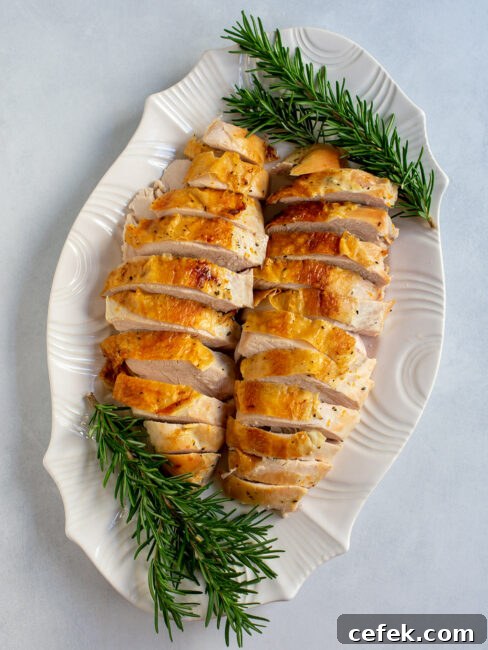
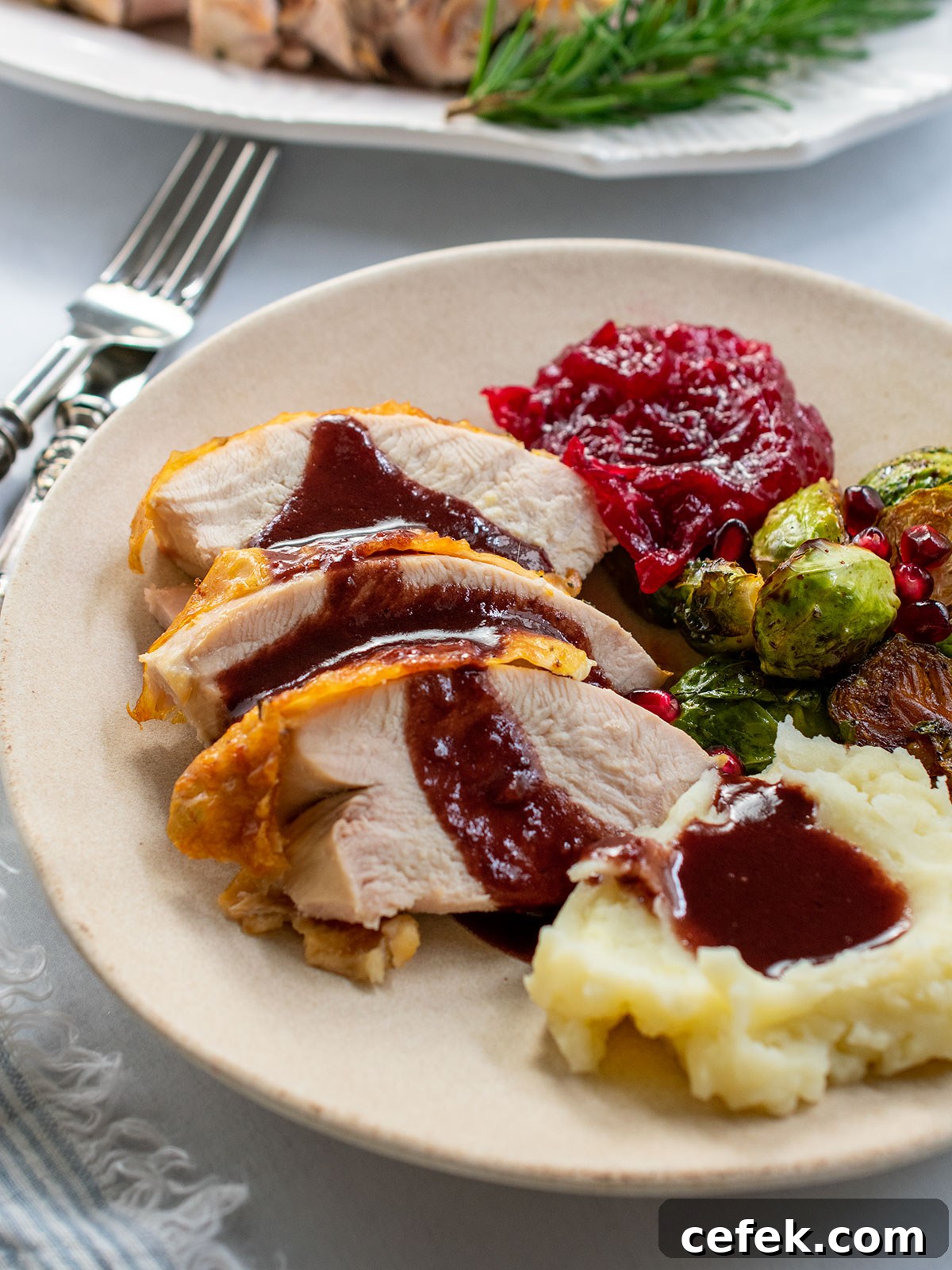
Once the bird has rested and the gravy is ready, remove each side of the breast from the bone and slice across in about ½-inch intervals (or your preferred thickness). Arrange the slices on a platter and serve with your chosen gravy and sides.
Expert tips and FAQs
- Use temperature, not time, to determine doneness. A probe-style thermometer that can be read from outside the oven is ideal.
- Meat carries over-cooks during resting. Keep the probe in while the breast rests or check periodically with an instant-read thermometer.
- If you don’t have a full 24 hours to brine, brine for as long as you can. Several hours will still help retain moisture. If brining longer than 24 hours, consider covering the breast part of the time to avoid over-drying the skin.
What to serve with dry-brine turkey breast
- Pomegranate gravy (pairs especially well)
- Sage sausage or challah stuffing
- Mushroom-studded challah stuffing
- Cranberry-orange jam for a bright, fruity contrast
P.S. If you try this recipe, please leave a star rating or review in the comments — feedback is greatly appreciated.
Dry Brine Turkey Breast for Thanksgiving or Year-round
A dry-brined bone-in turkey breast finished with pomegranate gravy will impress guests and works perfectly for smaller gatherings.
Servings
6
Times
- Prep: 20 mins
- Cook: about 1 hr 5 mins
- Brining and resting: 1 day 30 mins
- Total: about 1 day 1 hr 55 mins
Ingredients
- 1 bone-in turkey breast (4–6 lb)
- 1 tablespoon Diamond Crystal kosher salt (more if breast is near 6 lb)
- 1 sprig fresh rosemary, divided (½ tsp chopped for brine, remaining sprig for roasting)
- 1 medium orange, divided (½ tsp zest for brine, sliced for roasting)
- 1 small onion, thickly sliced
- 2 cups turkey or chicken stock
Equipment
- Roasting pan
- Probe or instant-read thermometer (recommended)
Instructions
Apply the dry brine
- Ensure the breast is fully defrosted.
- Mix kosher salt, finely chopped rosemary, and orange zest.
- Rub the mixture all over the breast, including the underside.
- Refrigerate uncovered for about 24 hours if possible, turning halfway through. If you must cover it, use a large bag or loose foil.
Cook the turkey breast
- Remove from the fridge about 1 hour before roasting and preheat oven to 450°F.
- Slice onion and orange; make a bed in the roasting pan with a rosemary sprig and place the breast on top.
- Pour 2 cups stock or water into the pan.
- Roast at 450°F for ~20 minutes, then lower to 350°F and continue until the internal temperature reaches your target (see notes). Allow to rest.
Slice and serve
- Remove each side of the breast from the bone, slice to desired thickness, and arrange on a platter.
- Serve with gravy and sides.
Notes
- Let the breast rest loosely covered in the roasting pan for a few minutes before moving to a cutting board so residual heat finishes the cooking.
- Use temperature, not time, to judge doneness. Aim for your desired final internal temperature, remembering carryover cooking will raise it a few degrees while resting.
- If reheating leftovers, warm gently to avoid drying the meat.

If you want more menu ideas, consider classic and contemporary Thanksgiving sides like stuffing, cranberry-orange condiments, and vegetable dishes to round out your meal.

Enjoyed this post? Sign up for the email list to get more recipes and updates.