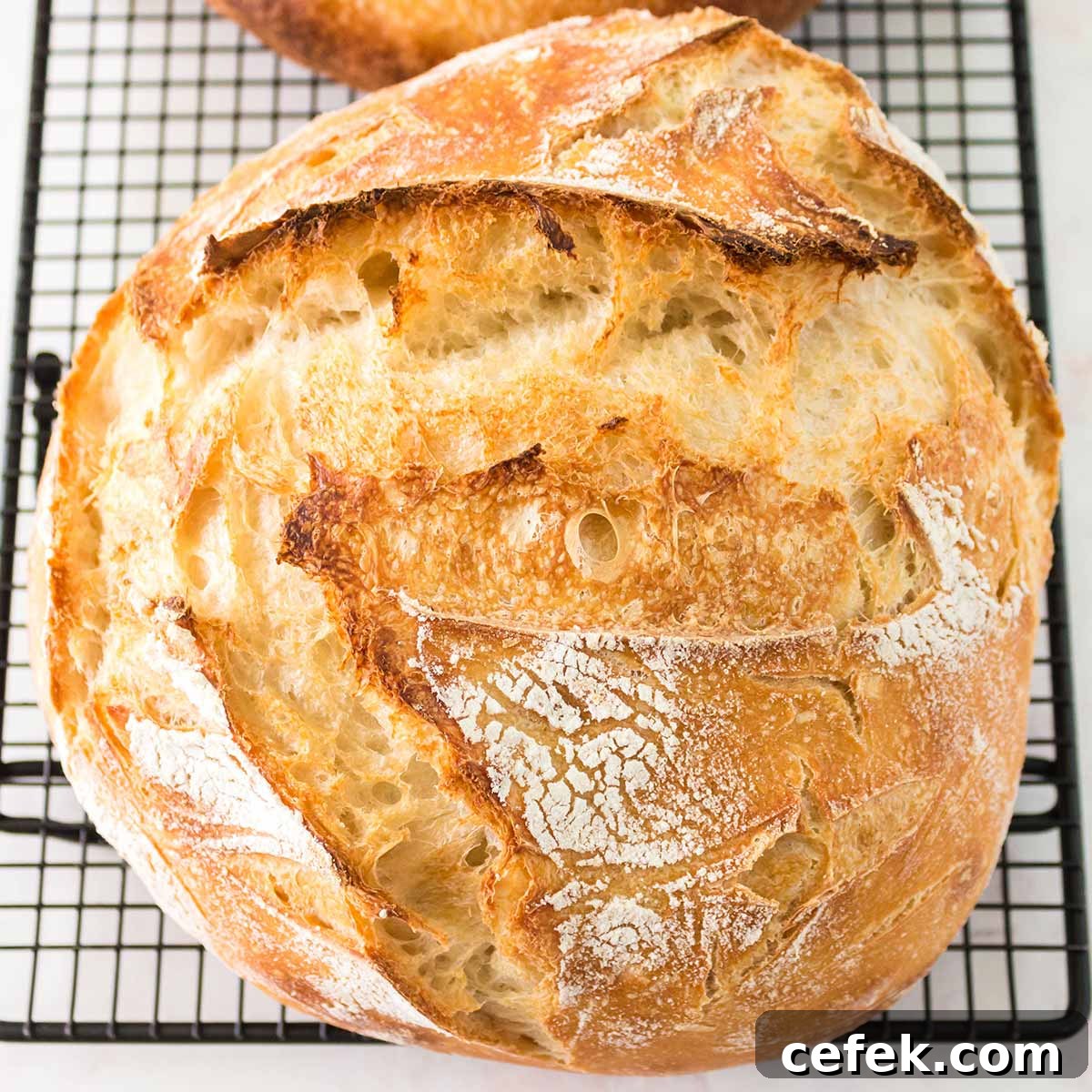
Baking overnight sourdough is a rewarding, simple process. Start the dough before bed and finish with a hot, crusty loaf in the morning—tangy, chewy, and naturally vegan. This straightforward method yields a rustic artisan-style sourdough that’s accessible to beginners and experienced bakers alike.
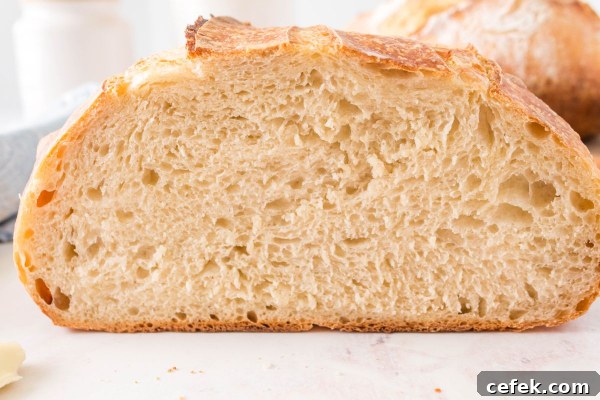
Sourdough’s charm lies in its slow fermentation and the live culture that leavens it: your sourdough starter. That wild yeast creates the characteristic tang, crisp crust, and open, chewy crumb. The long fermentation also helps break down some gluten and makes nutrients like folate, calcium, potassium, and magnesium easier for the body to access. While sourdough is often easier to digest, it is not gluten-free.
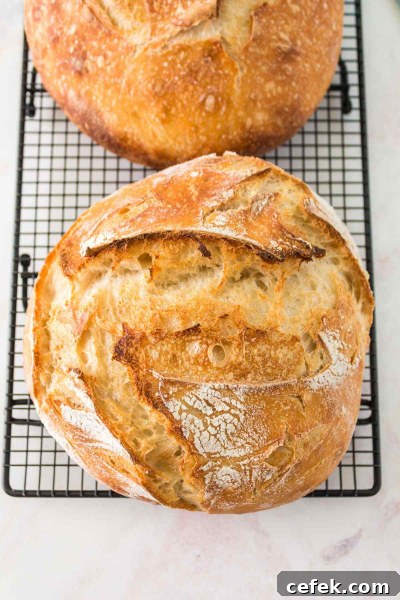
What is sourdough bread?
Sourdough is bread made with a naturally fermented starter instead of commercial yeast. That fermentation produces organic acids and beneficial microbes that contribute flavor, texture, and improved digestibility. The result is a loaf with a crunchy crust, tangy flavor, and a satisfying chew.
Along with flavor benefits, sourdough contains antioxidants and a profile of nutrients that can support overall health. The long fermentation helps break down phytic acid and other compounds, improving mineral availability and making the bread feel lighter on the stomach for many people.
Once you make your first successful sourdough loaf, you’ll likely want to bake it again and experiment with variations—seeds, whole grains, or different shaping and scoring designs.
Basic ingredients
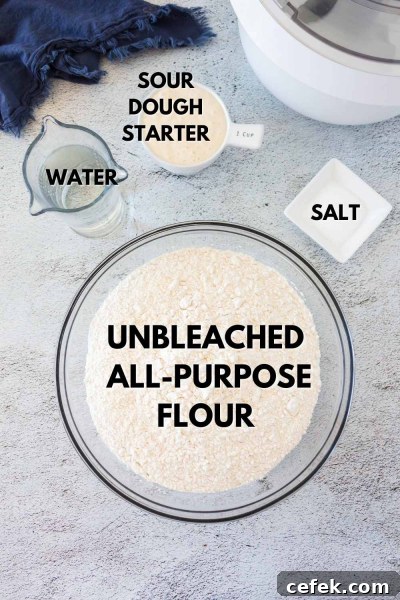
You’ll need only four ingredients for a great overnight loaf:
- 1 cup sourdough starter
- 3 1/4 cups room-temperature water, divided*
- 8 cups unbleached all-purpose flour
- 5 teaspoons salt
*Use filtered or bottled water if your tap is heavily chlorinated; alternatively boil and cool tap water to remove chlorine, which can affect starter activity.
Why choose unbleached flour?
Unbleached flour is naturally aged and generally produces stronger, more robust dough suited to breads. Bleached flour is chemically aged to create a softer, whiter product that works well for cakes and cookies but is less ideal for hearty loaves. When possible, look for unbleached flour without added improvers or oxidizers to keep your bread closer to a whole, simple profile.
Some flour treatments are controversial; if you prefer to avoid additives like potassium bromate or excessive oxidizers, read labels and choose minimally treated unbleached flour.
Why make overnight sourdough?
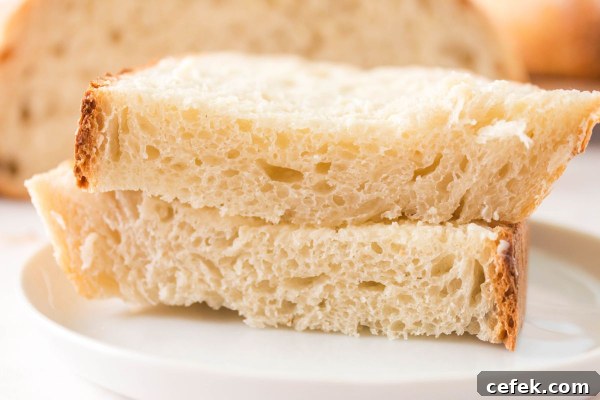
Overnight methods let fermentation develop slowly, producing deeper flavor and a better crumb with minimal hands-on time. Start the dough in the evening, let it proof slowly in the refrigerator, and bake the next morning for warm, fresh bread with minimal morning prep.
Overnight sourdough requires some planning, but rewards you with classic taste, robust crust, and an artisan-style loaf that’s worth the effort.
What is the stretch-and-fold technique?
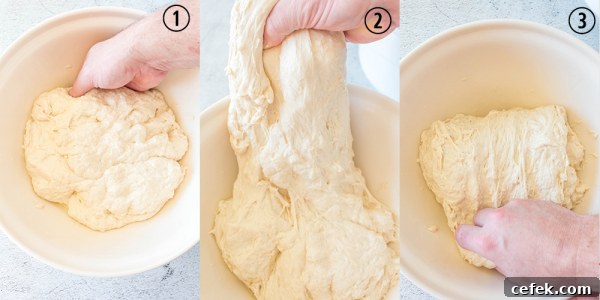
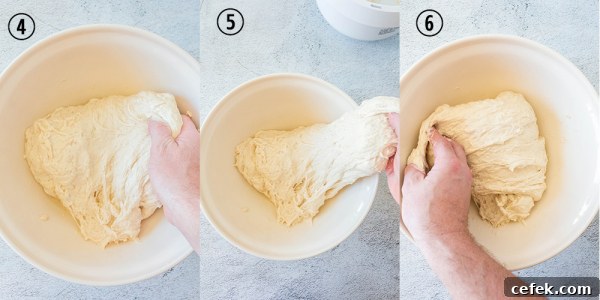
The stretch-and-fold method strengthens gluten and traps air in wet doughs without traditional kneading. It gently builds structure, increases dough volume, and helps achieve a good oven spring.
How to do it: picture the dough as a clock, with 12 o’clock facing you. With slightly wet fingertips, lift the dough at 12, stretch it upward, and fold it over toward the center. Repeat at 3, 6, and 9 o’clock. Cover and rest for 30 minutes between rounds. For this recipe you’ll repeat the process four times over two hours—each round helps improve elasticity and structure.
How to score bread
Scoring controls the oven spring by providing weak points where the loaf can expand, preventing random ruptures and creating a pleasing shape. Use a sharp blade and make quick, decisive cuts. You can keep it simple with a single central slash or be creative with patterns—your signature score becomes part of the loaf’s character.
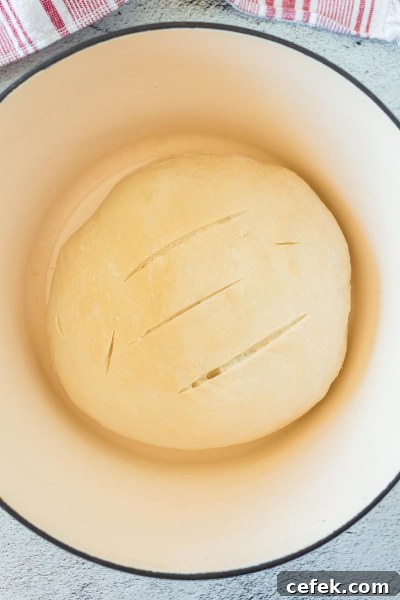
The blade should glide in a single motion so the dough opens neatly and creates an attractive ear.
Serving ideas
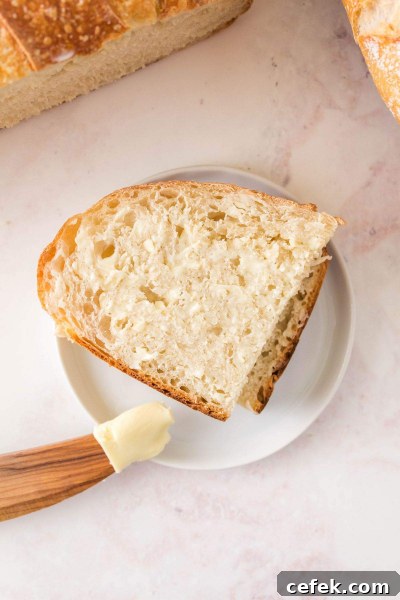
Sourdough pairs with countless recipes. Try it toasted with fresh tomato and mozzarella for bruschetta, use it for hearty sandwiches with smoked brisket or ham, or serve cubes alongside a warm beer-cheese dip. The bread’s texture and flavor make it versatile for breakfast, lunch, or appetizers.
Storing sourdough
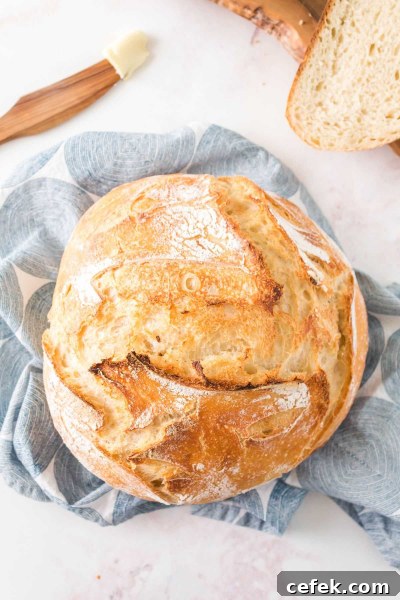
Fresh from the oven, leave the loaf uncovered at room temperature for the first day to preserve crust texture. Don’t slice while hot—wait until it cools to avoid a gummy crumb. Store a sliced loaf cut-side down or wrapped in a clean towel for a softer crust. An unsliced loaf can go in a paper bag to balance crust crispness and moisture retention.
After a couple of days, move the bread to a bread box or a sealed bag to keep it longer, knowing the crust will soften. For longer storage, freeze the loaf or individual slices—cool fully, then seal in a freezer bag for up to several months.
Freezing tips
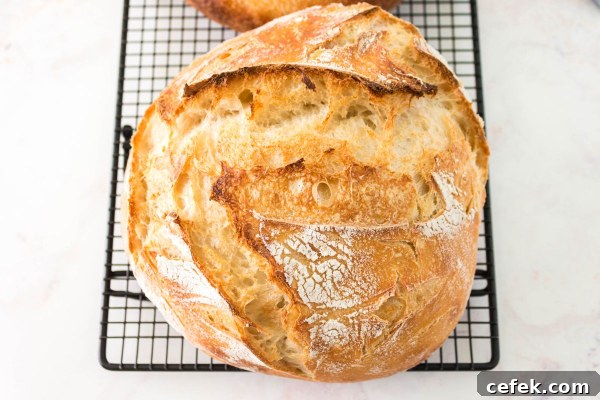
Freeze cooled loaves or slices in airtight bags. To preserve individual slices, separate them with parchment to prevent sticking. Toast or briefly reheat frozen slices for best texture. Frozen sourdough keeps well for months with only a gradual loss of fresh-baked flavor.
Gluten-free option?
This classic overnight sourdough uses wheat flour and is not gluten-free. Converting a yeasted or naturally leavened wheat recipe to gluten-free requires a different approach and dedicated gluten-free flours and techniques. If you need gluten-free sourdough, look for recipes designed specifically for that purpose.
Enjoy your baking. If you try this recipe, take pride in your loaf and experiment with flavors, shaping, and scoring—each bake improves your skills and yields delicious results.

Overnight Sourdough Bread
Ingredients
- 1 cup sourdough starter
- 3 ¼ cups room temperature water divided
- 8 cups unbleached all-purpose flour
- 5 teaspoons salt
Instructions
-
In a mixing bowl combine 1 cup starter with 3 cups room-temperature water and stir until the mixture looks milky.
-
Add the flour and mix until incorporated. Cover and let the dough rest for 30 minutes (autolyse).
-
Mix in the salt and 1/4 cup of the remaining water. Continue mixing until the dough comes away from the sides of the bowl. The dough will be sticky. Transfer it to a lightly oiled bowl.
-
Perform the stretch-and-fold: picture the dough as a clock, lift and fold at 12, then 3, 6, and 9 o’clock. Cover and rest 30 minutes between rounds.
-
Repeat the stretch-and-fold sequence three more times for a total of four rounds (about 2 hours total resting time).
-
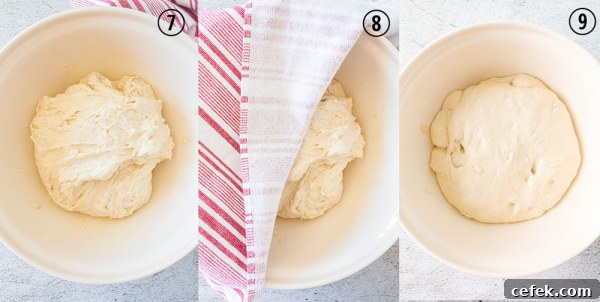
After the final round, cover the dough with a clean towel and let it rest undisturbed in a warm spot until doubled, about 2 hours.
-
Turn the dough onto a lightly floured surface, divide it in half, and shape each piece into a tight ball. Let them rest uncovered for 30 minutes.
-
Prepare two proofing baskets or bowls dusted with flour, or line them with parchment to make transferring easier.
-
After the 30-minute bench rest, perform a final stretch-and-fold and place each loaf into the prepared basket. Cover and refrigerate overnight.
The next morning:
-
Remove the dough from the refrigerator.
-
Preheat the oven to 425 °F (218 °C) with a Dutch oven inside.
-
Carefully transfer a loaf into the hot Dutch oven—use parchment or gently tip the proofing basket so the dough slides in without deflating.
-
Score the top with a sharp blade (two or three slashes) to control rise.
-
Bake with the lid on for 20 minutes.
-
Remove the lid and bake another 15–20 minutes until deep golden and crisp.
-
Transfer the loaf to a cooling rack and rest 15 minutes before slicing.
-
Reheat the Dutch oven for 5 minutes before baking the second loaf and repeat the process.